Technology news and discussion on TalkFuse.
GOP grip on Ohio, Texas in jeopardy amid data center fervor
Developed over time first seen 4 days ago
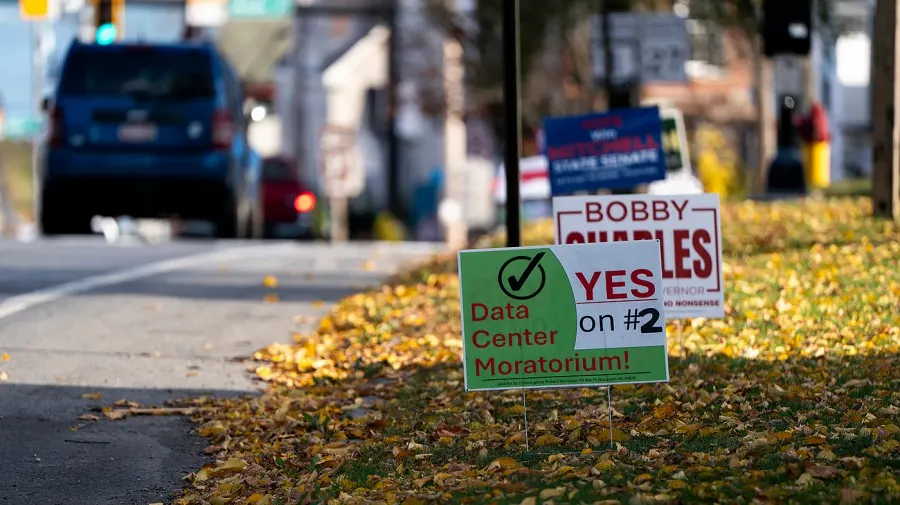
Opposition to large data centres has become an election issue in Ohio and Texas, where residents are questioning their demand for electricity and water, their use of land and the public support offered to developers. In Ohio’s Senate race, Democrat Sherrod Brown has sought to link Republican Senator Jon Husted to projects backed during his time as lieutenant governor. Husted has proposed measures intended to make data centres cover the cost of the power and infrastructure they need. The dispute has given Democrats an opening in communities where Republicans have usually been strong, although opposition to the projects crosses party lines.
- Sources
- 3
- Outlets
- 3
- Left · Centre · Right
- 0 · 0 · 1
In short
- Data centre opposition has become an issue in Ohio and Texas elections.
- Voters are concerned about power, water, land and who pays for infrastructure.
- The backlash crosses party lines, so its electoral effect remains uncertain.
How this story developed
- 3 hours ago Opposition to large data centres has become an election issue in Ohio and Texas, where residents are questioning their demand for electricity and water, their use of land and the public support offered to developers.
Full account
As November’s elections approach, resistance to data-centre construction is emerging as a political concern in both Ohio and Texas. The supplied reports describe voters weighing local costs and environmental effects alongside contests for state and federal office. They do not establish that opposition will determine the results, but they suggest the issue could shape campaigns and local decisions.
In Texas, an August survey by the University of Texas and the Texas Politics Project found 57% opposed to a data centre in their community, against 30% in favour; the rest had no opinion. The figures were similar to those recorded in June. Opposition was particularly strong among Democrats, independents and suburban and rural voters. Republicans were more evenly split, with 45% supportive and 43% opposed. The poll also found persistent concern about prices and the economy: 29% named inflation, higher prices or the economy as the state’s most important problem, and 35% identified those issues as the leading national concern.
The Texas survey also showed a close Senate contest in its trial ballot: Democrat James Talarico had 42% support and Republican Ken Paxton 39%, while 14% had no preference. In the governor’s race, Republican incumbent Greg Abbott led Democrat Gina Hinojosa by 45% to 40%. Republican candidates were ahead by smaller margins in other statewide contests covered by the poll. The survey questioned 1,200 registered voters online from 5 to 13 August; its reported margin of error was 2.83%, or 3.58% when weighting is taken into account.
Ohio’s opposition appears broader in the figures cited by the second report. A Bowling Green State University poll of 1,000 likely voters found 75% would oppose a data centre in their community and 63% would oppose construction anywhere in the state. Voters in 18 counties are due to consider data-centre-related ballot measures, and candidates for offices with influence over development will also be on the ballot. The report describes worries about electricity bills, emissions, backup generators and water use. One St Bernard resident, Danielle Mitsch, said a proposed facility near her home could make an already unaffordable electricity bill harder to manage. The report also cites an estimate that data centres have added $23 billion to consumer electricity costs across the PJM grid, which serves Ohio, and research indicating about 150 centres operate in Ohio, with 140 more planned.
The two reports frame the issue differently. The Texas poll report centres on statewide voting intentions, economic sentiment and differences in opinion by party and region; data-centre opposition is one part of a broader electoral picture. The Ohio report focuses on residents’ concerns, energy and environmental impacts, local ballot measures and the development pipeline, rather than supplying comparable candidate polling. Its figures therefore point to substantial public resistance in both states, but do not directly show how that resistance translates into support for particular candidates or parties.
Where outlets differ
From the full account, which is AI-written from the sources:
The Texas report is based on a statewide poll of registered voters and gives results for Senate and governor trial ballots as well as opinions on data centres. The Ohio report cites a poll of likely voters on data-centre construction and pairs it with a reported resident’s experience and discussion of costs and environmental concerns; it provides no candidate preference figures.
The Texas report quantifies differences by party and by rural and suburban residence, while the Ohio report emphasises the breadth of opposition and the local ballot measures planned in 18 counties.
The Texas account presents data-centre opposition alongside continuing economic concerns and closely contested statewide races. The Ohio account gives greater attention to electricity demand, grid costs, emissions and water use.
Coverage · 3 sources
AI Elections Environment Government Politics Science Software Technology