Japan’s Film Funds Look Beyond Production Committees to Build New Financing Models
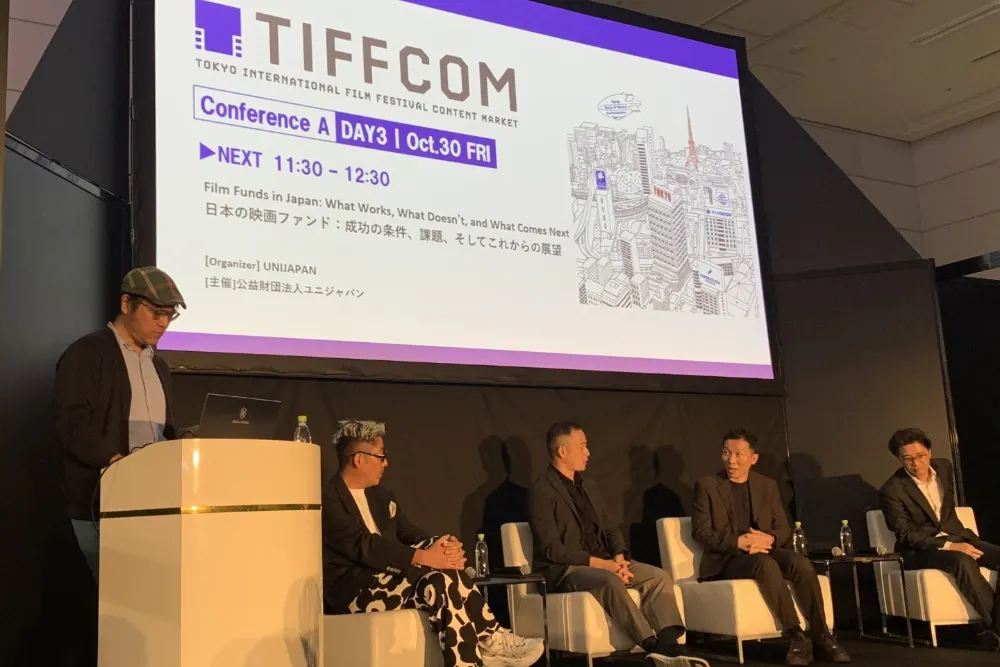
Japan’s film industry is exploring investment funds as an alternative to its production committee system, which shares costs and rights among companies but can limit budgets, deter overseas investors and slow decisions. At a TIFFCOM panel, industry and finance representatives discussed ways to bring in capital while ensuring creators receive returns and structures suit Japan’s market.
K2 Pictures’ first fund closed at about ¥5 billion ($32 million) in February and aims to support around 50 films over seven years; its greenlight committee approves projects, and five backed films had reached cinemas in 2026. A separate feasibility study, commissioned by Japan’s trade ministry and led by MUFG, runs until February 2027 and will test valuation, completion-guarantee and contracting models using real-world data. Panellists also highlighted the need to combine different forms of finance and address regulatory, tax and language barriers to cross-border investment.
In short
- Japan is testing film funds as an alternative to production committees.
- K2 Pictures raised ¥5 billion to back around 50 films.
- A government-commissioned study will test financing models through February 2027.
Steelman: both sides, in good faith
The strongest fair case each way — we don't pick a winner.
The case for
Investment funds could bring larger and more predictable pools of capital to Japanese films, attract overseas investors and support projects that the production committee system may struggle to finance. With clear project selection and structures that account for creators’ returns, they could also help films reach audiences while preserving incentives for those who make them.
The case against
The production committee system shares costs and risks among companies and is established within Japan’s market; replacing it with funds could concentrate decision-making and expose investors to risks that are difficult to value or insure. Cross-border investment also brings regulatory, tax and language hurdles, and a model that works elsewhere may not suit local contracts or creators’ interests without careful testing.
Explained simply
Japan’s production committee system brings several companies together to fund a film and share its rights and risks. It has long been a common way to make films, but spreading decisions across partners can make it harder to raise large budgets or attract investors from overseas.
K2 Pictures has launched a fund to back films over several years, with projects approved by a committee. Japan’s trade ministry has also commissioned a study, led by MUFG, to examine how investors could value film projects and manage risks such as a film not being completed.
The wider challenge is to bring different kinds of finance into Japanese film while giving creators a share in any returns. Investment across borders can also be complicated by differences in regulation, tax rules and language.
Art Asia Culture Entertainment Film World