Hundreds flee years of hardship in occupied Oleshky through ceasefire window
Developing story first seen 2 hours ago
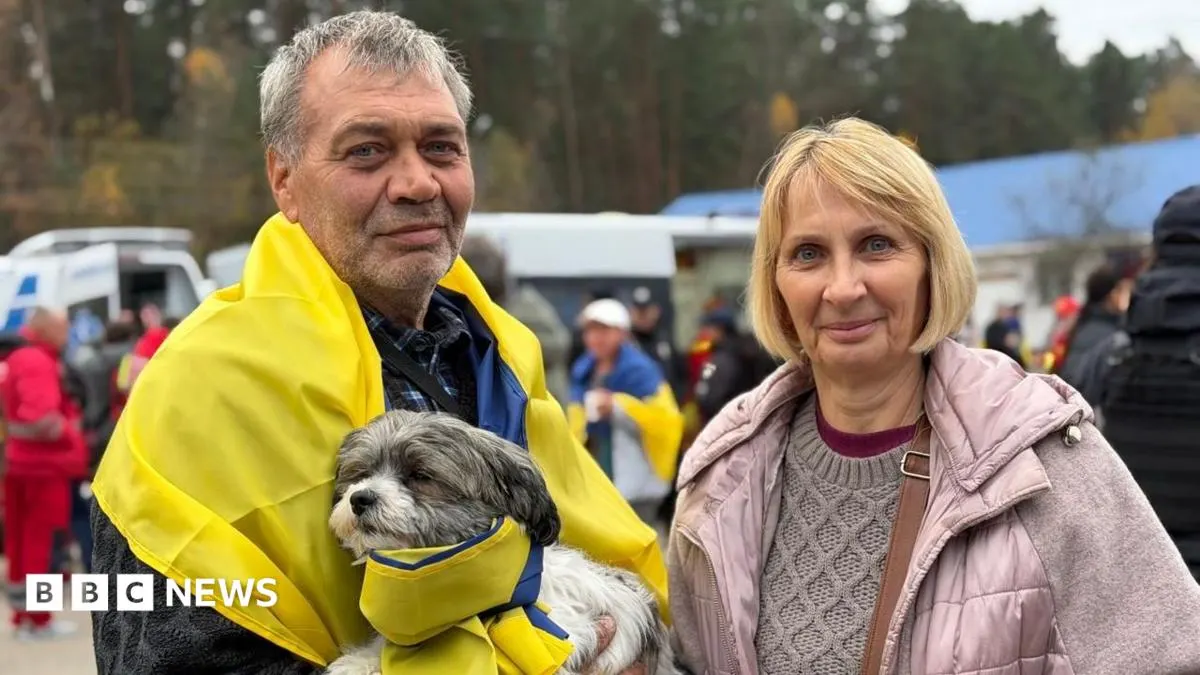
New accounts from evacuees describe residents in Russian-occupied Oleshky risking mines to find food, with some people surviving on cooked garden weeds. Hundreds have now reached northern Ukraine after a brief ceasefire enabled them to leave, but many others remain in the isolated city.
Oleshky was seized by Russian forces in February 2022 and is surrounded by the Dnipro River and Russian-held territory; shelling and drone attacks made escape dangerous. Up to 6,000 people, including 200 children, were believed to remain in the city and surrounding area. A four-hour evacuation window on Friday provided 25 buses for up to 750 people, some of whom arrived weak or on stretchers, while others were reunited with relatives; they now face finding homes and work.
- Sources
- 2
- Outlets
- 2
- Left · Centre · Right
- 0 · 1 · 1
In short
- Residents describe severe shortages and dangerous efforts to find food.
- A ceasefire window enabled hundreds to leave Oleshky.
- Thousands may still be in the occupied city and nearby areas.
How this story developed
- 1 hour ago Hundreds of people evacuated from Russian-occupied Oleshky arrived in northern Ukraine after years of shelling, shortages and danger. The city’s isolation and mined escape routes had made leaving perilous, while residents feared the journey could expose them to further attacks.
- 1 hour ago New accounts from evacuees describe residents in Russian-occupied Oleshky risking mines to find food, with some people surviving on cooked garden weeds. Hundreds have now reached northern Ukraine after a brief ceasefire enabled them to leave, but many others remain in the isolated city.
Full account
Residents who had endured years of shortages and danger in Russian-occupied Oleshky began arriving in northern Ukraine on Saturday after a temporary ceasefire opened a route out. Many had travelled through Russian-held territory and Belarus before crossing into Ukraine. At a reception point in Chernihiv region, relatives, volunteers and aid workers welcomed the evacuees with food and help for people and their pets. Some passengers were so frail they had to be carried on stretchers; others ran to embrace family members they had not seen for years.
Oleshky, in Kherson region, was seized by Russian forces in the first days of the full-scale invasion in February 2022. Its position between the Dnipro River and Russian-held territory has left residents with few safe ways to leave. Olha, who escaped with her husband Viacheslav, described life there as a horror. The couple said shelling had grown more intense, while mines and drone attacks made movement perilous. Earlier this month, they ventured through mined areas in search of food. Some residents, they said, had taken to cooking weeds from their gardens rather than risk going out.
Other evacuees spoke of dwindling supplies and constant threats. Ivan Yevhenovych, 48, said basic food had largely run out by spring and that mines and drones made it dangerous to walk through the streets. Mykhailo Palii said strikes had damaged his home, including blowing a hole in the bathroom, but he had kept details from his daughters to spare them worry. They ran across the arrival area to greet him, overcome with emotion. Tetiana Leonidivna, 71, praised the Ukrainian soldiers who helped her escape.
The evacuation followed a short humanitarian truce in the region, which reports said was brokered by US First Lady Melania Trump. A four-hour departure period on Friday was organised for residents, with 25 buses available and ambulances for people with limited mobility. Estimates of how many people remained in Oleshky and nearby settlements varied: one report put the total at up to 6,000, including about 1,700 in the city, while another cited roughly 2,000 in Oleshky. Some residents chose to stay, citing their homes or animals; evacuees were reportedly offered the choice of travelling to Ukrainian- or Russian-held territory, or remaining with replenished supplies.
Where outlets differ
From the full account, which is AI-written from the sources:
The first report centres on the experience of Olha and Viacheslav and describes the evacuation route and reception in Chernihiv region. The second gives greater attention to the ceasefire’s diplomatic context, welcomes at the border and statements by evacuees and officials.
The estimates of the population remaining differ: the first gives up to 6,000 across Oleshky and surrounding areas, with 1,700 in the city; the second says about 2,000 were still in Oleshky. The reports do not give a confirmed evacuation total. The second says authorities withheld details to protect residents who stayed and future humanitarian operations.
Centre outlets 1
Only here: hundreds, flee, hardship, window
Right-leaning outlets 1
Only here: tears, ukrainians, evacuated, russian, finally
Every side used: occupied, oleshky, ceasefire
Headline columns compared word for word; nothing in them is AI-written.
Explained simply
Oleshky is a city in Ukraine’s Kherson region, on the east bank of the Dnipro River. Russian forces have occupied it since 2022, and fighting in the wider region has left communities exposed to shelling, shortages and damaged services.
The area is divided by the river, with Ukrainian-held territory on the opposite bank. Mines and the risk of attack have made travel out of occupied areas dangerous, while access to food, healthcare and other essentials has been difficult for residents.
The people who leave must start again in places where they may have no home, job or nearby family. Those still in Oleshky and surrounding areas face continued hardship, and the scale of any further evacuations depends on whether safe routes can be arranged.
Coverage · 2 sources
Bias meters
From 2 rated sources.
Read the full article at the source →
Originally published by BBC World as “‘We came back from hell’, say Ukrainians after years in Russia-occupied frontline city”.