Burnham’s apology openness reignites Caribbean reparations calls during royal tour
Developing story first seen 2 hours ago
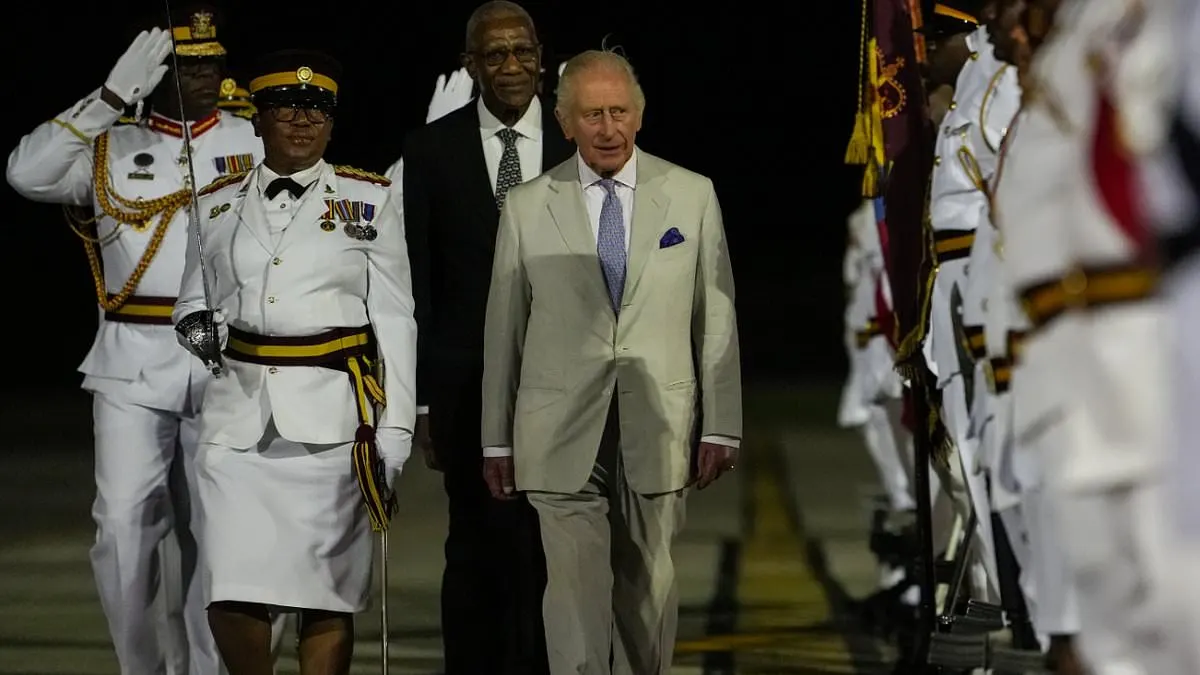
Fresh details show Downing Street and Buckingham Palace say the Palace knew in advance that Andy Burnham would say he was open to a formal apology for Britain’s role in the slave trade. The comments have intensified calls from Caribbean leaders for reparations and raised questions about the King’s position during his Caribbean tour and the Commonwealth summit in Antigua.
Burnham proposed structured dialogue and expressed personal sorrow and regret, but rejected reparations. Barbados Prime Minister Mia Mottley welcomed his remarks, while St Lucia’s Philip J. Pierre said the Caribbean Community does not accept that reparations are the wrong answer. The government had previously maintained a policy of no apology, and Conservative leader Kemi Badenoch questioned whether Britain should attend Commonwealth summits if they become forums for financial demands.
- Sources
- 2
- Outlets
- 2
- Left · Centre · Right
- 1 · 0 · 1
In short
- The Palace says it knew of Burnham’s remarks in advance.
- Caribbean leaders say reparations must remain part of the discussion.
- The King’s Antigua summit speech is under fresh scrutiny.
How this story developed
- 2 hours ago Downing Street and Buckingham Palace confirmed the Palace knew in advance of Burnham’s remarks, renewing questions about the government’s stance and the King’s role during his Caribbean tour and the Commonwealth summit in Antigua.
- 2 hours ago Andy Burnham proposed structured dialogue and expressed sorrow for Britain’s role in the slave trade, while rejecting reparations, prompting mixed responses from Caribbean leaders and criticism from Kemi Badenoch.
Full account
Andy Burnham’s willingness to hear calls for a formal British apology over the transatlantic slave trade has revived debate about reparations as King Charles visits the Caribbean. The prime minister said the government would begin a structured dialogue with communities affected by slavery, describing his own feelings as sorrow and regret. He has ruled out compensation on the grounds that people living in Britain today were not personally responsible for historical crimes.
Burnham is due to attend the Commonwealth Heads of Government Meeting in Antigua and Barbuda. He argued that acknowledging the past was necessary to repair relations within the 56-member Commonwealth, whose membership includes many countries with histories of British colonial rule. He also pointed to present-day challenges, including developing countries’ debt, and said former prime minister Gordon Brown would attend to support discussion of debt relief.
Caribbean leaders welcomed the prospect of a more direct conversation, while making clear that they continue to seek reparations. Barbados prime minister Mia Mottley described Burnham’s remarks as opening a new stage of engagement. St Lucia prime minister Philip J. Pierre, who chairs the 15-member Caribbean Community, said the region did not accept that reparations were the wrong response or that Britain’s responsibility ended with the passage of time.
The debate also raises questions about the King’s role. During an earlier stop in the Bahamas, Charles acknowledged past suffering and injustice but did not apologise. As a constitutional monarch, he speaks on behalf of the elected government, and the reports say the Palace and Downing Street were aware of Burnham’s position before it became public. The meeting in Antigua will test whether the proposed dialogue can proceed amid disagreement over what an apology should mean and whether it should lead to financial redress.
Where outlets differ
From the full account, which is AI-written from the sources:
The first report frames the comments as a sudden disruption to the royal tour and focuses on political repercussions, including Kemi Badenoch’s suggestion that Britain might boycott Commonwealth summits if they became a forum for demands for money. It also quotes a royal commentator who argues that an apology could intensify reparations claims and create difficulties for the King. The AP report gives more background on Burnham’s rationale, Commonwealth relations, debt relief and the King’s earlier remarks in the Bahamas. It describes the meeting as running Sunday to Wednesday, while the first report says the King’s keynote is expected on Tuesday. The first report also says the Palace and Downing Street had been briefed in advance; AP emphasises the constitutional constraint on the King. The supplied first report ends mid-sentence, and the second also appears truncated.
Left-leaning outlets 1
- U.K. Leader Burnham Hints At Apology For Country's Role In Slave Trade But Rejects ReparationsHuffPost
Only here: leader, hints, country, role, slave
Right-leaning outlets 1
Only here: openness, reignites, caribbean, calls, royal
Every side used: burnham, apology, reparations
Headline columns compared word for word; nothing in them is AI-written.
Steelman: both sides, in good faith
The strongest fair case each way — we don't pick a winner.
The case for
Supporters of a formal apology and reparations argue that slavery’s lasting harms were profound and that acknowledging them openly is a matter of historical responsibility and justice. Burnham’s proposed dialogue could offer a constructive way to discuss what accountability might involve, while Caribbean leaders say reparations remain a legitimate subject for negotiation.
The case against
Those wary of reparations argue that present-day governments and taxpayers should not be assigned financial liability for historical actions, and that an apology or dialogue need not imply compensation. They may also see raising the issue during the King’s tour and a Commonwealth summit as risking the monarch’s political neutrality and diverting the forum from other shared priorities.
Explained simply
Britain’s slave trade forcibly transported millions of Africans to the Caribbean, where enslaved people were made to work, especially on plantations. The trade and slavery generated wealth for Britain, while their effects remain part of debate about inequality and historical responsibility.
Caribbean governments have called for reparations, which can include apologies, funding or other measures to address the lasting harms of slavery. The Caribbean Community, known as CARICOM, coordinates regional positions on issues including reparations; its members do not all have identical views on what action should follow.
The King’s Caribbean visits take place as he represents Britain in countries with histories shaped by colonial rule and slavery. The Commonwealth is a voluntary association of countries, many with historical ties to Britain, and its meetings bring leaders together to discuss shared issues.
Coverage · 2 sources
Bias meters
From 2 rated sources.
Read the full article at the source →
Originally published by Daily Mail as “Burnham slave trade pledge sparks new reparations row for the King on Caribbean tour as PM’s ill-timed intervention triggers fresh calls for billions”.