A Newly Discovered Trail of Cosmic Debris Illustrates How the End of the Solar System Could Look
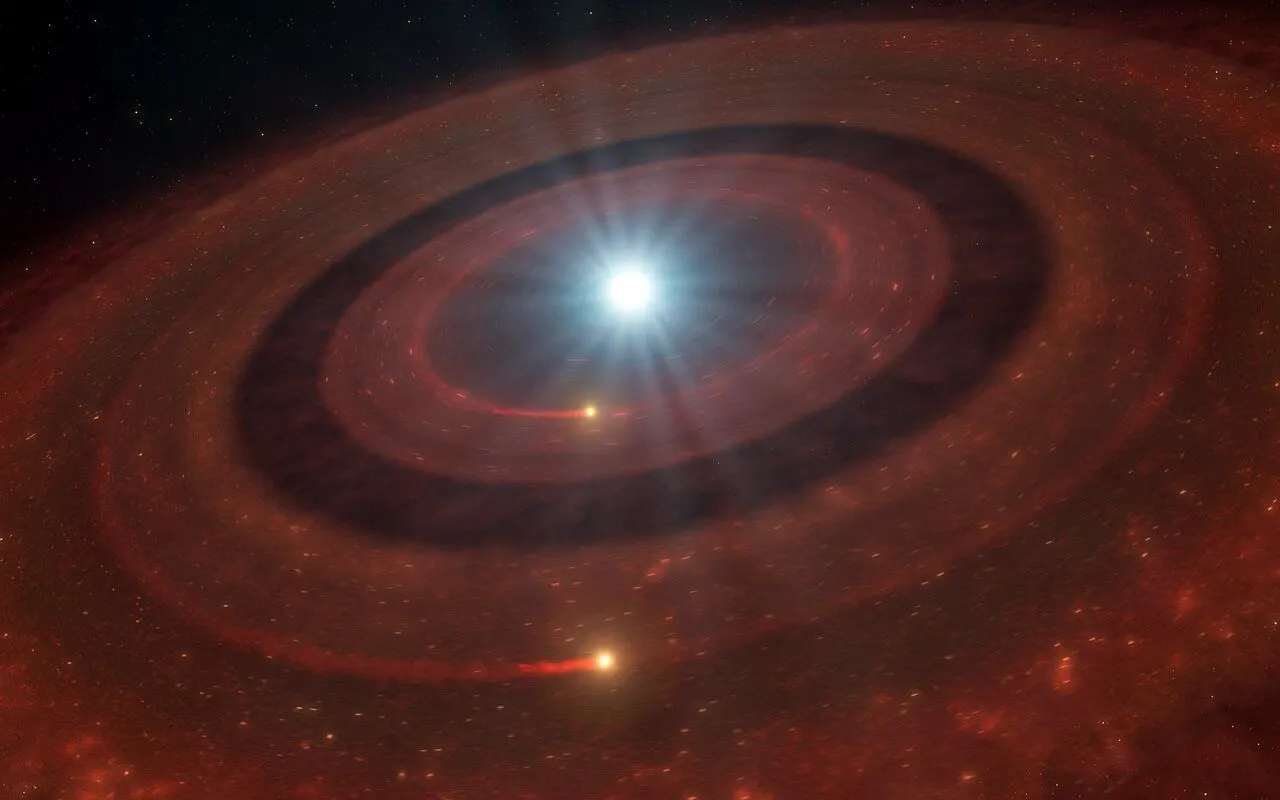
Astronomers using the European Southern Observatory’s Very Large Telescope have found two distinct gas rings around white dwarf J1328−1450, about 1,600 light-years away. The unusual debris may be the remains of the star’s former planetary system and offers a possible glimpse of what could happen to the Solar System when the Sun dies.
The Sun is expected to exhaust its fuel and expand into a red giant in about five billion years, potentially engulfing nearby planets before shedding its outer layers and becoming a white dwarf. The rings around J1328−1450 may be shaped by two surviving planetary bodies: one only a few kilometres across and another potentially as large as Pluto or the Moon. Researchers have not confirmed that these bodies exist; the rings could instead come from different parts of a single planet-like object.
In short
- A white dwarf 1,600 light-years away has two unusual gas rings.
- The debris may preserve clues to its former planetary system.
- Similar remnants could form around the Sun in about five billion years.
Explained simply
Stars such as the Sun shine by using up fuel in their cores. In about five billion years, the Sun is expected to swell into a red giant, possibly engulfing nearby planets, then shed its outer layers and leave behind a white dwarf: a small, dense stellar remnant.
Planets and smaller bodies around a star can be disrupted as it changes, leaving gas and dust behind. Astronomers study such debris around white dwarfs to learn what may happen to planetary systems, including our own, as their stars age and die.