World news and discussion on TalkFuse.
Was Deep Purple’s famous riff a rip-off?
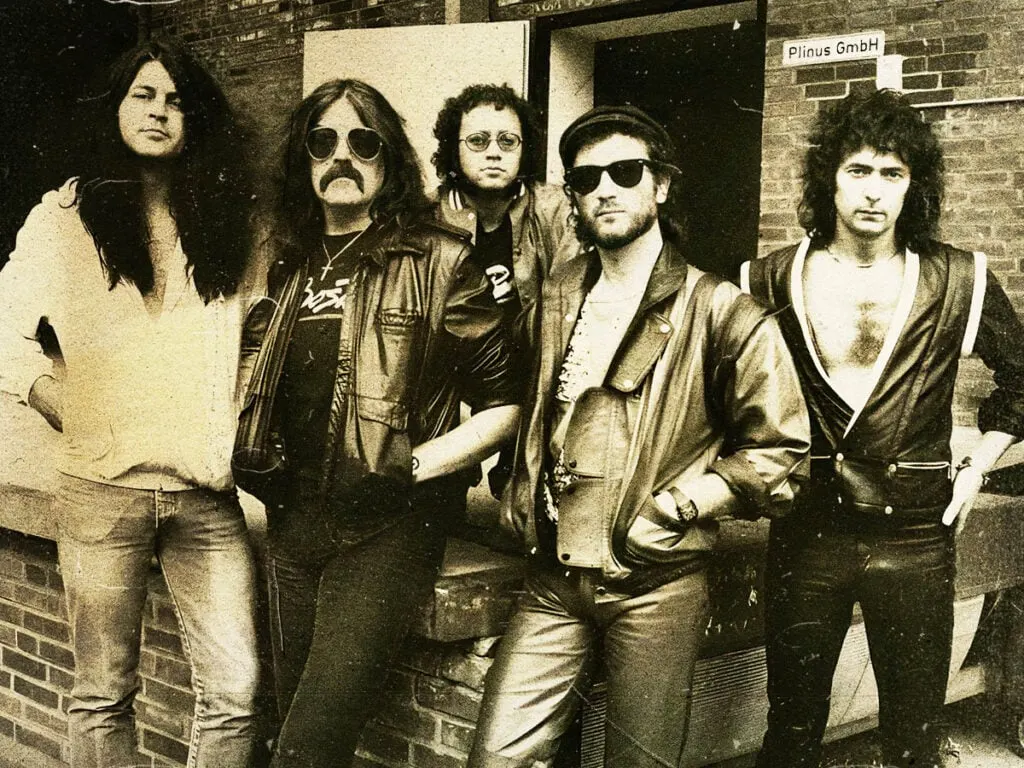
Deep Purple’s “Smoke on the Water” riff has been compared with earlier music, prompting questions about whether guitarist Ritchie Blackmore borrowed it. The similarities are intriguing, but the article argues that the riff’s rhythm, phrasing and arrangement give it a distinct identity.
Released in 1973 on *Machine Head*, the song became famous for its four-note guitar figure and its account of the 1971 fire at Montreux Casino, which disrupted the band’s recording plans. Blackmore said the riff was based on an inversion of Beethoven’s Fifth Symphony, though the article notes that the rhythm and note order differ substantially. It also points to a melodic resemblance to Carlos Lyra’s 1964 song “Maria Moita”, while stressing that the two recordings come from very different musical settings.
In short
- Blackmore linked the riff to Beethoven’s Fifth.
- A 1964 Brazilian song also sounds similar.
- Rhythm and arrangement help make Purple’s riff distinctive.
Steelman: both sides, in good faith
The strongest fair case each way — we don't pick a winner.
The case for
The resemblance to earlier music, including “Maria Moita”, gives listeners a reasonable basis to ask whether Blackmore drew on ideas already in circulation. His account of adapting Beethoven’s Fifth also suggests the riff may have emerged through reshaping familiar material, and influence can be real even when a new work changes its source substantially.
The case against
A resemblance alone does not establish that the riff was copied, particularly when a short four-note figure can occur independently in different musical settings. The article points to differences in rhythm, phrasing and note order, as well as the riff’s distinctive arrangement in “Smoke on the Water”, as reasons to regard it as an original musical identity.
Explained simply
Deep Purple are a British rock band, and “Smoke on the Water” is one of their best-known songs. It appeared on their 1973 album Machine Head and describes a fire at the Montreux Casino in Switzerland in 1971, which disrupted the band’s plans to record there.
The song’s guitar figure was played by Ritchie Blackmore. He said it drew on Beethoven’s Fifth Symphony, while listeners have also compared it with “Maria Moita”, a 1964 song by Brazilian composer Carlos Lyra. Such comparisons raise questions about how musicians draw on earlier music and what makes a melody distinct.
Americas Entertainment Music World