World news and discussion on TalkFuse.
NASA’s Swift Observatory Is Falling to Earth. Here’s What to Know About the Impending Impact
Developing story first seen 3 hours ago
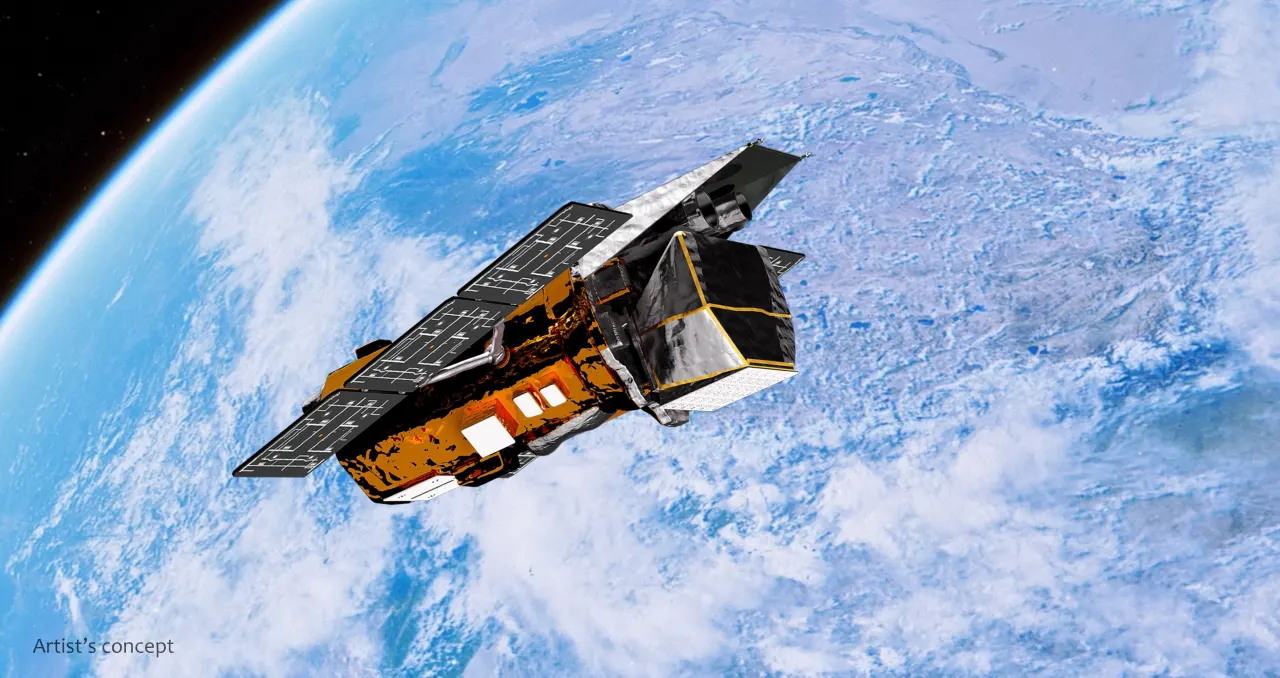
NASA’s Swift observatory is expected to re-enter Earth’s atmosphere around 6 November, with only a few fragments likely to survive the descent. The precise impact area has not been made public, though the monitored zone covers parts of several continents and the remaining debris is thought most likely to fall into the ocean.
Swift’s scientific work ended after solar activity increased atmospheric drag and lowered its orbit, preventing stable observations. Launched in 2004 for a planned two-year mission, it operated for more than two decades, observing over 2,000 gamma-ray bursts and nearly as many supernovas; its data contributed to more than 7,000 research papers. A $30 million attempt to raise its orbit failed because of problems with the rescue spacecraft’s control system.
- Sources
- 2
- Outlets
- 2
- Left · Centre · Right
- 0 · 0 · 0
In short
- Swift is expected to re-enter around 6 November.
- Most of the observatory should burn up.
- Its data contributed to more than 7,000 research papers.
How this story developed
- 27 minutes ago NASA’s Swift space observatory is expected to re-enter Earth’s atmosphere around 6 November, after solar activity increased atmospheric drag and hastened its descent.
- 43 minutes ago NASA’s Swift observatory is expected to re-enter Earth’s atmosphere around 6 November, with only a few fragments likely to survive the descent.
Full account
NASA’s Neil Gehrels Swift Observatory is expected to re-enter Earth’s atmosphere soon, ending a mission that lasted far beyond its original plan. The precise timing remains uncertain: one report, citing US Armed Forces predictions, gives about 3.30am Eastern time on 4 November, with an uncertainty of 11 hours. Another cites a US Space Force estimate of around 6 November. Predictions can shift as the spacecraft descends, so neither date should be treated as exact.
Launched in November 2004, Swift carried three telescopes and was built chiefly to detect gamma-ray bursts, exceptionally energetic cosmic explosions. It could rapidly locate these events and alert observatories around the world to follow them up. Over its lifetime, it also observed supernovas and other phenomena, including stars being torn apart by black holes. The reports describe a substantial scientific legacy, with thousands of bursts and a large body of data that has supported many research papers and will remain available for future study.
Swift’s orbit began to decay more quickly after heightened solar activity heated and expanded the upper atmosphere, increasing drag on the spacecraft. In July, NASA tried to extend the observatory’s life with the Swift Boost mission. The plan was for Katalyst Space’s LINK vehicle to dock with Swift and raise its orbit. But LINK suffered problems controlling its orientation, which also disrupted communications, and NASA ended the rescue attempt. With Swift unable to correct its own orbit, the agency concluded operations in late October after the telescopes could no longer make stable observations. Its final observation was made on 20 October, according to one report.
Most of the observatory is expected to burn up during re-entry, though some parts may reach the ground. NASA and the US military are tracking its descent and updating their estimates. The reports say the chance of debris injuring anyone is very low. Swift’s end as an operating spacecraft does not mean its scientific work is over: its accumulated observations will continue to be studied.
Where outlets differ
From the full account, which is AI-written from the sources:
The reports give different re-entry forecasts: one says around 3.30am Eastern time on 4 November, with an 11-hour uncertainty; the other cites a Space Force estimate around 6 November. These are time-sensitive predictions and may change.
They also report different totals for Swift’s observations. One says it observed nearly as many supernovas as its more than 2,000 gamma-ray bursts; the other gives 1,400 supernovas. The first emphasises the mission’s contribution to more than 7,000 research papers and its longer-term archive, while the second gives a wider list of observed objects and stresses the low risk from surviving debris.
The first report says Swift was placed into safe mode and gives its final observation date and the end of its operational status. The second describes operations ending in late October as the spacecraft prepared for re-entry. Both attribute the failed rescue to LINK’s difficulty controlling its orientation, with the second also noting the resulting communications problems.
Explained simply
Swift is a NASA space observatory launched in 2004 to study gamma-ray bursts, brief and powerful flashes of energy from space. It also observed supernovas, the explosions that mark the end of some stars, and its findings have been used in thousands of research papers.
The mission was planned to last two years but continued for more than two decades. Swift’s orbit has gradually lowered, making it harder to point its instruments steadily at distant objects; increased solar activity has added drag to the spacecraft as it moves through the upper atmosphere.
When a spacecraft re-enters the atmosphere, most of it heats up and burns, although some pieces can survive and reach the ground. Swift’s descent matters because it marks the end of a long-running source of astronomical observations, while any surviving debris could pose a small risk to people or property.
Coverage · 2 sources
Africa Art Asia Culture Space Technology World