World news and discussion on TalkFuse.
Improved asteroid deflection model runs faster, reveals more doomsday worries
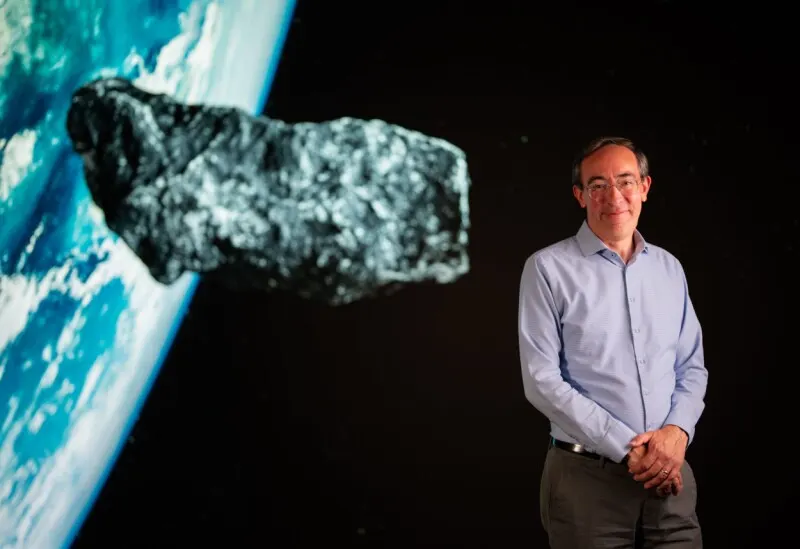
Sandia National Laboratories researchers have developed a faster way to model how X-rays from a nearby nuclear detonation might deflect an asteroid. The simulations show that an asteroid’s shape and orientation can greatly affect the result, making accurate targeting important when planning a deflection.
The team combined two existing codes, ALEGRA and SPARTA, which model different gas-density conditions around an asteroid. The approach is more than 1,600 times faster than earlier methods and was tested on Golevka, Bennu and Itokawa. Depending on which side faced the blast, simulations found up to a fivefold difference in velocity change; even Bennu showed nearly a twofold difference.
In short
- A combined simulation method runs more than 1,600 times faster.
- Asteroid shape and orientation can sharply change deflection results.
- Different sides facing a blast produced up to fivefold velocity differences.
Steelman: both sides, in good faith
The strongest fair case each way — we don't pick a winner.
The case for
The faster model could help researchers assess a last-resort planetary-defence option more accurately, especially because an asteroid’s shape and orientation may strongly affect whether a deflection succeeds. Better simulations could inform planning and reduce reliance on rough estimates if a dangerous object were detected.
The case against
Even as a modelling tool, studying nuclear deflection risks giving undue confidence in a highly consequential intervention whose outcome depends on precise knowledge of an asteroid’s shape and orientation. The large differences in simulated results underscore how a poorly targeted attempt could be ineffective, so research should be accompanied by caution and attention to other ways of preventing an impact.
Explained simply
Asteroids are rocky or metallic objects that travel around the Sun; some pass close to Earth. If one were found on a collision course, changing its speed slightly could make it miss Earth, provided there was enough warning.
One proposed method is to detonate a nuclear device near an asteroid, so its X-rays heat the surface and push material away, nudging the object in the opposite direction. Researchers use computer models to estimate how much this might change an asteroid’s path.
The result could depend on an asteroid’s shape, which way it is turning and which side faces the blast. That matters because planners would need to estimate the object’s movement accurately when deciding how to respond to a potential threat.