Culture news and discussion on TalkFuse.
Nasa telescope launched in 2004 to plunge back to Earth after failed rescue mission
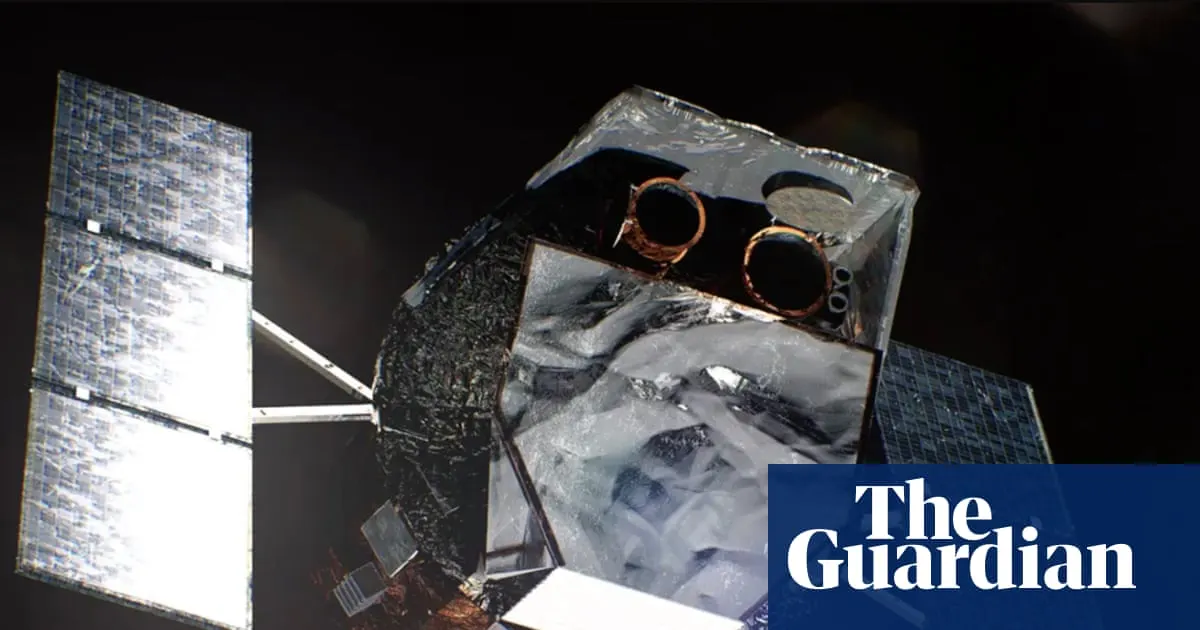
Nasa’s Neil Gehrels Swift Observatory is expected to make an uncontrolled re-entry into Earth’s atmosphere on Wednesday, 4 November, after it lost the ability to steer and observe. Most of the spacecraft is expected to burn up, though some parts may reach the ground; Nasa says the risk of harm to anyone is about 1 in 2,100.
Launched in 2004 for a two-year mission, Swift operated for two decades and tracked more than 2,000 gamma-ray bursts, helping scientists study the universe’s most powerful explosions. It also recently observed a star being torn apart by a wandering supermassive black hole. A Nasa attempt to raise the observatory’s orbit last year failed, and it was about 171 miles above Earth when operations ended last month.
In short
- Swift is expected to re-enter Earth’s atmosphere on 4 November.
- Nasa puts the risk of harm at about 1 in 2,100.
- The observatory tracked more than 2,000 gamma-ray bursts.
Explained simply
Swift is a Nasa space observatory launched in 2004 to study gamma-ray bursts: brief, intense flashes of high-energy radiation from distant parts of the universe. It uses several instruments to detect these events and quickly point its telescopes towards them, helping astronomers investigate how stars and other cosmic objects behave.
The observatory was designed for a two-year mission but continued working for about two decades. Its observations have also helped scientists study events such as stars being disrupted by black holes. As Swift orbits Earth, the atmosphere gradually slows spacecraft down; when they can no longer maintain their orbit, they eventually re-enter the atmosphere.
Art Culture Research Science Space Technology World