Politics news and discussion on TalkFuse.
Israeli President Herzog urges compromise after divisive election
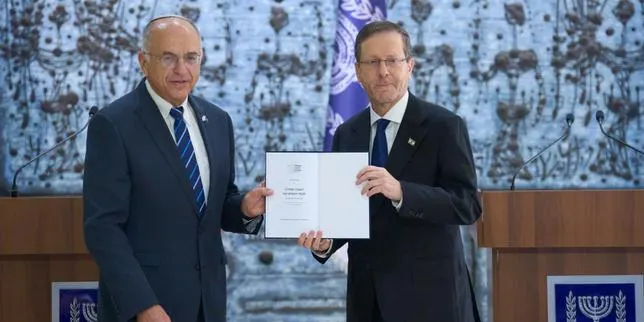
Israeli President Isaac Herzog has urged political leaders to compromise after an inconclusive election, as he begins consultations on forming a government. With neither bloc holding a majority, he is weighing whether Prime Minister Benjamin Netanyahu or rival Gadi Eisenkot should get the first chance to form a coalition, while warning that another election should be avoided.
The vote took place on 27 October, Israel’s first election since the Hamas attacks of 7 October 2023, and left the 120-seat parliament without a clear majority. Arab parties gained support and may help Eisenkot, while Herzog condemned racist rhetoric directed at Israel’s Arab minority, around one-fifth of the population. An audit of 9,069 polling stations found no evidence undermining the result; the chosen candidate will have 28 days to form a government, with a possible 14-day extension.
In short
- Herzog calls for compromise after Israel’s inconclusive election.
- Neither bloc has a majority in the 120-seat parliament.
- An audit of 9,069 polling stations found no evidence of vote irregularities.
Steelman: both sides, in good faith
The strongest fair case each way — we don't pick a winner.
The case for
Herzog’s call for compromise reflects the need to form a government that can command parliamentary support and govern effectively, especially after a divisive election. Avoiding another vote could spare the country further uncertainty, while including Arab parties where voters’ support makes them relevant would respect democratic representation and help ensure minority voices are heard.
The case against
A compromise coalition may bring together parties with sharply different priorities, making it difficult to agree on policy or sustain public confidence. Giving either candidate the first chance to form a government also carries political weight, so leaders may argue that the process should follow clear democratic conventions and that another election is preferable if no workable coalition can be formed.
Explained simply
Israel is a parliamentary democracy, where the 120-seat Knesset chooses the government. After an election, the president consults party leaders and asks the person most likely to win enough support to form a coalition of parties to try to become prime minister.
Benjamin Netanyahu is the sitting prime minister, while Gadi Eisenkot leads a rival political camp. Neither camp has enough seats to govern alone, so support from smaller parties, including Arab parties, could affect who can assemble a majority.
The election was the first since the Hamas attacks of 7 October 2023, and its result leaves Israel facing negotiations over who will govern. Arab citizens make up about one-fifth of the population, and their parties’ gains have brought renewed attention to their place in the political process.
Elections Government Middle East Politics World