World news and discussion on TalkFuse.
Abdul El-Sayed shouts at Sky News journalist: ‘I do not care what you think’
Developing story first seen 2 hours ago
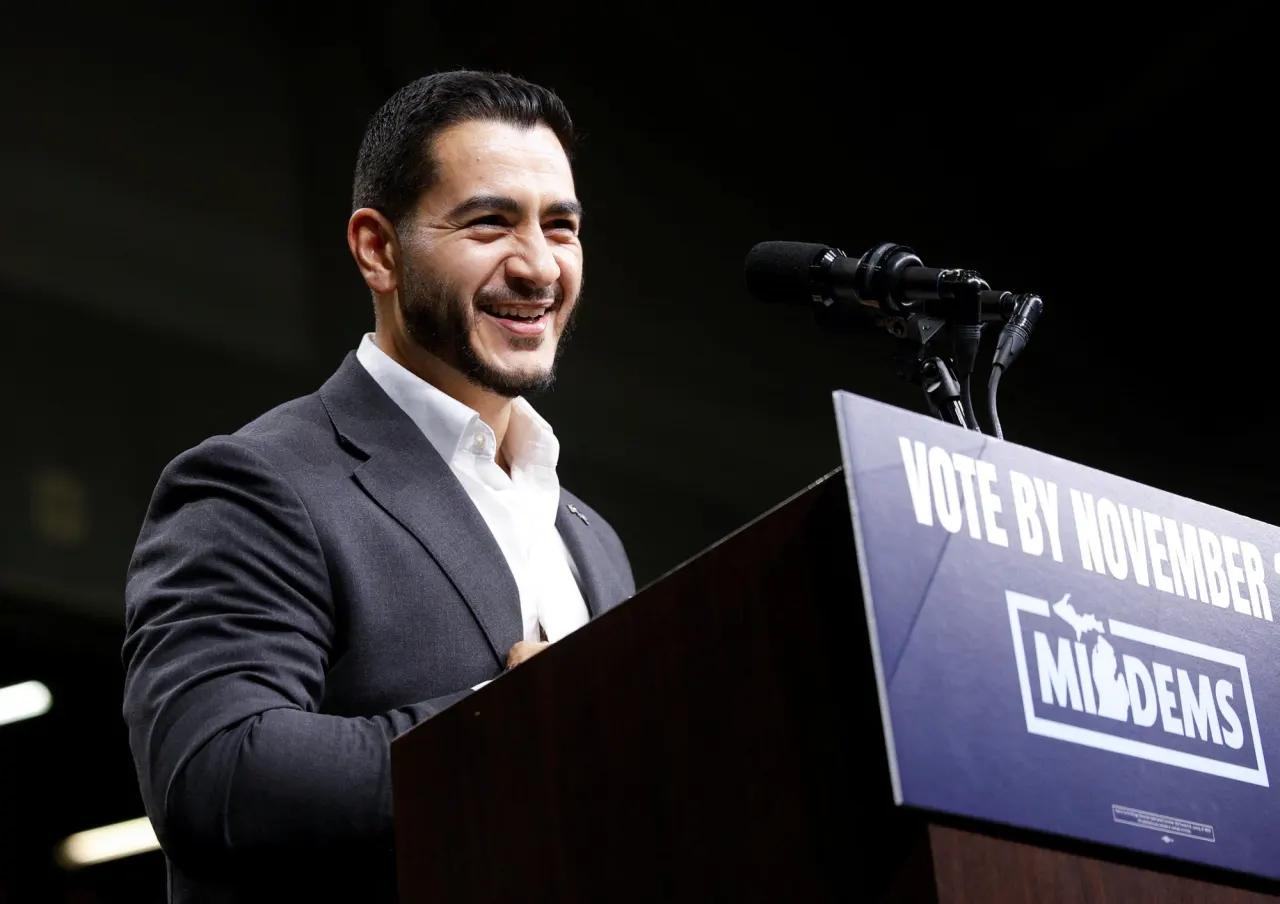
The newly added coverage records Abdul El-Sayed telling Sky News correspondent James Matthews, “I do not care what you think”, during a confrontation outside a Detroit polling centre. El-Sayed challenged Matthews’s standing to question him because he was not registered to vote in Michigan, and asked him to stop following him; Matthews replied that the election mattered internationally.
El-Sayed, a Democrat running against Republican Mike Rogers for a Michigan Senate seat, is seeking to become the first Muslim elected to the Senate. His campaign said it raised $2.4 million in one day after former primary rival Haley Stevens endorsed Rogers. The race has also featured attacks questioning El-Sayed’s loyalty to the US, which he has called shameful.
- Sources
- 2
- Outlets
- 2
- Left · Centre · Right
- 0 · 0 · 1
In short
- El-Sayed clashed with Sky News correspondent James Matthews in Detroit.
- He challenged the reporter’s interest because he could not vote in Michigan.
- His campaign reported a $2.4 million fundraising day.
How this story developed
- 1 hour ago Abdul El-Sayed, a Democratic candidate for the US Senate in Michigan, clashed with Sky News correspondent James Matthews outside a Detroit polling centre.
- 1 hour ago The newly added coverage records Abdul El-Sayed telling Sky News correspondent James Matthews, “I do not care what you think”, during a confrontation outside a Detroit polling centre.
Full account
A heated exchange between Abdul El-Sayed and Sky News US correspondent James Matthews drew attention during the final stretch of Michigan’s Senate campaign. Matthews approached El-Sayed, a Democratic candidate, as he was leaving a polling centre in Detroit and tried to ask him questions. El-Sayed challenged the reporter’s connection to the state, asking whether he was registered to vote in Michigan. When Matthews said he was not, El-Sayed questioned why he should speak with him.
The conversation escalated as Matthews argued that the election mattered internationally and said Sky News had viewers beyond Britain. El-Sayed replied that he was not seeking votes in the UK and said he did not care what Matthews thought or asked. He also disputed that Sky News had a substantial US audience, describing it as watched mainly in Britain. The two spoke over one another, and El-Sayed twice placed his hands on Matthews’s shoulders. He ended by asking the reporter to stop following him; Matthews said he was asking questions, not chasing him.
The reports place the encounter amid a closely watched contest against Republican Mike Rogers, though they describe the result differently. The first account presents El-Sayed as a candidate still running against Rogers, while the second says he had won the race on Tuesday evening. The first also highlights the campaign’s wider political tensions: former Democratic primary rival Haley Stevens had backed Rogers, and El-Sayed’s campaign said it raised $2.4 million in one day. It reports that Trump and other Republicans had questioned El-Sayed’s loyalty and portrayed him as extreme; El-Sayed has rejected such attacks.
The second report gives more attention to the clip’s online spread, saying it had received more than 8.8 million views on X, and describes a separate earlier exchange in which Matthews asked about Trump’s criticism of El-Sayed. It also includes reactions from Sky journalist Alex Crawford and broadcaster Piers Morgan. The first instead foregrounds the Senate campaign and allegations directed at El-Sayed. Both accounts characterise the confrontation as heated, but neither provides a full, uninterrupted transcript or independent figures for Sky News’s US audience.
Where outlets differ
From the full account, which is AI-written from the sources:
The first report describes El-Sayed as a candidate in an ongoing race; the second says he had already won the Michigan Senate contest. The supplied material does not establish the timing that would reconcile these accounts.
The first says the confrontation happened as El-Sayed left a polling centre in Detroit. The second describes him as newly elected and places the exchange on the eve of his victory in the midterms.
The first focuses on campaign context, including Haley Stevens’s endorsement of Rogers and the campaign’s reported fundraising. The second emphasises the viral clip, a separate earlier interview exchange and reactions to the footage.
The first gives no view count for the clip. The second reports more than 8.8 million views on X.
Steelman: both sides, in good faith
The strongest fair case each way — we don't pick a winner.
The case for
El-Sayed could reasonably argue that a candidate deserves to set boundaries when a journalist follows him outside a polling centre, and that a reporter who cannot vote in Michigan should not presume to speak for its electorate. His sharp reply may reflect frustration with coverage of a consequential campaign that has included attacks on his loyalty to the United States.
The case against
Matthews could reasonably argue that a Senate race with national and international implications is a legitimate subject for scrutiny, regardless of whether the correspondent can vote in Michigan. Challenging a candidate in public can help voters assess how he responds to difficult questions, and the reported exchange does not establish that the journalist’s questioning was improper.
Explained simply
Michigan is a US state whose voters elect two senators to represent them in the national legislature, Congress. The Senate helps make federal laws and approve senior government appointments, so its members can influence decisions affecting the whole country.
Abdul El-Sayed, a Democrat, is running for one of Michigan’s Senate seats against Republican Mike Rogers. El-Sayed is seeking to become the first Muslim elected to the Senate; the campaign has also drawn attention to debates about religion, identity and political loyalty in the United States.
Coverage · 2 sources
Americas Elections Politics World