Politics news and discussion on TalkFuse.
Herzog begins consultations on Israel’s next government after election ruling
Developed over time first seen 1 day ago
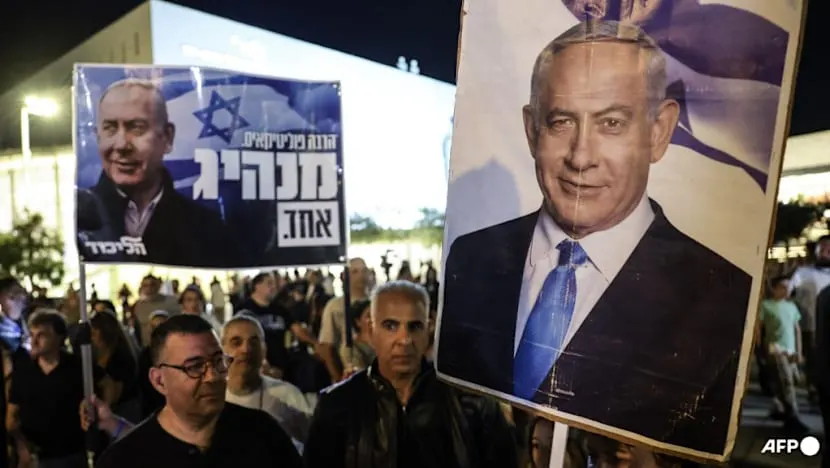
Israeli President Isaac Herzog has accepted last week’s parliamentary election results as legally binding and begun consulting party representatives about who should try to form a government. His move undercuts Prime Minister Benjamin Netanyahu’s efforts to discredit the vote after his bloc lost its parliamentary majority, while Arab-led parties made historic gains.
The elections commission said its investigation found no evidence of fraud that compromised the election or changed its outcome. A separate Shin Bet inquiry into alleged foreign interference continues, but officials said any suspected interference had not affected the results. Neither Netanyahu’s bloc nor that of opposition leader Gadi Eisenkot won a majority; Herzog will choose a candidate to attempt coalition talks, which could take weeks.
- Sources
- 2
- Outlets
- 2
- Left · Centre · Right
- 1 · 1 · 0
In short
- Herzog has certified the election results as binding.
- Netanyahu’s bloc lost its parliamentary majority.
- Coalition talks could bring rival blocs together.
How this story developed
- 22 hours ago Herzog began consultations with the parties, with three Netanyahu-aligned factions recommending him and one backing opposition leader Gadi Eisenkot; talks with eight more parties were scheduled for Thursday.
- 1 day ago The elections commission reported no evidence of fraud that affected the result, while a separate Shin Bet inquiry into alleged foreign interference continued and the committee’s head warned against undermining public trust.
- 1 day ago President Isaac Herzog accepted Israel’s certified 27 October election results as legally binding and began consultations on forming a government, despite Prime Minister Benjamin Netanyahu’s claims that the vote was stolen.
Full account
Israel’s President, Isaac Herzog, has accepted last week’s certified election results as legally binding and begun meeting party representatives to hear whom they support for prime minister. The consultations, which started on Wednesday and are due to continue on Thursday, come after Benjamin Netanyahu and his allies lost their parliamentary majority. Herzog said the vote was over and it was time to accept the outcome.
The 27 October election left no bloc with the 61 seats needed to govern in the 120-member Knesset. Netanyahu’s coalition won 53 seats, while the bloc led by opposition figure Gadi Eisenkot secured 48. Arab-led parties won a record 19 seats between them, making their positions consequential to efforts to assemble a majority. Possible outcomes include an arrangement between Netanyahu and Eisenkot, or cooperation between Eisenkot and the Arab-led factions.
Herzog’s choice will follow the parties’ recommendations, though the candidate he selects must still build a coalition. Three factions aligned with Netanyahu’s religious-nationalist camp backed him in the initial consultations; Yisrael Beytenu supported Eisenkot. Ra’am has also said it will recommend Eisenkot, bringing his expected endorsements to 56, according to one report. The Joint List has yet to state its position. If it supports Eisenkot, its 11 seats could take him above the threshold, although the arithmetic depends on how the parties ultimately act. Netanyahu’s likely support is also uncertain: Degel HaTorah, which holds four seats within United Torah Judaism, said it would recommend neither candidate, amid a dispute over legislation exempting ultra-Orthodox men from military service. Herzog has several days to name a candidate. That nominee would have 28 days to form a government, with a possible two-week extension; failure could lead to another election early next year.
The president’s decision to recognise the certified result undercuts Netanyahu’s repeated, unsubstantiated claims that Arab-led parties had stolen the vote, possibly with foreign help. The elections commission said its review found no evidence of irregularities that compromised the election or changed its result. A separate Shin Bet inquiry into alleged foreign interference remains open. An intelligence assessment cited at a closed committee meeting referred to substantial funds entering Israel from foreign states, but provided no supporting evidence in the account. The commission’s chair, Supreme Court Justice Noam Sohlberg, said suspicions remained unproven and that any potential effect appeared limited; he warned that undermining confidence in elections could damage public trust.
The reports share the central account of Herzog accepting the results and beginning consultations, but give different levels of detail. One focuses on the election-fraud allegations, the commission’s findings and the unresolved Shin Bet inquiry, including the intelligence assessment. The other concentrates on coalition arithmetic, party recommendations and the possible paths to a majority, while adding procedural details about the consultation timetable and the next steps. They also describe Eisenkot’s support in slightly different terms: one presents his bloc’s 48 seats, while the other reports Ra’am’s recommendation could raise his expected endorsements to 56 and says the Joint List might support or abstain depending on his preference.
Where outlets differ
Left-leaning outlets 1
Only here: accepts, vote, results, opens, talks
Centre outlets 1
Only here: begins, consultations, next, election, ruling
Every side used: israel, herzog, government
Headline columns compared word for word; nothing in them is AI-written.
Steelman: both sides, in good faith
The strongest fair case each way — we don't pick a winner.
The case for
Accepting the certified result and beginning consultations respects the legal process and voters’ decision, especially since the elections commission found no evidence of fraud that changed the outcome. Moving promptly to coalition talks can provide clarity and help form a government despite the fragmented parliament.
The case against
A president should take claims of foreign interference seriously while consultations proceed, so that any credible concerns can be examined and public confidence preserved. Because neither bloc won a majority and the Shin Bet inquiry is ongoing, some may argue that Herzog should avoid appearing to settle the political question before the inquiry’s findings are known.
Explained simply
Israel is a parliamentary democracy, where voters elect the Knesset, the country’s parliament. A government needs the support of a majority of its members, so parties often join together in a coalition after an election.
The president, Isaac Herzog, has a formal role in choosing which politician gets the first chance to form a government. Prime Minister Benjamin Netanyahu leads one political bloc, while Gadi Eisenkot is a rival figure; neither bloc won enough seats to govern alone.
Election officials oversee the vote and certify its result, while the Shin Bet is Israel’s domestic security service. Allegations of interference can prompt investigations, but claims about the vote’s integrity matter because public confidence in the result underpins the formation of the next government.
Coverage · 2 sources
Bias meters
From 2 rated sources.
Elections Government Middle East Politics World
Read the full article at the source →
Originally published by CNA as “Israel’s president takes first steps on building new government after accepting election results”.