Technology news and discussion on TalkFuse.
Exclusive: Aina’s Smart Ring Wants to Be a Remote Control for Your AI Agent
Developing story first seen 3 hours ago
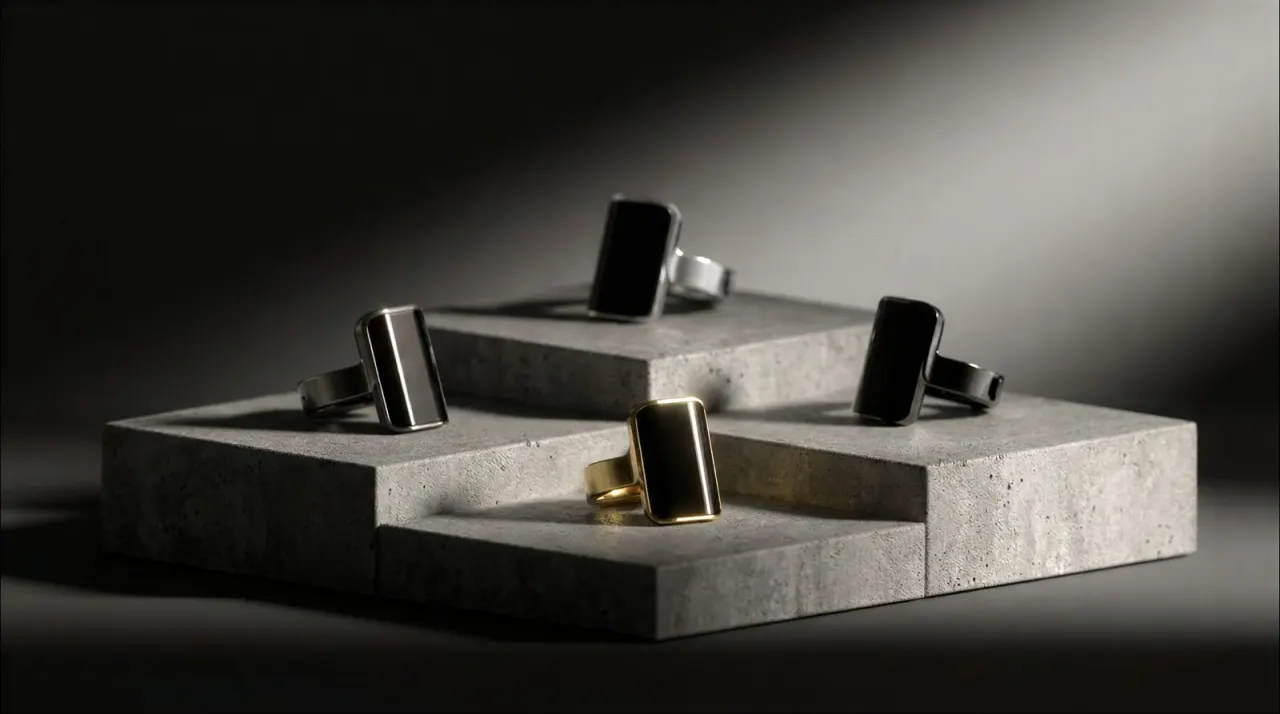
New details describe how Aina’s smart ring is intended to work as a physical control for AI agents, letting users approve or reject suggested actions without taking out their phone. The announcement reflects an effort to make frequent interactions with AI agents quicker, though the available actions will depend partly on supported apps and services.
The titanium ring connects to Macs or iPhones and includes a small display, joystick-like button and speaker. Its assistant can use personal data and connected services to suggest actions such as playing music, booking an Uber or sending a message about being late; users can also create prompts or connect other AI agents. Preorders are open at $399 for a limited time, rising to $499 at retail, and shipping is due to begin in January 2027.
- Sources
- 2
- Outlets
- 2
- Left · Centre · Right
- 0 · 0 · 0
In short
- Aina’s ring lets users approve AI agent actions from their hand.
- It can suggest tasks using personal data and connected services.
- Preorders cost $399 before rising to $499, with shipping due in January 2027.
How this story developed
- 2 hours ago Aina specified that its assistant can draw on location, calendar and email data to suggest tasks such as booking an Uber or sending a message, while users can also set prompts or connect other AI agents.
- 2 hours ago Aina outlined a titanium smart ring that connects to Macs and iPhones, allowing users to approve or reject AI-suggested actions through a display, button and speaker, with pre-orders starting at $399 ahead of planned January 2027 shipments.
Full account
Aina is pitching its new titanium smart ring as a way to manage AI agents without repeatedly reaching for a phone. The device has a small display and a joystick-style control for reviewing and approving actions. Founder Apoorv Shankar argues that frequent requests for permission could interrupt people’s work if each one requires opening a phone. The ring is intended to make those decisions quicker, while showing whether an action has gone through.
The company says the ring can also surface suggestions based on a user’s routines and connected information, such as their calendar, location and email. These prompts, which Aina calls “Cues”, might include continuing a podcast during a morning run, arranging a regular journey or drafting a message about being late to a meeting. Users can reportedly create their own prompts in natural language. The range of available actions will depend on which apps and services Aina supports; the company says other AI agents can also be connected to carry out tasks through virtual browsers.
The ring builds on Mirage, a three-button controller Aina showed at CES 2026 under the name Project Mirage. That device offered shortcuts tied to the app in use on a Mac, such as meeting controls. The new ring adds a screen, microphone, speaker and gesture controls. Aina says it can be used to talk to agents, dictate or record notes, take calls, manage notifications, control music and operate some smart-home devices. Shankar previously led hardware at Ultrahuman, whose health-tracking ring competed with Oura.
Aina has opened pre-orders at an introductory price of $399, with the price due to rise to $499 after the early-bird period. The company expects to begin shipping in January 2027. It raised $5.5 million in July, according to TechCrunch. The two reports frame the product somewhat differently: one centres on approving actions from proactive agents and Aina’s routine-based suggestions, while the other presents a broader ring-shaped controller for AI and conventional apps, alongside hands-on observations. TechCrunch describes using it for notifications, meetings, Uber and occasional Apple TV control, but says the software is still taking shape and its place in daily use is uncertain. Both accounts present the device as part of a wider push to build dedicated hardware for people using multiple AI agents.
Where outlets differ
From the full account, which is AI-written from the sources:
The first report calls the product the Aina Ring and focuses on agent approvals, contextual prompts and the company’s design rationale. TechCrunch calls it an “AI ring” and gives more attention to its microphone, speaker, calls, dictation and general app controls.
TechCrunch includes a short hands-on account and mentions competing smart rings and other agent-focused hardware. The first report instead gives more background on Shankar’s Ultrahuman role and Aina’s CES predecessor, Mirage.
The first report says the ring connects to Macs or iPhones and describes third-party services including Uber and Spotify. TechCrunch adds specific examples from its use, including notifications, meeting information and Apple TV control. Both reports note that the product’s software or supported actions remain limited or unfinished.
Steelman: both sides, in good faith
The strongest fair case each way — we don't pick a winner.
The case for
A dedicated wearable could make AI agents more useful in everyday moments by letting people review and approve suggested actions without taking out a phone. Its small controls may offer a quick, convenient way to manage tasks, while user-defined prompts and connections to other agents could give it flexibility beyond the maker’s own assistant.
The case against
A separate $399–$499 device may add cost and complexity for tasks that a phone can already handle, and its value will depend on how reliably it works with the apps and services people use. Giving an assistant access to location, calendar and email also raises reasonable questions about privacy and whether users can confidently understand what they are approving.
Explained simply
AI agents are software assistants that can use information and connected services to carry out tasks, such as choosing music or arranging a ride. Their usefulness depends on which apps and services they can access, and on what information a user allows them to use.
Aina is developing a titanium ring that pairs with Macs and iPhones and gives users a small display, a button and a speaker to interact with an assistant. The idea is to let people review suggested actions and approve or reject them without reaching for a phone, making frequent exchanges with an AI assistant more convenient.
Coverage · 2 sources
AI Business Companies Technology