World news and discussion on TalkFuse.
Over 600,000 rally across France to demand higher wages, school funding
Developing story first seen 2 hours ago
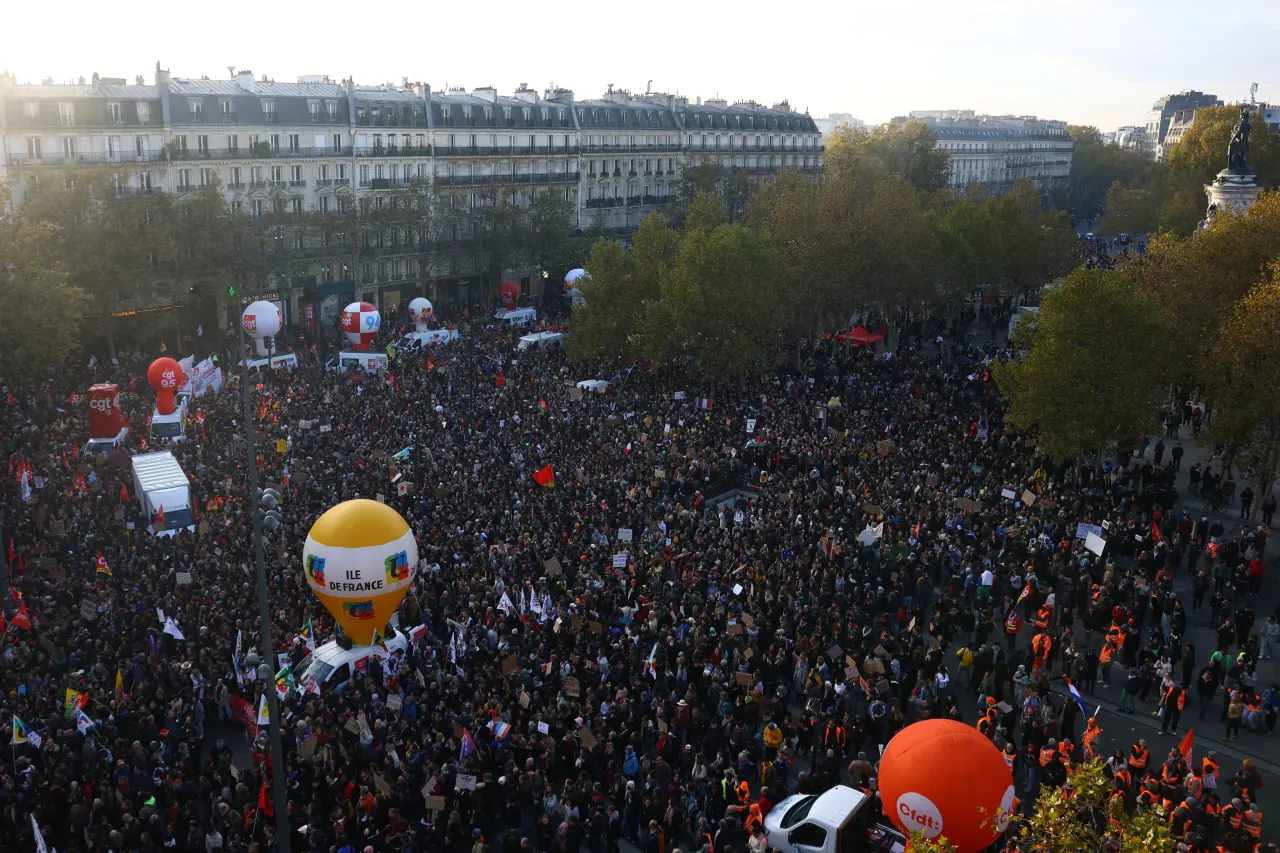
No revised figures or other clear updates appear in the added coverage: France’s Interior Ministry still puts Thursday’s turnout at more than 600,000, provisionally. The rallies, held in Paris and across the country, pressed for higher wages and school funding, adding to pressure on a government already facing weeks of protests.
Most demonstrations were peaceful, though authorities reported tensions and incidents in several cities. About a third of high schools were closed or unable to operate, public transport was disrupted in some areas, and the Eiffel Tower shut; 70,000 police were deployed. Unions warned of recession and rising layoffs as the movement, which began with students’ concerns about school staffing, widened to include workers seeking better pensions and relief from rising living costs.
- Sources
- 2
- Outlets
- 2
- Left · Centre · Right
- 0 · 1 · 1
In short
- More than 600,000 people rallied across France, according to provisional figures.
- Protesters demanded higher wages and better-funded schools.
- Disruptions and incidents accompanied weeks of demonstrations.
How this story developed
- 48 minutes ago More than 600,000 people rallied across France on Thursday, according to provisional Interior Ministry figures, demanding higher wages and better-funded schools.
- 60 minutes ago No revised figures or other clear updates appear in the added coverage: France’s Interior Ministry still puts Thursday’s turnout at more than 600,000, provisionally.
Full account
More than 600,000 people took part in demonstrations across France on Thursday, according to provisional figures from the Interior Ministry. The rallies brought together workers, students and retirees calling for higher pay and action on the cost of living. They also voiced concerns about public services and young people’s prospects. The government faced renewed pressure after a month of recurring protests, including student-led actions.
Large gatherings were reported in Paris, Lyon, Marseille and other cities. Five trade unions representing public and private sector workers organised the protests, with unions across education, rail, hospitals, postal services and energy joining the action. Their demands included increases to the minimum wage and wages more broadly, tax changes, better conditions for students, and improved public services. Unions said prices for essentials, housing and energy were rising while wages and pensions were lagging.
The disruption varied by location. About a third of France’s high schools were closed or unable to operate because of student blockades or teacher strikes; the Education Ministry put the share of teaching staff on strike at just over 15%. Public transport was affected in some areas, although reports cited only minor expected disruption to long-distance rail services. The Eiffel Tower was closed for the day. Police deployments numbered about 70,000, backed in some places by specialist vehicles and aircraft.
Most demonstrations were described as peaceful, but authorities and media also reported clashes and other incidents. Police used tear gas in Paris, and there were reports of confrontations involving riot police in Lyon. Officials in Brittany said masked people tried to block roads in Rennes and reported violence there; separate reports described incidents in several other cities, while a broadcaster reported a fire at a high school near Toulouse. The protests follow violent episodes at some earlier demonstrations, which President Emmanuel Macron blamed on ultra-left groups. Unions, meanwhile, warned of recession risks and mounting lay-off plans, while participants described the rallies as a broader effort to secure economic security and a better future for young people.
Where outlets differ
From the full account, which is AI-written from the sources:
The reported crowd total is presented as provisional by the Interior Ministry in the first account. The second gives the minister’s reported rise in the count from 270,000 during the afternoon to 600,000 by evening.
The first account gives more attention to wage and pension demands, workers’ experiences and the economic outlook, including concerns raised by healthcare staff and unions. The second sets out a wider list of union demands, including tax reform and improved learning conditions, and reports the Education Ministry’s strike figure and expectations for long-distance rail services.
Descriptions of disorder differ in scope and detail. The first reports tensions or incidents in several named cities and details allegations by Brittany authorities; the second specifically mentions tear gas in Paris, clashes in Lyon and a broadcaster’s report of a school fire near Toulouse. Both say most demonstrations were peaceful overall, while noting incidents.
Centre outlets 1
Only here: protest, anger, grows, cost, living
Right-leaning outlets 1
Only here: rally, across, demand, higher, wages
Every side used: france
Headline columns compared word for word; nothing in them is AI-written.
Steelman: both sides, in good faith
The strongest fair case each way — we don't pick a winner.
The case for
Supporters argue that wages and pensions have not kept pace with the cost of essentials, while underfunded schools weaken public services and opportunity. They see mass demonstrations and union pressure as legitimate ways to demand action and prevent workers and pupils bearing the burden of economic strain.
The case against
Critics argue that large-scale strikes and demonstrations disrupt school, transport and other services, imposing costs on families, pupils and businesses, and that clashes can undermine public safety. They may also contend that higher public spending or wage demands should be weighed against France’s worsening economic outlook and the risk of adding pressure to jobs and public finances.
Explained simply
France’s president, Emmanuel Macron, leads a government that sets national policy on wages, public services and spending. Trade unions represent workers and organise strikes and demonstrations to press for changes to pay and working conditions.
Public schools and transport are largely funded or run by the state, so disputes over budgets and staffing can affect daily life as well as public finances. With the cost of essentials rising and wages and pensions seen as lagging, unions say households and workers are under pressure; economic concerns are also shaping debate as France looks towards choosing Macron’s successor.
Coverage · 2 sources
Bias meters
From 2 rated sources.