Technology news and discussion on TalkFuse.
Beau Lamarre-Condon trial live updates: former police officer tells court of fatal confrontation with Jesse Baird and Luke Davies
Developed over time first seen 2 hours ago
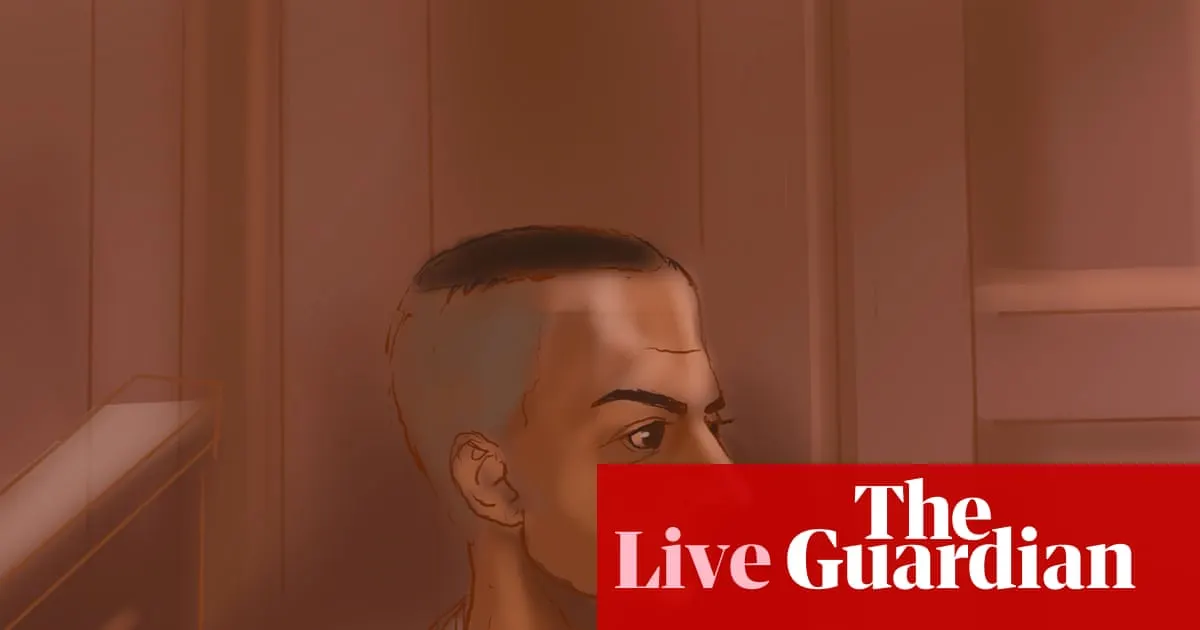
Former police officer Beau Lamarre-Condon told a jury he once fired his gun in the Royal National Park to test how loud it was while considering taking his own life. The account came during his trial over the deaths of Jesse Baird and Luke Davies, and offered the court background on his thoughts and handling of the firearm.
Lamarre-Condon said he was careful to ensure the bullet would not hit anyone, but particles entered his eyes after the first shot. He said he rubbed his eyes, then put a brown paper bag over the gun before firing a second shot; he told the court the bag was not intended to change the sound.
- Sources
- 2
- Outlets
- 1
- Left · Centre · Right
- 2 · 0 · 0
In short
- Lamarre-Condon described firing his gun in the Royal National Park.
- He said he was considering taking his own life at the time.
- He told the jury a paper bag did not alter the gunshot sound.
How this story developed
- 1 hour ago Former police officer Beau Lamarre-Condon told a jury he once fired his gun in the Royal National Park to test how loud it was while considering taking his own life.
Full account
A former New South Wales police officer accused of killing Jesse Baird and Luke Davies told a Sydney court that he did not intend to shoot Baird. Beau Lamarre-Condon, who has pleaded not guilty to two counts of murder and a charge of aggravated break and enter, continued giving evidence at the New South Wales Supreme Court on Friday. He told the jury that he considered himself guilty of manslaughter. The prosecution alleges that he fatally shot Baird and Davies with his police firearm at Baird’s Paddington home on 19 February 2024. His account of the confrontation is disputed and remains for the jury to assess.
Describing the shooting, Lamarre-Condon said he believed Baird had a knife and that his own life was in immediate danger. He said he ordered Baird to drop it and reacted in a fraction of a second, drawing on his police training to aim at the centre of the body. Baird’s mother, Helen, left the courtroom as he gave this evidence. Lamarre-Condon also told the jury that, on an earlier occasion when he had been thinking about taking his own life, he had fired his gun at a tree in the Royal National Park to find out how loud it was. He said he had taken care that the bullet would not strike anyone.
The court heard his account of the days leading up to the deaths. Lamarre-Condon said he had signed out his firearm for a shift three days beforehand with permission and had stopped at a shopping centre for a car wash on his way to work. He said he had considered going to Baird’s home then to collect his belongings. On 19 February, he said, he wanted to retrieve a surfboard, clothes and a Cartier ring. He told the jury he drove his mother’s car because he did not want to be recognised, looked along Baird’s street for Baird’s vehicle and parked near the house. He said he hoped to avoid meeting Baird, who had previously asked him to stop contacting him. The supplied account of this part of his evidence ends as he describes noticing clothing near what he took to be a delivery motorcycle; it does not establish what he did next.
Lamarre-Condon also described visiting a friend two days after the alleged killings with the bodies in a van. The friend, identified in court by the pseudonym Elizabeth Kennedy, was shown Baird’s head, according to his evidence. He said he warned her that she could face a charge as an accessory. When he raised going to the police, he testified, she discouraged him because she thought officers might not believe him. He said she referred to Taylor Swift’s song No Body, No Crime and believed he could be killed in prison. These are Lamarre-Condon’s claims about the conversation; the supplied reports do not include Kennedy’s account.
Where outlets differ
From the full account, which is AI-written from the sources:
Source 1 concentrates on Lamarre-Condon’s account of his visit to Elizabeth Kennedy and her alleged advice after the deaths. Source 2 concentrates on his description of the shooting, his claimed fear for his life, and his actions before going to Baird’s home. The reports cover different portions of his evidence and do not provide competing accounts of the same exchange.
Coverage · 2 sources
Bias meters
From 2 rated sources.