Technology news and discussion on TalkFuse.
Blue Origin plans stronger New Glenn engine and new lunar stage
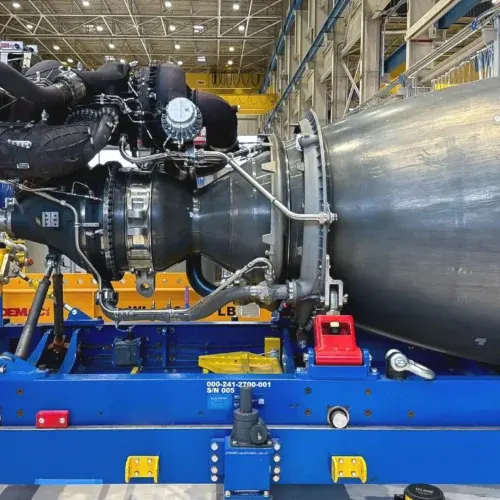
Blue Origin has announced two New Glenn upgrades intended to lower launch costs and carry more payload to geostationary orbit and the Moon. The plans pair a more powerful first-stage engine with a new third stage, as the company seeks to expand the rocket’s capabilities and launch capacity.
The Northstar engine is already being test-fired and is designed to have 715,000 pounds of thrust, compared with 640,000 for the BE-4. Blue Origin says it has half as many parts, is 30 per cent lighter, and could cost a quarter as much to manufacture; the company will still make BE-4 engines for United Launch Alliance. The hydrogen-fuelled GS3 third stage is intended for a 2028 debut: Blue Origin says it could carry 8 or 14 tonnes to geostationary orbit, and 10 or 20 tonnes to translunar injection, depending on New Glenn’s configuration. The company says a composite hydrogen tank passed pressure tests, including one at 150 per cent of expected operating pressure.
In short
- Blue Origin is testing a more powerful New Glenn engine.
- It says Northstar could cost a quarter as much as BE-4.
- A new third stage could debut for a government customer in 2028.
Steelman: both sides, in good faith
The strongest fair case each way — we don't pick a winner.
The case for
The upgrades could make New Glenn more capable and less costly, helping Blue Origin compete for launches and deliver larger payloads to orbit or the Moon. A simpler, lighter engine and a hydrogen-fuelled upper stage could also broaden mission options, while continued BE-4 production would preserve supply for United Launch Alliance.
The case against
The advertised performance and savings are company claims, and the new engine and lunar stage still need to demonstrate reliability in flight before customers can count on them. Developing and integrating new hardware may bring delays or added costs, and investing in these upgrades could divert resources from proving the existing rocket’s launch cadence and dependability.
Explained simply
New Glenn is a large, partly reusable rocket developed by Blue Origin, the space company founded by Jeff Bezos. Its first stage uses BE-4 engines, which are also made for United Launch Alliance, a separate US rocket company.
The rocket is designed to launch satellites and carry supplies or equipment towards the Moon. Geostationary orbit is a high orbit where satellites stay above the same point on Earth; translunar injection is the path that sends a spacecraft from Earth towards the Moon.
A rocket’s engine and upper stages affect how much it can carry and where it can send it. Blue Origin’s planned changes could expand New Glenn’s uses and reduce some costs, but the new stage is not expected to debut until 2028.
Read the full article at the source →
Originally published by Ars Technica as “Blue Origin says it is building a higher-performing rocket engine at 1/4 the cost”.