Technology news and discussion on TalkFuse.
Taiwan Audience Study Highlights Cross-Platform IP Opportunities as AI Raises New Risks for Content Industry
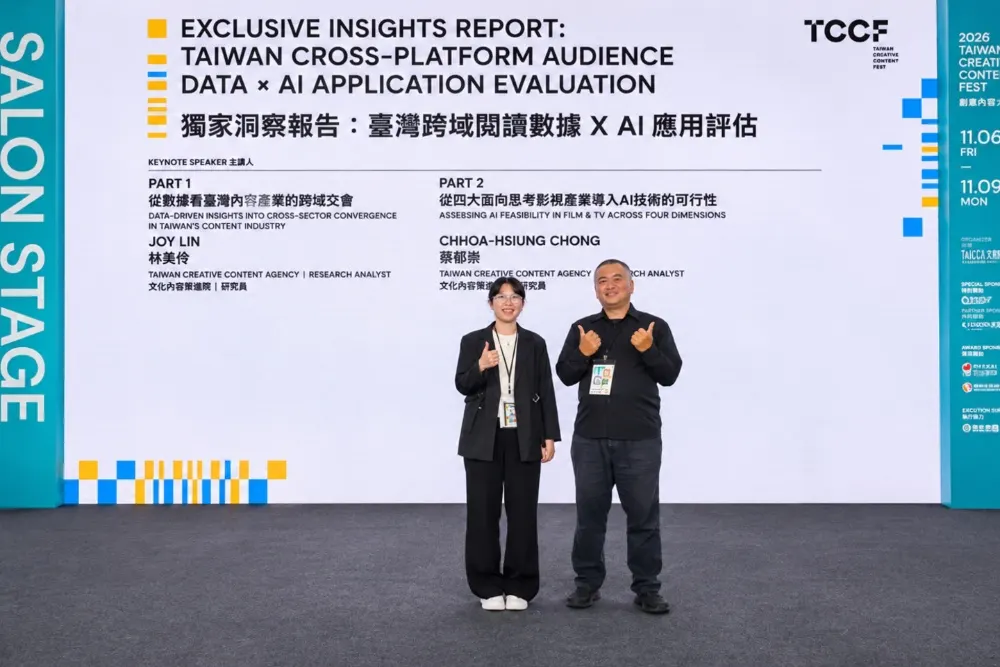
A study presented by Taiwan’s creative content agency found that audiences regularly consume entertainment across film, television, music, publishing and gaming, creating opportunities to develop intellectual property across platforms. Its findings also point to growing AI use in production, alongside legal, technical and consumer concerns that could affect how the industry adopts the technology.
In an annual survey of about 2,000 people, 96% watched audiovisual content in 2025, while 75% read published works and 75% played video games; 90% engaged with both audiovisual content and music. A separate survey of 2,018 people found romance could connect screen stories with comics, music and mobile games. Industry estimates cited at the event put AI adoption at 70% to 85% in post-production and visual effects, but the presentation noted workflow limits and 153 AI-related legal cases involving creative industries; surveys also showed resistance to fully synthetic performers and support for labelling AI-generated content.
In short
- Taiwan’s audiences consume entertainment across several formats.
- Romance could link screen stories with comics, music and games.
- AI adoption brings production opportunities and unresolved concerns.
Steelman: both sides, in good faith
The strongest fair case each way — we don't pick a winner.
The case for
The findings suggest audiences already move between media, giving creators and rights holders a sound basis to develop stories and characters across formats. Used carefully, AI could also help with post-production and visual effects, while clear labelling and safeguards could address concerns about its use.
The case against
Cross-platform expansion may encourage companies to prioritise repeatable franchises over distinctive work, even if audiences consume several media. AI adoption also raises unresolved legal and workflow questions, and resistance to synthetic performers suggests that using it without clear limits or disclosure could undermine trust in creative work.
AI Entertainment Film Gaming Music Research Science Technology