Politics news and discussion on TalkFuse.
Congress Has a Chance To Fix the Endangered Species Act
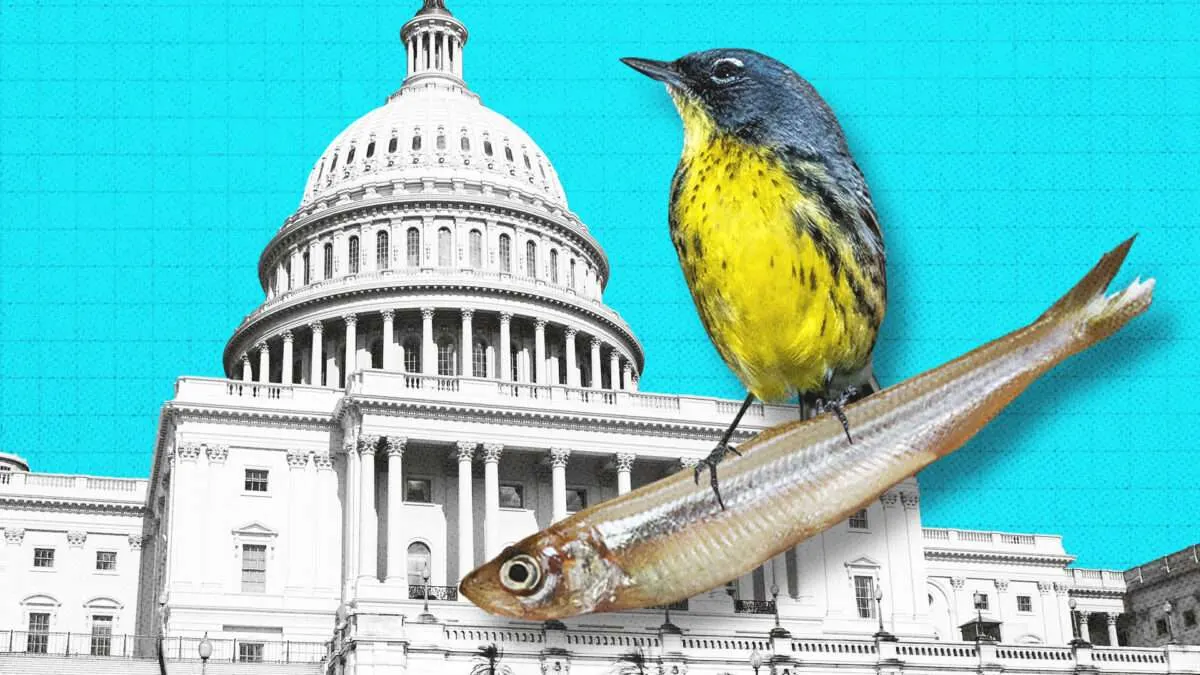
The article argues that Congress should use a proposed permitting bill, the Bipartisan American Affordability and Jobs Act, to clarify how the Endangered Species Act (ESA) is applied. Its authors say clearer rules could help the law recover threatened species while reducing uncertainty and delays for infrastructure, energy projects, landowners and businesses.
The article says only 57 of the 1,732 species listed under the ESA in its first 50 years were delisted because of recovery, citing a 2023 analysis. It also points to the Delta Smelt case: in 2008, federal restrictions on water projects were imposed to protect the fish, affecting water deliveries to California farmers. The bill would define the “best available science” standard and set criteria for assessing evidence, including whether models account for errors and use accepted methods.
In short
- The bill would clarify scientific standards used under the Endangered Species Act.
- Only 57 of 1,732 listed species were delisted after recovery.
- The authors say clearer rules could reduce uncertainty and project delays.
Steelman: both sides, in good faith
The strongest fair case each way — we don't pick a winner.
The case for
Clarifying how the Endangered Species Act evaluates evidence could make decisions more consistent and predictable while retaining the law’s conservation purpose. Supporters argue that transparent standards for scientific models may reduce avoidable delays and disputes, helping infrastructure, energy and water projects proceed while directing protection towards measures supported by robust evidence.
The case against
The ESA’s low number of recovery-based delistings may point to the difficulty of restoring species, rather than a need to loosen or redefine its safeguards. Opponents could argue that setting more prescriptive criteria for “best available science” risks excluding relevant evidence or slowing urgent protections, while uncertainty and project delays are sometimes necessary costs of preventing irreversible harm to wildlife and ecosystems.
Elections Environment Government Politics Science