Weird & Viral news and discussion on TalkFuse.
Video: Zelda: Ocarina Of Time Side-By-Side Graphics Comparison (Switch 2, 3DS, N64)
Developed over time first seen 1 day ago
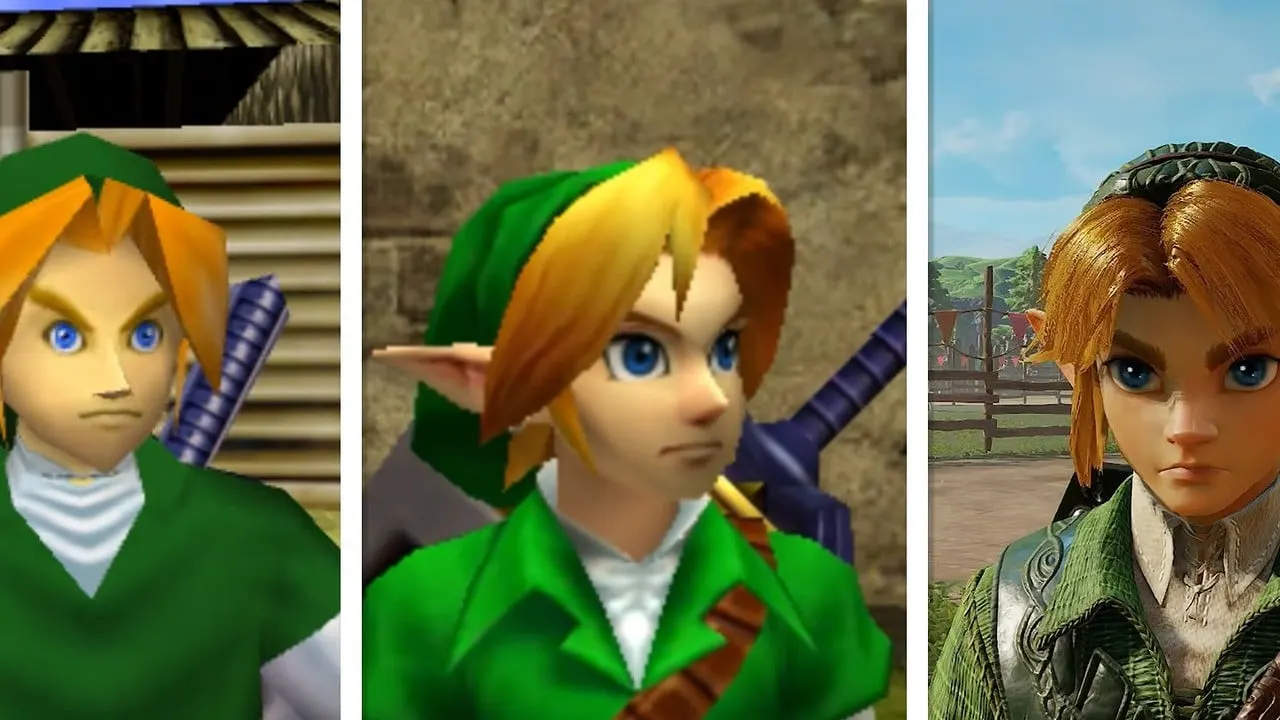
A graphics comparison video shows how the Switch 2 remake of The Legend of Zelda: Ocarina of Time differs from the 3DS and original N64 versions. It examines character models, environments, physics and locations, giving players a way to see how the game has changed across releases.
The Switch 2 version runs at 60 frames per second, compared with 20fps on N64. Its resolution ranges from 1080p to 1440p when docked and from 720p to 1080p in handheld mode. The article describes the remake as a major visual update, while noting that its review mentioned some minor blemishes.
- Sources
- 2
- Outlets
- 1
- Left · Centre · Right
- 0 · 0 · 0
In short
- A new video compares the remake with the 3DS and N64 versions.
- Switch 2 runs at 60fps; the N64 original ran at 20fps.
- Resolution varies by play mode.
How this story developed
- 22 hours ago A graphics comparison video shows how the Switch 2 remake of The Legend of Zelda: Ocarina of Time differs from the 3DS and original N64 versions.
Full account
A new side-by-side video compares the graphics of The Legend of Zelda: Ocarina of Time across its Nintendo 64, Nintendo 3DS and Switch 2 releases. Published by the YouTube channel ElAnalistDeBits, the comparison looks at character models, environments and familiar locations, giving viewers a way to see how the presentation has changed across the three versions.
The Nintendo 64 original provides the starting point for that comparison. Its 2011 3DS release revised the game’s appearance for a handheld screen, while the reported Switch 2 remake makes more extensive visual changes. The video’s close views of characters and locations should help viewers judge those changes for themselves, including whether they prefer the look of an earlier version.
Nintendo Life reports that the Switch 2 version runs at 60 frames per second, compared with 20 frames per second for the Nintendo 64 release. Citing Digital Foundry, it also gives the newer version’s resolution as ranging from 1080p to 1440p when docked and from 720p to 1080p in handheld play. Those figures describe technical differences; they do not, on their own, settle which version’s artistic style a player might favour.
The comparison arrives amid renewed attention to Ocarina of Time’s history. Nintendo Life has also revisited the cover art used for its different releases, from the restrained gold and black designs of the Nintendo 64 era to later images of Link, Epona and Hyrule. That separate look at the game’s packaging underlines how many interpretations of Ocarina of Time players may have in mind when they watch the footage. The video offers a direct view of the games themselves, leaving the choice of a favourite presentation to the viewer.
Where outlets differ
From the full account, which is AI-written from the sources:
Source 1 focuses on the graphics comparison and reports performance and resolution figures for the Switch 2 version. Source 2 discusses regional box art across releases; it provides historical context but no independent assessment of the video or its technical claims.
Explained simply
The Legend of Zelda: Ocarina of Time is an action-adventure game first released for Nintendo 64 in 1998. Players guide Link through a fantasy world, solving puzzles, exploring locations and fighting enemies.
The game has since appeared on other Nintendo systems, including the 3DS, with changes to its presentation and controls. Comparing versions can show how technology has affected the look and feel of the same game over time.
Nintendo’s Switch 2 is a newer console that can be played on a television or as a handheld device. Frame rate describes how smoothly movement appears, while resolution affects image detail; both can vary between systems and play modes.