Science news and discussion on TalkFuse.
Australia and Turkey share leadership of divided Cop31 talks
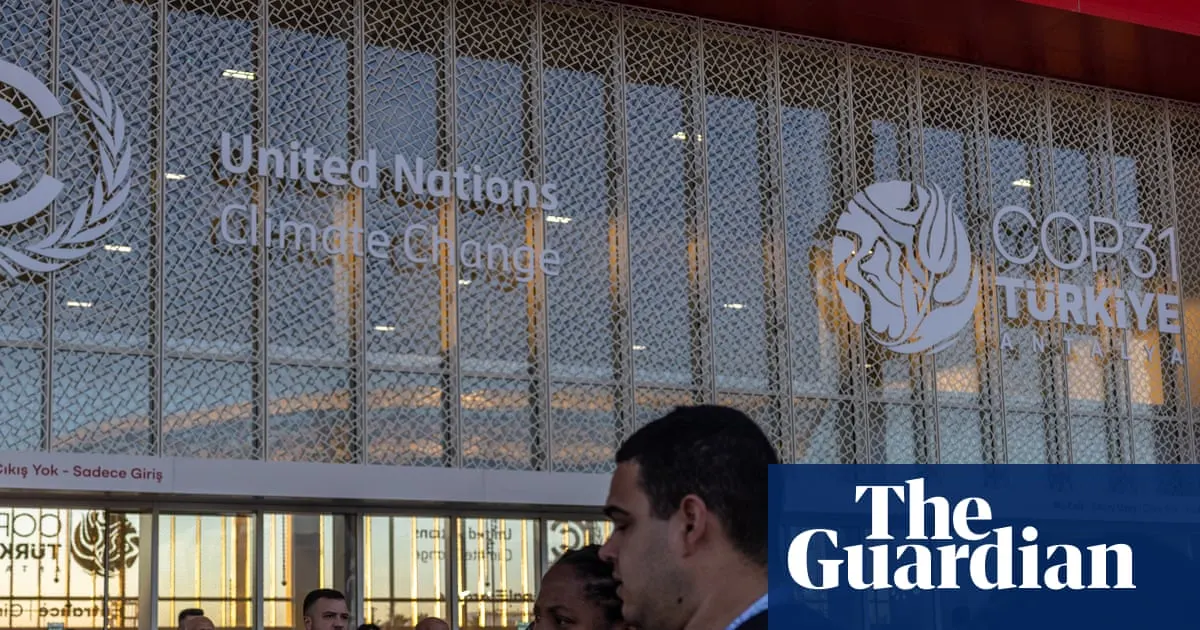
Cop31 is being held in Antalya, Turkey, under an unusual compromise: Australia will lead the climate negotiations while Turkey controls the agenda of voluntary initiatives. The arrangement followed a bitter dispute over hosting, and the article says Australia has appeared to some to be a less engaged host than previous countries.
The talks bring together leaders with competing interests. Australian minister Chris Bowen will run negotiations while balancing support for fossil fuels with the shift to clean energy; Turkey’s environment minister Murat Kurum oversees the action agenda, including a focus on recycling. Brazil’s President Lula da Silva is bringing non-binding plans to move away from fossil fuels and halt deforestation, while China, the world’s largest greenhouse gas emitter, will be represented by officials rather than President Xi Jinping. The International Energy Agency’s Fatih Birol is associated with the summit’s emphasis on electrification.
In short
- Australia leads negotiations in Antalya, while Turkey sets the voluntary action agenda.
- Leaders bring competing priorities on fossil fuels, electrification and deforestation.
- China’s officials attend, though President Xi Jinping will not.
Steelman: both sides, in good faith
The strongest fair case each way — we don't pick a winner.
The case for
The shared leadership can be defended as a pragmatic compromise that lets the talks proceed despite the dispute over hosting. Australia can use its role in negotiations to bridge countries with different energy interests, while Turkey can direct voluntary initiatives towards practical action such as recycling and electrification.
The case against
The split leadership may blur responsibility and weaken the summit’s ability to set a coherent direction, especially if negotiation priorities and voluntary initiatives pull apart. Australia’s balancing of fossil fuel support and clean energy, alongside its reportedly less engaged hosting, may also raise doubts about whether the talks will receive sustained leadership.
Explained simply
The United Nations climate talks, known as COP, bring countries together to discuss how to limit climate change and respond to its effects. Governments differ over how quickly to cut the use of coal, oil and gas, and how to share the costs of moving to cleaner energy.
Australia’s climate minister, Chris Bowen, is leading the formal negotiations, while Turkey’s environment minister, Murat Kurum, is responsible for a separate programme of voluntary initiatives. Their shared roles follow a dispute over where the talks should be held. Brazil’s President Luiz Inácio Lula da Silva is bringing non-binding proposals on fossil fuels and deforestation, while China, the largest emitter of greenhouse gases, is sending officials rather than President Xi Jinping.
The talks matter because agreements between countries can shape climate policy and investment, even though each government decides how to act at home. The summit also features a focus on electrification, associated with International Energy Agency head Fatih Birol, and on practical measures such as recycling.
Climate Elections Geopolitics Government Politics Science World
Read the full article at the source →
Originally published by The Guardian as “Who’s who at Cop31: key players at the climate talks”.