Politics news and discussion on TalkFuse.
Eisenkot gets first opportunity to form Israel’s next government
Developed over time first seen 1 day ago
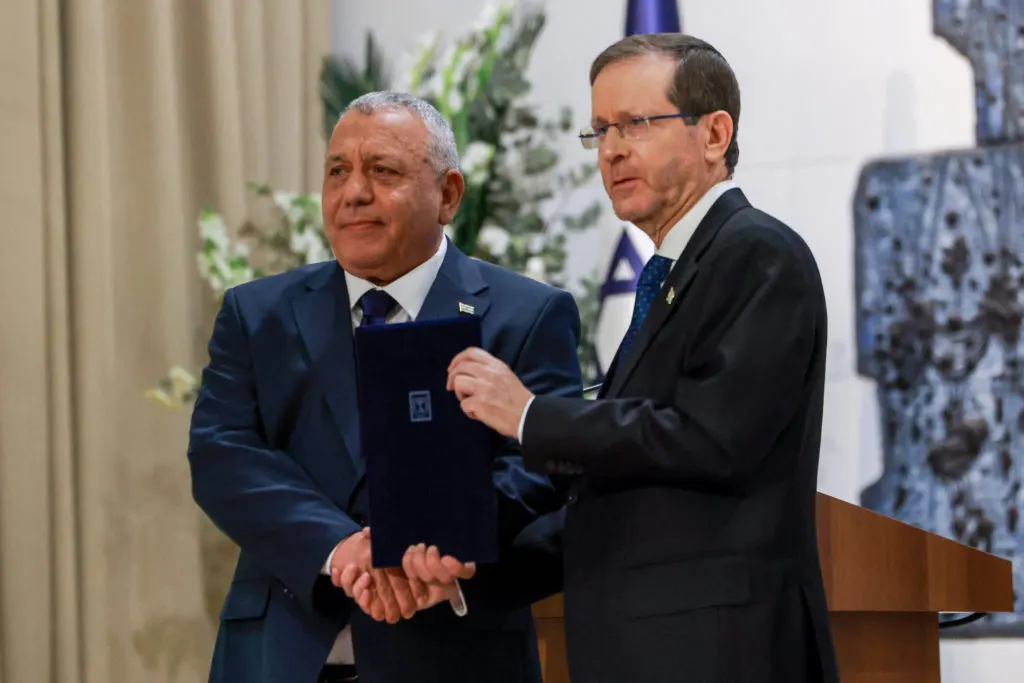
President Isaac Herzog has formally tasked opposition leader Gadi Eisenkot with trying to form Israel’s next government, giving the former army chief the first chance to build a coalition after the election. The move is a setback for Benjamin Netanyahu, but it does not guarantee Eisenkot will become prime minister: neither bloc won a clear parliamentary majority, and coalition talks remain difficult.
Eisenkot has up to six weeks to secure support in the 120-seat Knesset, where 61 seats are needed for a majority. Arab-led parties made gains and may help him; Ra’am has pledged support, while the Joint List has offered backing from outside a coalition, an unprecedented step. Eisenkot’s partner Yisrael Beytenu opposes a coalition with Arab-led parties, and Eisenkot says prospective partners must accept Israel as a Jewish and democratic state and support military, national or civil service for all citizens.
- Sources
- 4
- Outlets
- 4
- Left · Centre · Right
- 2 · 2 · 0
In short
- Herzog gave Eisenkot the first chance to form a government.
- Neither bloc won a clear Knesset majority.
- Arab-led parties could be pivotal, but cooperation is contentious.
How this story developed
- 18 hours ago Eisenkot’s potential reliance on Arab-led parties remained contentious, with one offering support from outside government and his Yisrael Beytenu partner rejecting a coalition with them.
- 1 day ago Seat totals showed Benjamin Netanyahu’s bloc with 53 seats, Eisenkot’s with 48 and Arab-led parties with 19, leaving all sides short of the 61 needed to govern.
- 1 day ago Isaac Herzog gave opposition leader Gadi Eisenkot the first chance to form Israel’s next government, but neither bloc had a clear majority and coalition talks looked difficult.
- Al Jazeera Jerusalem Daily: Eisenkot picked over Netanyahu to form government
- The Guardian Gadi Eisenkot reaches out to Netanyahu allies as he strives to form government
- PBS NewsHour Eisenkot gets first opportunity to form Israel’s next government
- France 24 Gadi Eisenkot receives mandate to form government
Where outlets differ
Left-leaning outlets 2
- Jerusalem Daily: Eisenkot picked over Netanyahu to form governmentAl Jazeera
- Gadi Eisenkot reaches out to Netanyahu allies as he strives to form governmentThe Guardian
Only here: netanyahu, jerusalem, daily, picked, reaches
Centre outlets 2
- Eisenkot gets first opportunity to form Israel’s next governmentPBS NewsHour
- Gadi Eisenkot receives mandate to form governmentFrance 24
Only here: gets, opportunity, israel, next, receives
Every side used: eisenkot, form, government, gadi
Headline columns compared word for word; nothing in them is AI-written.
Steelman: both sides, in good faith
The strongest fair case each way — we don't pick a winner.
The case for
Eisenkot’s backers could argue that the election produced no clear majority and that he has a legitimate chance to assemble one through negotiation. Seeking support from Arab-led parties, including support from outside the coalition, could reflect the parliamentary arithmetic and give voters a government able to command confidence while upholding agreed civic and security principles.
The case against
Critics could argue that a coalition dependent on parties whose positions or priorities conflict with those of its other members may be unstable or unable to govern effectively. They may also say that excluding Arab-led parties from government, or refusing their support on the proposed terms, better protects shared policy commitments and avoids forming a majority whose members disagree on fundamental questions.
Explained simply
Israel’s parliament, the Knesset, has 120 seats, and a government needs the support of at least 61 members to command a majority. Because no single party usually wins enough seats, parties negotiate after an election to assemble a coalition government.
The president formally asks a lawmaker to try to build that coalition, but the role does not decide who becomes prime minister. Gadi Eisenkot is a former army chief who leads an opposition alliance; Benjamin Netanyahu, a long-serving prime minister, leads the rival bloc. Arab-led parties also hold seats and can influence whether either side can gather enough support.
Coalition talks matter because the parties that join, or support a government from outside it, can shape its policies and stability. Disagreements over who may take part and what conditions they must accept can affect whether a government can be formed.
Coverage · 4 sources
Bias meters
From 4 rated sources.
- PBS NewsHourCentreEisenkot gets first opportunity to form Israel’s next government
- Al JazeeraLeftJerusalem Daily: Eisenkot picked over Netanyahu to form government
- The GuardianLeftGadi Eisenkot reaches out to Netanyahu allies as he strives to form government
- France 24CentreGadi Eisenkot receives mandate to form government
Government Middle East Politics World
Read the full article at the source →
Originally published by PBS NewsHour as “Israel’s president formally gives Eisenkot the first chance to form the next government”.