Politics news and discussion on TalkFuse.
Social unrest ahead of French elections: Protesters ‘don’t believe politics can achieve anything’
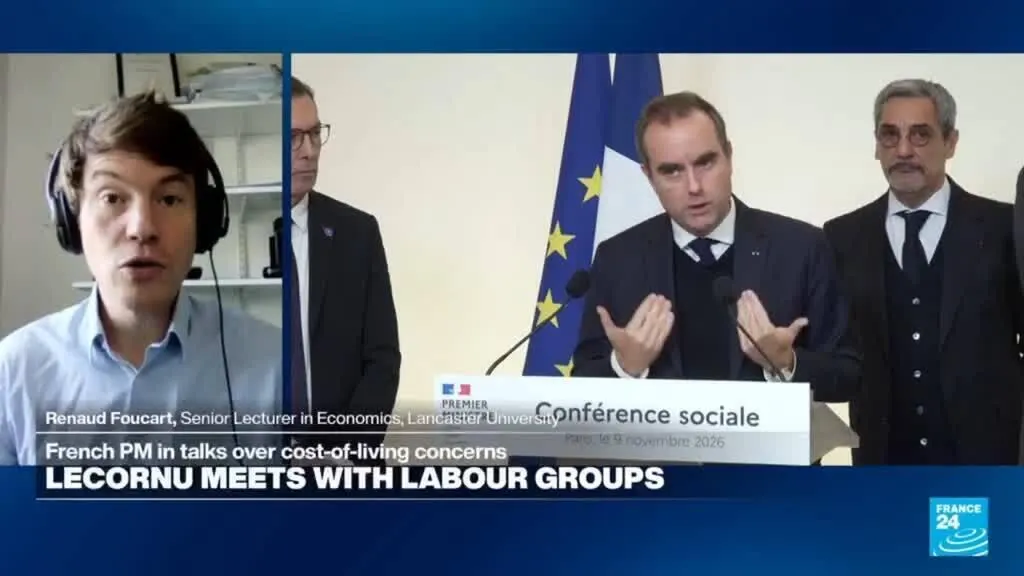
France’s 1.6% minimum-wage increase, introduced in response to countrywide protests, may ease unrest temporarily but is unlikely to resolve the country’s deeper political crisis. Economist Renaud Foucart argues that the demonstrations reflect a wider loss of confidence in politics and its ability to bring about change.
The protests come amid concerns about declining purchasing power, fiscal constraints and the limits of a minority government. Foucart says people are taking to the streets because they do not believe political action can achieve anything, with demonstrations continuing ahead of the presidential election.
In short
- France raised the minimum wage by 1.6% after countrywide protests.
- The increase may provide only temporary relief.
- An economist links unrest to deep disillusionment with politics.
Steelman: both sides, in good faith
The strongest fair case each way — we don't pick a winner.
The case for
The protests can be seen as a reasonable response to falling purchasing power and a sense that ordinary political channels have not delivered change. A minimum-wage rise may offer some immediate relief, but continued demonstrations can press leaders to address deeper economic and political concerns.
The case against
With fiscal constraints and a minority government limiting what can be done, protests may not produce lasting solutions and can make governing harder. Some may argue that change is more likely through sustained political engagement and workable compromises than through demonstrations, especially when a wage increase has already been introduced.
Explained simply
France’s minimum wage is the legal hourly pay floor, and changes to it affect workers on the lowest incomes. Rising living costs have made purchasing power—the goods and services people can afford with their income—a central concern for many households.
The protests also reflect wider tensions over how France is governed. The government has limited support in parliament, while pressure to control public spending can constrain the measures it can introduce. These issues matter as the country approaches a presidential election, when voters choose the head of state.
Elections Europe Politics World