Politics news and discussion on TalkFuse.
Israel’s new Knesset opens as Eisenkot faces coalition talks
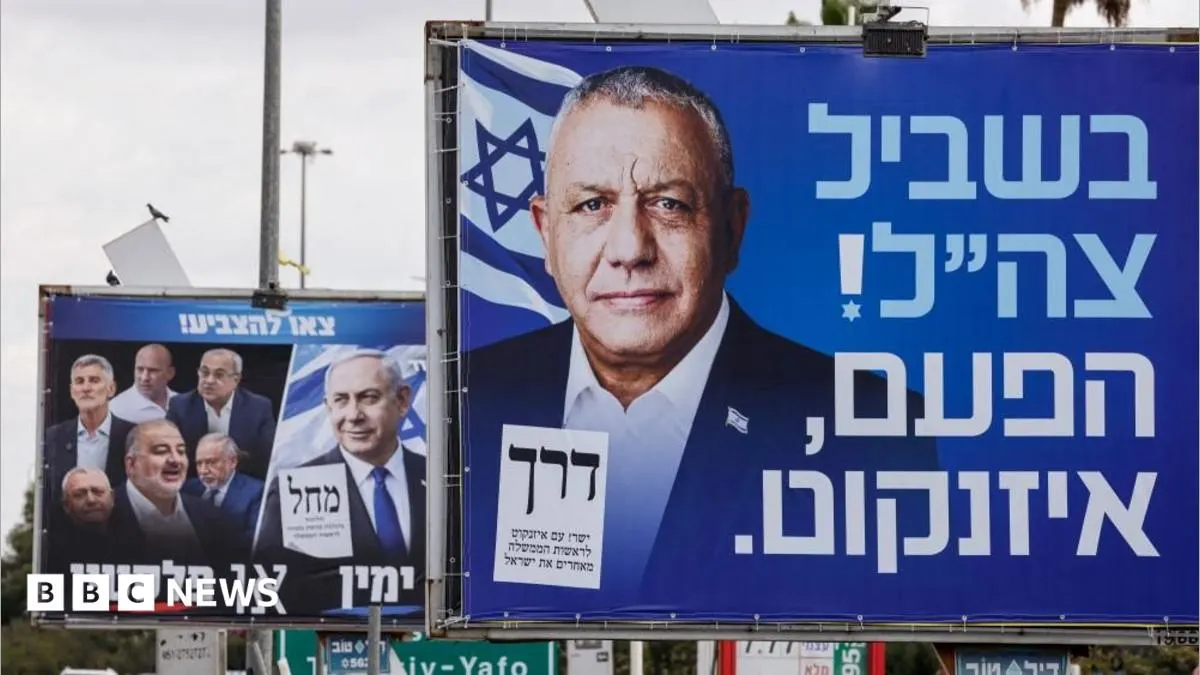
Israel’s new parliament has been sworn in amid uncertainty over who will lead the next government. Opposition leader Gadi Eisenkot has been asked to form a coalition after receiving more recommendations from MPs than caretaker Prime Minister Benjamin Netanyahu, but he must reconcile parties that disagree over potential partners and policy.
Eisenkot’s four-party bloc won 48 seats and Netanyahu’s bloc 53, short of the 61 needed for a majority in the 120-seat Knesset. Arab-led parties won a record 19 seats and could hold the balance of power, though Netanyahu rejects governing with them and some of Eisenkot’s partners oppose their inclusion. Eisenkot has 28 days, with a possible two-week extension, to assemble a government; Netanyahu remains caretaker prime minister in the meantime.
In short
- Eisenkot has been tasked with forming Israel’s next government.
- Neither main bloc has a Knesset majority.
- Arab-led parties’ record 19 seats could prove pivotal.
Steelman: both sides, in good faith
The strongest fair case each way — we don't pick a winner.
The case for
Supporters of Eisenkot argue that he should be given the chance to form a government because more MPs recommended him, and coalition talks could produce a working majority despite his bloc’s initial seat count. They may see cooperation with Arab-led parties as a legitimate way to represent voters and address shared policy concerns, while ending Netanyahu’s caretaker tenure.
The case against
Critics argue that Eisenkot’s bloc has fewer seats than Netanyahu’s and that its partners’ disagreements over Arab-led parties and policy may make a coalition unstable or unable to govern effectively. They may also contend that Netanyahu should have the first opportunity to assemble a government, given his bloc’s larger number of seats, and that rejecting certain potential partners reflects genuine political or policy differences.
Explained simply
Israel’s Knesset is the country’s 120-seat parliament. After an election, parties usually need to join together in a coalition to form a government, which must have the support of at least 61 MPs.
Gadi Eisenkot and Benjamin Netanyahu lead rival political blocs, but neither has enough seats to govern alone. The Arab-led parties, with 19 seats, could affect which side can secure a majority, although the leaders and parties disagree over whether they should be included.
Eisenkot has been given 28 days, with a possible two-week extension, to try to form a coalition. Until a new government is in place, Netanyahu remains caretaker prime minister.
Government Middle East Politics World
Read the full article at the source →
Originally published by BBC World as “Israel’s new parliament sworn in as leaders compete to form government”.