Business news and discussion on TalkFuse.
Spain sees widespread disruption in first general strike for 14 years
Developing story first seen 2 hours ago
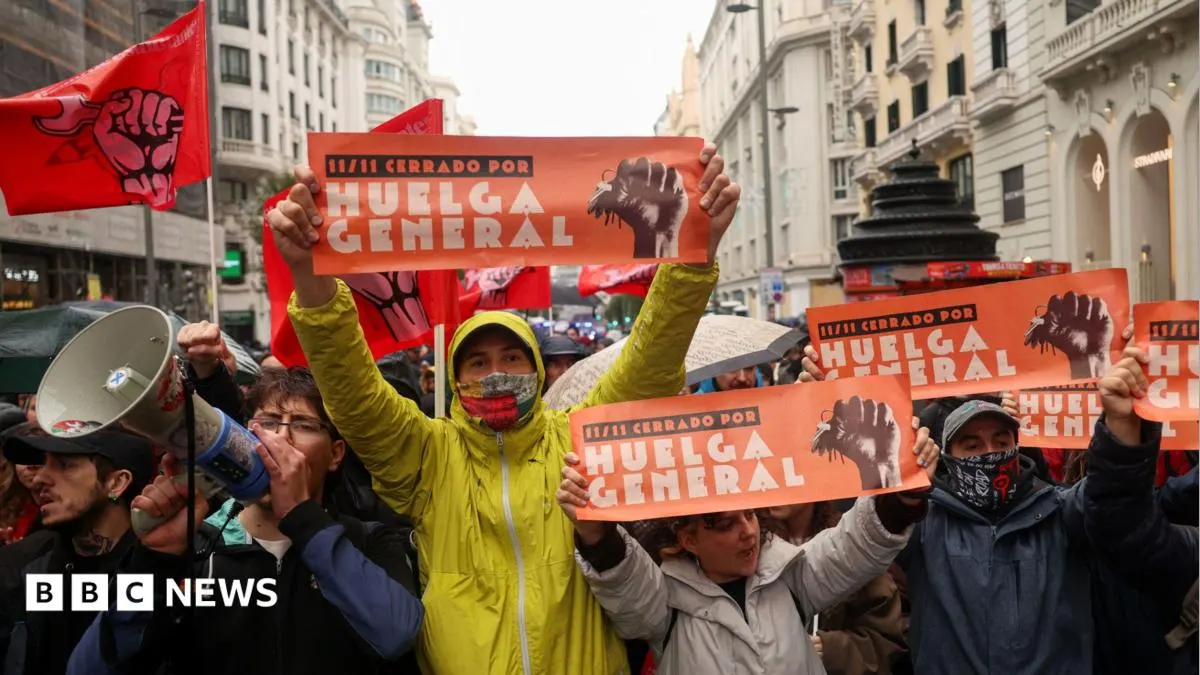
The strike has become a point of political dispute ahead of Spain’s 29 November election: Prime Minister Pedro Sánchez defended workers’ right to strike, while the conservative People’s Party accused his government of exploiting the action for electoral gain. The PP is leading in polls, and a right-wing government is seen as the most likely outcome.
Called by Spain’s main unions over housing affordability and living costs, the first general strike in 14 years disrupted transport and public services, with tens of thousands marching in Madrid and Barcelona. Unions described participation as massive or very significant, while business groups called it low and uneven; authorities reported dozens of arrests. The protests followed the eviction of 87-year-old Maricarmen Abascal, amid high rents: a 50-square-metre flat in Madrid averaged €1,170 a month in October, nearly half the average gross monthly salary.
- Sources
- 4
- Outlets
- 4
- Left · Centre · Right
- 2 · 2 · 0
In short
- Spain’s strike has sharpened the political dispute before the 29 November election.
- Unions and business groups disagree over how many workers took part.
- Madrid rents have become a central focus of protests over living costs.
How this story developed
- 10 minutes ago The new coverage centres on the strike’s political divide: Prime Minister Pedro Sánchez defended workers’ right to strike, while the conservative People’s Party accused his government of using the action for electoral gain.
- 11 minutes ago The strike has become a point of political dispute ahead of Spain’s 29 November election: Prime Minister Pedro Sánchez defended workers’ right to strike, while the conservative People’s Party accused his government of exploiting the action for electoral gain.
- 40 minutes ago Spain faced widespread disruption as workers joined a general strike over housing costs and the rising cost of living, the first such strike in 14 years.
- The Guardian Millions join Spain’s first general strike in 14 years in protest at rising housing costs
- Le Monde Spain protests over housing crisis, in first general strike in 14 years
- BBC Business Spain sees widespread disruption in first general strike for 14 years
- CNA Millions of Spaniards stage first general strike in 14 years as anger rages over housing
Where outlets differ
Left-leaning outlets 2
- Millions join Spain’s first general strike in 14 years in protest at rising housing costsThe Guardian
- Spain protests over housing crisis, in first general strike in 14 yearsLe Monde
Only here: join, protest, rising, costs, protests
Centre outlets 2
- Spain sees widespread disruption in first general strike for 14 yearsBBC Business
- Millions of Spaniards stage first general strike in 14 years as anger rages over housingCNA
Only here: sees, widespread, disruption, spaniards, stage
Every side used: millions, spain, general, strike, housing
Headline columns compared word for word; nothing in them is AI-written.
Steelman: both sides, in good faith
The strongest fair case each way — we don't pick a winner.
The case for
Supporters can argue that the strike is a legitimate way for workers to press for action on housing costs and living expenses, especially when rents consume a large share of typical earnings. Its timing before the election does not by itself invalidate the unions’ concerns or workers’ right to demonstrate, and the disruption may help bring urgent issues to public attention.
The case against
Critics can argue that unions and the government should keep workers’ concerns distinct from party campaigning, particularly so close to an election. The People’s Party’s charge of electoral opportunism reflects a concern that the strike could be used to benefit Sánchez politically, while uneven participation reported by business groups cautions against presenting it as a uniform mandate.
Explained simply
Spain’s general strike is a nationwide stoppage called by major trade unions, which represent workers in negotiations over pay and conditions. Strikes can disrupt transport and other services while workers and unions press for changes. In this case, the unions called for action over the cost of housing and everyday expenses.
Spain is a parliamentary democracy: voters elect members of parliament, and the government depends on parliamentary support. Prime Minister Pedro Sánchez leads the governing party, while the conservative People’s Party (PP) is its main rival. The unions, political parties, employers and public authorities each have different roles in debates over workers’ rights and economic policy.
Housing costs are a prominent issue, particularly in Madrid, where rents take up a large share of many people’s incomes. The strike and demonstrations have brought that pressure into public debate, alongside disagreement over how to interpret the action and its political significance.
Coverage · 4 sources
Bias meters
From 4 rated sources.
- BBC BusinessCentreSpain sees widespread disruption in first general strike for 14 years
- The GuardianLeftMillions join Spain’s first general strike in 14 years in protest at rising housing costs
- Le MondeLeftSpain protests over housing crisis, in first general strike in 14 years
- CNACentreMillions of Spaniards stage first general strike in 14 years as anger rages over housing
Business Elections Europe Politics World