World news and discussion on TalkFuse.
Something obvious happens. Then Albo shamelessly says ‘no, it didn’t’: PETER VAN ONSELEN’s list proves PM’s worst habit
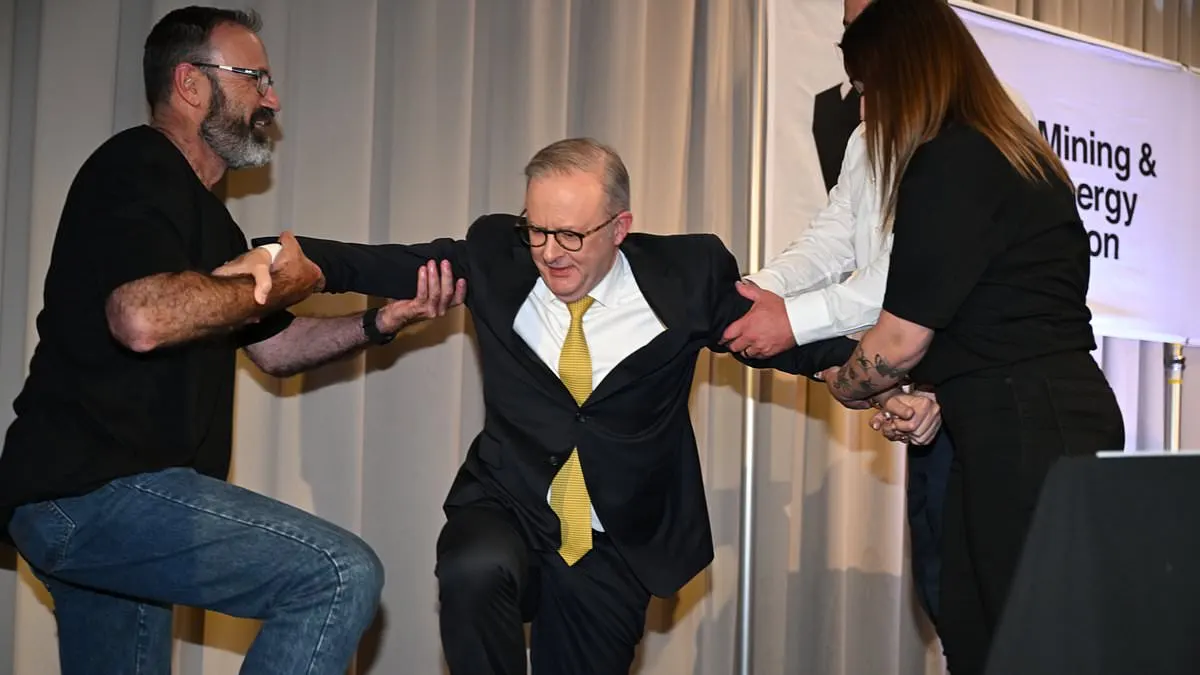
The article argues that Australian Prime Minister Anthony Albanese repeatedly denies or redefines events and policy reversals that the writer considers clear, and says this pattern has damaged public trust. It cites a poll finding that only one in five voters trust him, and contends that rebuilding that trust will be difficult.
Examples include changes to superannuation tax plans and stage-three tax cuts, failure to deliver the promised $275 reduction in electricity bills, and Albanese’s denial that he fell at a campaign event despite video footage. The article also discusses a briefing document targeting independent MP Helen Haines and $6 million in funding for a golf club redevelopment, which Albanese said was intended to address a sewerage problem; the piece is an opinion column critical of his explanations.
In short
- The writer says Albanese’s repeated denials have undermined trust.
- A cited poll found only one in five voters trust the Prime Minister.
- The column lists disputed promises and explanations.
Steelman: both sides, in good faith
The strongest fair case each way — we don't pick a winner.
The case for
A strong case for the column’s criticism is that leaders should describe policy changes and public events candidly, especially when earlier promises or video evidence make denials appear inconsistent with the facts. If voters see repeated retreats or disputed explanations, they may reasonably conclude that the government is avoiding accountability, making trust harder to restore.
The case against
A strong case against the column’s framing is that policy commitments can change as circumstances, fiscal constraints or negotiations evolve, and a revised plan is not necessarily evidence of dishonesty. Some examples may also depend on how a promise or event is defined; judging the Prime Minister’s credibility fairly requires the full context and evidence, rather than treating the writer’s interpretation of each episode as settled fact.
Explained simply
Anthony Albanese is Australia’s prime minister and leads the Labor Party. His government has changed or revised some policies since taking office, including plans for tax cuts and superannuation, while a promised reduction in household electricity bills has not been delivered as originally stated.
The column refers to these changes, as well as disputes over his account of a campaign fall and government actions involving independent MP Helen Haines and funding for a golf club redevelopment. It presents them as examples of Albanese denying or reframing events, and cites a poll about voters’ trust in him. The issue matters because public confidence can affect how people judge a government and its explanations.