World news and discussion on TalkFuse.
Chinese President Xi Jinping says Taiwan ‘reunification’ must happen as history cannot be stopped
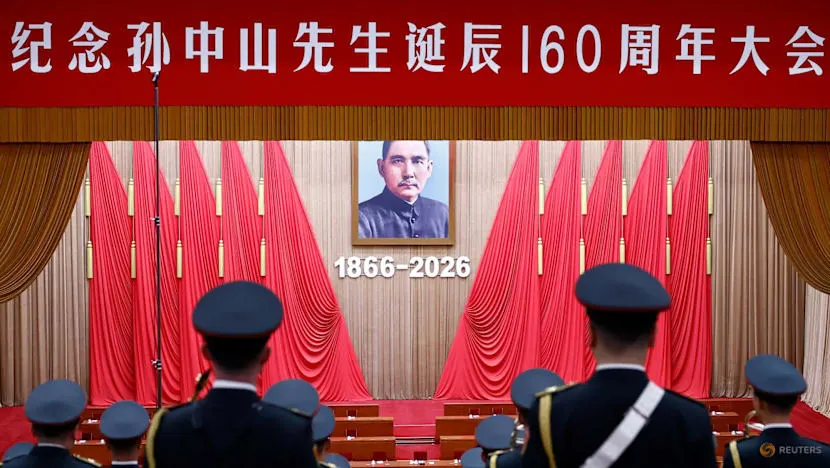
Xi Jinping said China’s goal of bringing Taiwan under its control is an “unwavering historical mission”, declaring that reunification “must be realised”. He also pledged to pursue it peacefully, renewing Beijing’s claim to the island while Taiwan rejects that claim and says its people should decide their future.
Speaking at a Beijing event marking the 160th anniversary of Sun Yat-sen’s birth, Xi backed dialogue under Beijing’s “one-China” principle and its “one country, two systems” proposal, which major Taiwanese parties oppose. He did not mention using force, though China has not renounced it and its military operates around Taiwan daily. His remarks came ahead of a planned meeting with US President Donald Trump at the APEC summit and important local elections in Taiwan.
In short
- Xi said reunification with Taiwan must happen.
- He pledged to pursue it peacefully and offered dialogue.
- Taiwan rejects Beijing’s claim and says its people decide its future.
Steelman: both sides, in good faith
The strongest fair case each way — we don't pick a winner.
The case for
Supporters of Beijing’s position argue that Taiwan is part of China and that reunification would fulfil a long-standing national goal and resolve a legacy of civil conflict and foreign involvement. They may see dialogue under the one-China principle as a path to peaceful integration, while arguing that keeping the possibility of force open deters moves towards formal independence.
The case against
Opponents argue that Taiwan’s people should decide their political future, and that Beijing’s sovereignty claim and proposed one country, two systems arrangement lack consent across Taiwan’s major parties. They see China’s military activity and refusal to rule out force as coercive pressure that undermines self-determination and risks destabilising the region, even when leaders speak of peaceful dialogue.
Explained simply
Taiwan is a self-governing island with its own elected government and armed forces. China’s government regards it as part of China, while Taiwan’s leaders say its future should be decided by the people who live there.
The dispute dates back to 1949, when the Chinese civil war ended with the Communist Party governing the mainland and the Republic of China government taking control of Taiwan. Beijing’s “one-China” principle says there is one China and Taiwan belongs to it; its “one country, two systems” proposal would place Taiwan under Chinese sovereignty while allowing it some separate arrangements, a model Taiwan’s major parties reject.
The issue affects relations between China, Taiwan and the United States, which has close ties with Taiwan and supplies it with defensive arms. China says it seeks peaceful unification but has not ruled out force, and its military activity near the island has raised tensions.
Asia Government Politics World