World news and discussion on TalkFuse.
Six European countries and EU officials named for Ukraine peace talks
Developed over time first seen 1 day ago
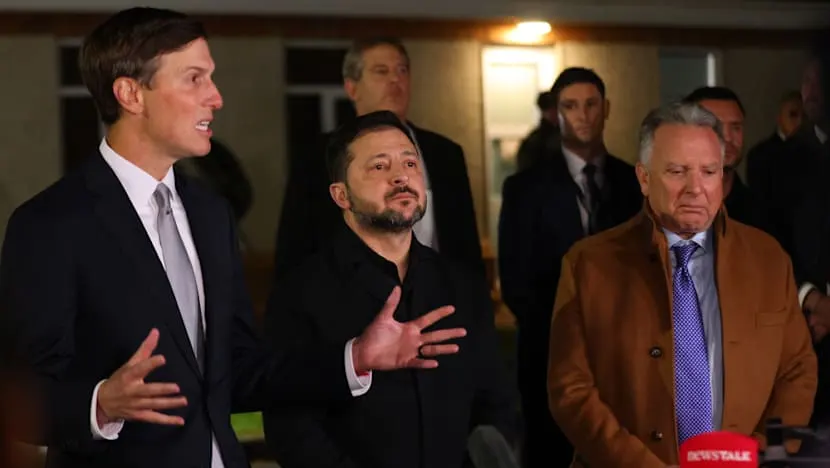
EU leaders have agreed that Britain, France, Germany, Italy, Poland and EU institutions will represent Europe in future talks on ending the war in Ukraine. The decision sets out who will speak for Europe, but Russia has not confirmed that it will accept Ukraine’s supporters at the negotiating table.
The agreement followed US envoys’ account that Vladimir Putin had approved Europe’s participation; the Kremlin later said it wanted to assess Europe’s intentions. Russia is seeking talks on wider European security arrangements, while several European leaders say securing a ceasefire and ending the war should come first. Moscow has shown little sign of compromise as its bombing campaign continues ahead of winter.
- Sources
- 3
- Outlets
- 3
- Left · Centre · Right
- 1 · 1 · 0
In short
- Six countries and EU institutions will represent Europe in Ukraine talks.
- Russia has yet to confirm Europe will join the negotiations.
- European leaders prioritise a ceasefire over wider security discussions.
How this story developed
- 1 day ago European leaders said a ceasefire and ending the war must take priority over Russia’s push for wider security talks, citing little sign that Moscow was ready to compromise.
- 1 day ago US envoys said Vladimir Putin had approved Europe’s participation, but the Kremlin said it wanted to assess Europe’s intentions as Moscow continued its winter bombing campaign.
- 1 day ago EU leaders selected Britain, France, Germany, Italy, Poland and EU institutions to represent Europe in future Ukraine peace talks, though Russia had not agreed to include Ukraine’s backers.
Full account
European Union leaders meeting in Dublin agreed on Friday to send a group of national and EU representatives to future talks on ending Russia’s war in Ukraine. The proposed team comprises Britain, France, Germany, Italy and Poland, alongside officials from the European Union’s institutions. The decision settles who will speak for Europe, though the reports differ on the delegation’s precise make-up and level of involvement.
The choice followed indications from US envoys that Russian President Vladimir Putin was open to European participation. Moscow’s position remained qualified: Kremlin spokesman Dmitry Peskov said a decision would depend on Russia understanding Europe’s intentions and willingness to contribute. Russia’s Foreign Ministry was also reported as saying European participation had not been discussed at Putin’s meeting with the Americans.
The debate over a European seat is tied to Russia’s push to discuss the wider security arrangements of the continent, including NATO’s posture. European leaders have rejected the idea that Moscow should determine how Europe protects itself. German Chancellor Friedrich Merz said the existing security framework did not need renegotiation, while EU foreign policy chief Kaja Kallas argued that a ceasefire should take priority and warned that broader talks could distract from ending the fighting.
European Council President António Costa and Commission President Ursula von der Leyen presented the line-up as a collective effort, with Costa calling for Europe to speak in a united voice. The decision gives several countries a place in the process, but the reports leave open how much influence the group will have. One account says national security advisers will join technical-level discussions and that no delegation has yet been named for talks at the highest level.
Where outlets differ
From the full account, which is AI-written from the sources:
The first two reports describe the delegation as Britain, France, Germany, Italy and Poland plus EU institutions or their representatives. The third specifies national security advisers from those countries and the EU, and says their role will be at the technical level; it reports no high-level representatives have been appointed.
The first report focuses on disagreements over whether wider European security arrangements should be discussed, including remarks from Merz and Kallas. The second gives more attention to Europe’s decision to send a multi-country team and to criticism that a group could weaken its influence. The third concentrates on the delegation’s reported composition and the mixed signals from Russian officials.
The reports differ on timing: the first and second say leaders decided on Friday, 13 November, while the third describes the decision as following a summit held on 12 and 13 November.
Left-leaning outlets 1
Only here: europe, agrees, team, represent, russia
Centre outlets 1
Only here: european, countries, officials, named, ukraine
Every side used: talks
Headline columns compared word for word; nothing in them is AI-written.
Steelman: both sides, in good faith
The strongest fair case each way — we don't pick a winner.
The case for
A joint European delegation could give Ukraine’s supporters more influence and make it harder for Russia to divide them in negotiations. Focusing first on a ceasefire and ending the fighting responds to the immediate human cost and could create conditions for wider talks.
The case against
A united delegation may still struggle to shape talks if Russia refuses to include Ukraine’s backers, and deciding who speaks for Europe does not resolve differences over the agenda. Addressing Russia’s stated concerns about European security in broader negotiations could be seen as necessary for a durable settlement, rather than treating a ceasefire as sufficient.
Explained simply
Russia’s full-scale invasion of Ukraine began in 2022, and efforts to end the war have involved Ukraine, Russia and countries supporting Kyiv. European countries and EU institutions have provided Ukraine with military, financial and political support.
Britain, France, Germany, Italy and Poland are among Europe’s largest and most influential countries, while the EU’s institutions represent its member states collectively. Russia has argued for talks about wider European security, while several European leaders have said ending the fighting should be the priority. The shape of any talks matters because decisions could affect Ukraine’s security and the future relationship between Russia and Europe.
Coverage · 3 sources
Bias meters
From 2 rated sources, 1 unrated.
Read the full article at the source →
Originally published by CNA as “Europe chooses team for Ukraine talks”.