World news and discussion on TalkFuse.
US flight ground stop exposes differing accounts of FAA communications failure
Developing story first seen 26 minutes ago
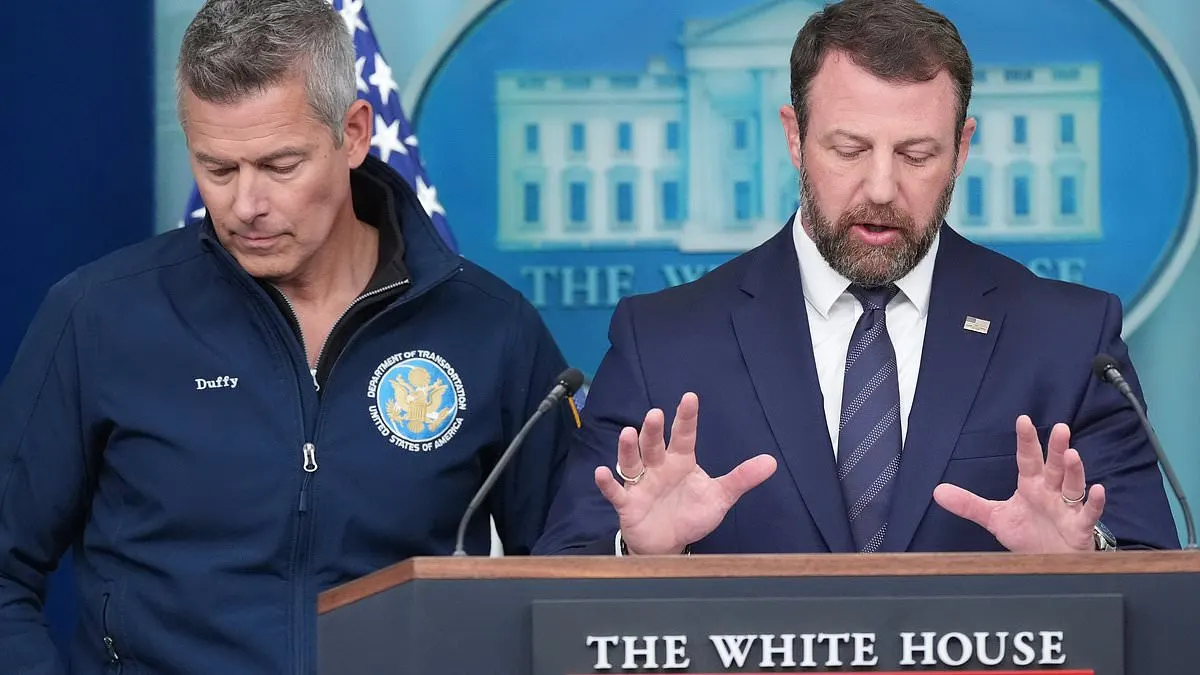
New details from the White House briefing show Sean Duffy and Markwayne Mullin offering different explanations for the FAA communications failure behind a five-hour nationwide flight ground stop. Their exchange highlighted that the cause remained uncertain, including whether a cyberattack was involved.
Duffy blamed ageing, inconsistent FAA equipment and urged Congress to provide $50 billion for air traffic control upgrades. Mullin said the failure appeared mechanical and suggested new equipment may have overwhelmed the older system, but said cybersecurity was still under investigation. The FAA said regional control-centre communications problems prompted the halt, disrupting thousands of flights; more than 3,500 aircraft were airborne when it began.
- Sources
- 2
- Outlets
- 2
- Left · Centre · Right
- 1 · 0 · 1
In short
- Duffy and Mullin gave differing accounts of the FAA failure.
- A five-hour ground stop disrupted flights nationwide.
- Officials had not ruled out a cyberattack.
How this story developed
- 9 minutes ago A five-hour nationwide flight ground stop followed communications problems at regional air traffic control centres, leaving thousands of flights cancelled and hundreds delayed.
- 15 minutes ago New details from the White House briefing show Sean Duffy and Markwayne Mullin offering different explanations for the FAA communications failure behind a five-hour nationwide flight ground stop. Their exchange highlighted that the cause remained uncertain, including whether a cyberattack was involved.
Where outlets differ
Left-leaning outlets 1
Only here: travel, slowly, recovers, nationwide, chaos
Right-leaning outlets 1
Only here: exposes, differing, accounts, communications, failure
Every side used: flight, ground, stop
Headline columns compared word for word; nothing in them is AI-written.
Steelman: both sides, in good faith
The strongest fair case each way — we don't pick a winner.
The case for
Duffy’s account points to ageing and inconsistent FAA equipment as a systemic weakness, and the ground stop’s disruption underscores the need for reliable communications across the network. A major upgrade could reduce the risk of similar failures and help ensure that safety-critical systems can handle modern demands.
The case against
Mullin’s account cautions against treating the cause as settled: the immediate failure may have been mechanical, possibly involving new equipment interacting with an older system, while cybersecurity remained under investigation. Congress could reasonably seek a clearer diagnosis before committing $50 billion, so that any investment addresses the actual failure and is appropriately targeted.
Explained simply
The Federal Aviation Administration (FAA) manages the US air traffic control system, which helps keep aircraft safely separated and directs them through the skies. If controllers cannot communicate reliably with pilots or other control centres, flights may have to be delayed or stopped while the problem is assessed.
Sean Duffy is the US transport secretary, and Markwayne Mullin leads the Department of Homeland Security. Their different explanations reflect uncertainty about whether the communications failure involved ageing equipment, a mechanical problem or a cyberattack; the FAA’s investigation is examining the cause.
The issue matters because air travel depends on dependable links between controllers and aircraft, and a failure can disrupt flights across the country. It has also renewed attention on the condition of the equipment used to manage US air traffic.
Coverage · 2 sources
Bias meters
From 2 rated sources.
Read the full article at the source →
Originally published by Daily Mail as “Awkward moment transportation secretary appears to nudge Mullin as he stumbles over excuses for massive FAA system malfunction that led to catastrophic ground stop”.