World news and discussion on TalkFuse.
WATCH: Rubio delivers keynote address at Federalist Society National Lawyers Convention
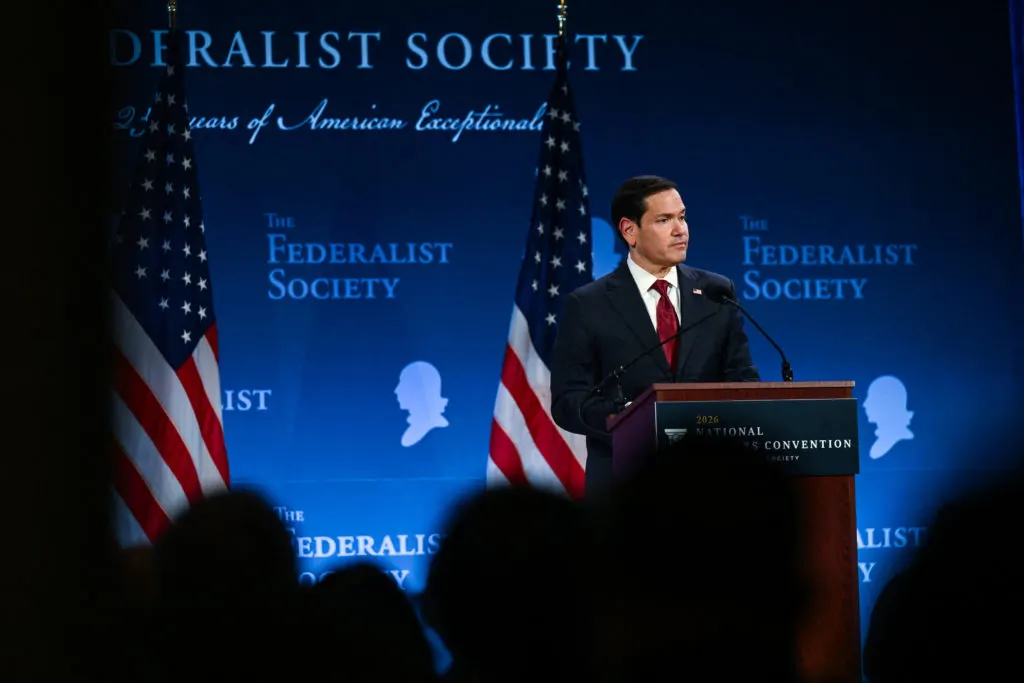
Marco Rubio used his keynote speech to the conservative Federalist Society to acknowledge that many Americans are struggling with the cost of living, while defending the Trump administration’s foreign policy and criticising international institutions. The address matters because economic concerns have hurt Republicans electorally, and Rubio’s remarks also carried a political tone as he has declined to say whether he will run for president in 2028.
Rubio said household ability to afford necessities, rather than stock market performance, is a better measure of the economy. He defended the war in Iran as necessary to prevent Iran obtaining a nuclear weapon, while acknowledging its contribution to higher petrol prices and other costs. He also argued that economic prosperity requires long-term effort and accused international organisations and critics of using international law to constrain US decisions.
In short
- Rubio acknowledged Americans’ cost-of-living pressures.
- He defended the Iran war while recognising its economic costs.
- He accused international bodies of constraining US policy.
Steelman: both sides, in good faith
The strongest fair case each way — we don't pick a winner.
The case for
Supporters could argue that preventing Iran from obtaining a nuclear weapon is a vital security goal, even if military action brings short-term economic costs. They may also see Rubio’s focus on household affordability and his criticism of international constraints as a case for policies that put American security and voters’ interests first.
The case against
Critics could argue that a war that raises petrol prices and household costs requires especially strong evidence that its security benefits justify those burdens. They may also contend that dismissing international legal constraints risks weakening rules that limit conflict and protect cooperation, while broad claims about long-term prosperity do little to ease immediate cost-of-living pressures.
Americas Business Economy Politics World