Technology news and discussion on TalkFuse.
These are some of the strongest 3D printer filaments for durable parts
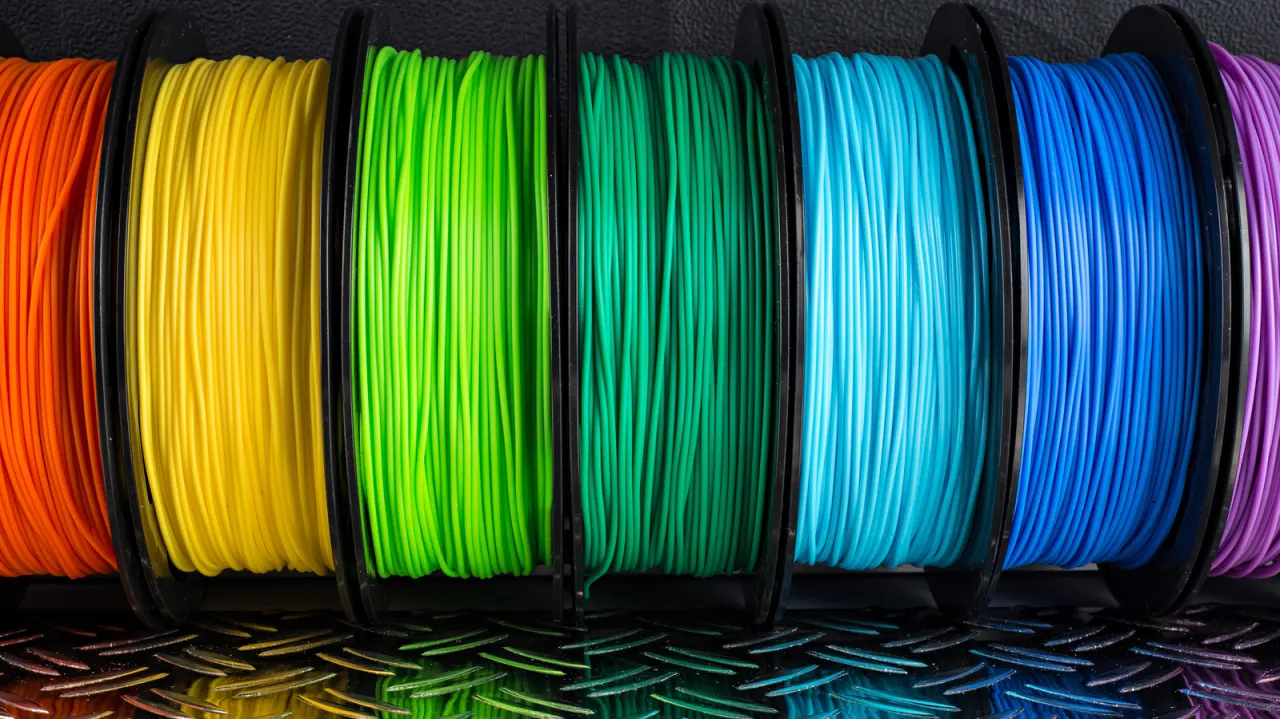
Carbon-fibre-reinforced nylon (PA-CF) and polycarbonate (PC) are presented as strong, practical filaments for functional 3D-printed parts. The article focuses on rigidity, while stressing that material choice alone does not determine a print’s strength: design, print orientation, wall thickness and infill also matter.
In the cited tests, Bambu Lab measured PA6-CF at 151 MPa bending strength and a heat-deflection temperature of 186°C; Polymaker measured PC at 106 MPa bending strength, with tensile strength of 69.1 MPa along the layers and 52.8 MPa between them. PA-CF costs more in the examples given, at $52.99 per 1 kg spool versus $29.99 for PC, and its abrasive fibres call for a hardened nozzle. Both materials need higher-temperature equipment and careful workspace ventilation; PA-CF must also be dried, while larger PC parts may need a heated chamber.
In short
- PA-CF scored higher for bending strength in the cited tests.
- PC costs less in the examples given.
- Printer setup, print design and ventilation matter for both.
Steelman: both sides, in good faith
The strongest fair case each way — we don't pick a winner.
The case for
PA-CF and PC are credible choices when a printed part must be rigid and withstand heat or mechanical loads. The cited measurements suggest PA6-CF can offer particularly high bending strength and heat resistance, while PC costs less and provides substantial tensile strength; selecting either still requires attention to orientation, design and print settings.
The case against
Strength figures alone do not establish that either filament is best for a particular part: performance depends on print direction and geometry, and the cited tests may not be directly comparable. Both materials also demand higher-temperature equipment and careful handling, while PA-CF adds cost, nozzle wear and drying needs, and PC can be difficult to print for larger parts; a less demanding filament may therefore be more practical.
Explained simply
3D printers build objects by laying down thin layers of melted plastic. The plastic, called filament, comes in different types, and the choice affects properties such as stiffness, heat resistance and cost.
Carbon-fibre-reinforced nylon contains short fibres that make it stiffer, but the fibres wear down ordinary printer nozzles, so a tougher nozzle is needed. Polycarbonate is another strong plastic; both materials need printers that can reach higher temperatures, and good ventilation helps manage fumes.
Strength also depends on the part’s shape and how it is printed: layers can be weaker in one direction, and wall thickness and infill affect how much force a part can take. These factors matter when choosing a material and printer settings for parts intended to work under load or heat.