World news and discussion on TalkFuse.
Follow the Leader: Democrats face party battle as divisions deepen
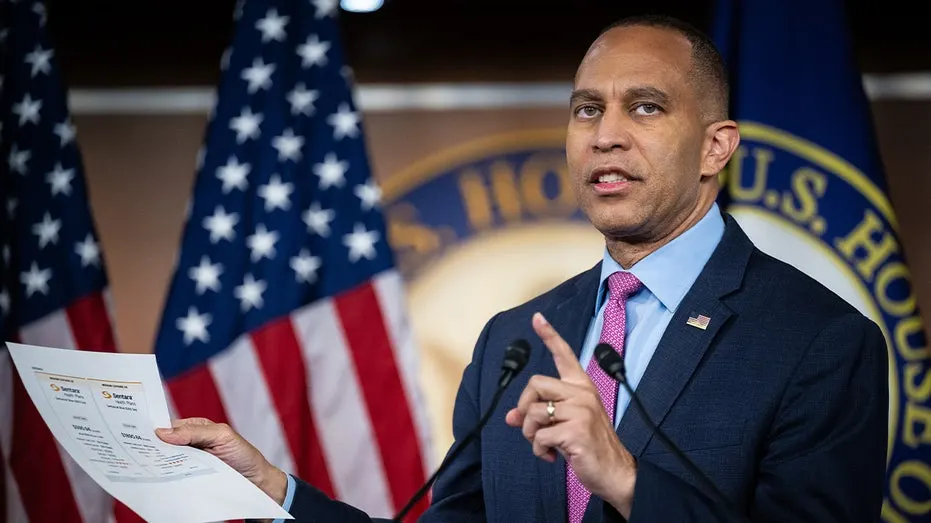
House and Senate Democrats are facing challenges over who should lead their parties, exposing disagreements about leadership and how decisions should be made. Hakeem Jeffries has no declared rival for House Speaker, but several incoming Democrats have not committed to backing him; in the Senate, Chris Van Hollen is challenging Chuck Schumer for the Democratic leadership post.
Some House Democrats want Jeffries endorsed by acclamation, while others say members should have a democratic process or want to see how he would lead in the majority. The incoming House freshman class numbers more than 100, and the article describes reservations among both progressive and centrist members. Van Hollen says recent Democratic gains make a leadership contest appropriate; he has at least five supporters among senators and senators-elect, while three senators aligned with Democrats will not back Schumer. Schumer has led Senate Democrats for a decade and is nearly nine years older than Van Hollen.
In short
- Democrats face leadership disputes in both chambers.
- Jeffries has no declared House rival but lacks unanimous support.
- Van Hollen is challenging Schumer after a decade in leadership.
Steelman: both sides, in good faith
The strongest fair case each way — we don't pick a winner.
The case for
Supporters of continuity argue that Jeffries and Schumer have experience, established relationships and a record of guiding their caucuses through difficult periods. A prompt show of support could help Democrats project unity and focus on their legislative priorities rather than a prolonged internal contest.
The case against
Those seeking a contest argue that leadership should be earned through an open process in which members can assess candidates and their plans. Recent election results and the arrival of many new House members make this a natural moment to reconsider strategy, hear differing views and decide whether the current leaders best represent the caucuses.
Explained simply
Democrats in Congress are organised into separate groups in the House of Representatives and the Senate, and each chooses leaders to coordinate its members and represent the party. House Democrats are led by Hakeem Jeffries; Senate Democrats are led by Chuck Schumer. The leaders help set priorities and guide their parties’ work in Congress.
Choosing a leader can involve questions about experience, party direction and how much say members get in decisions. Democrats include progressives and centrists, who may differ over policy and strategy. Leadership choices matter because they can shape how the party works together and responds to the opposing party, whether Democrats hold power in Congress or not.