Politics news and discussion on TalkFuse.
UK sanctions eight Israeli businesses tied to West Bank settlements
Developing story first seen 4 hours ago
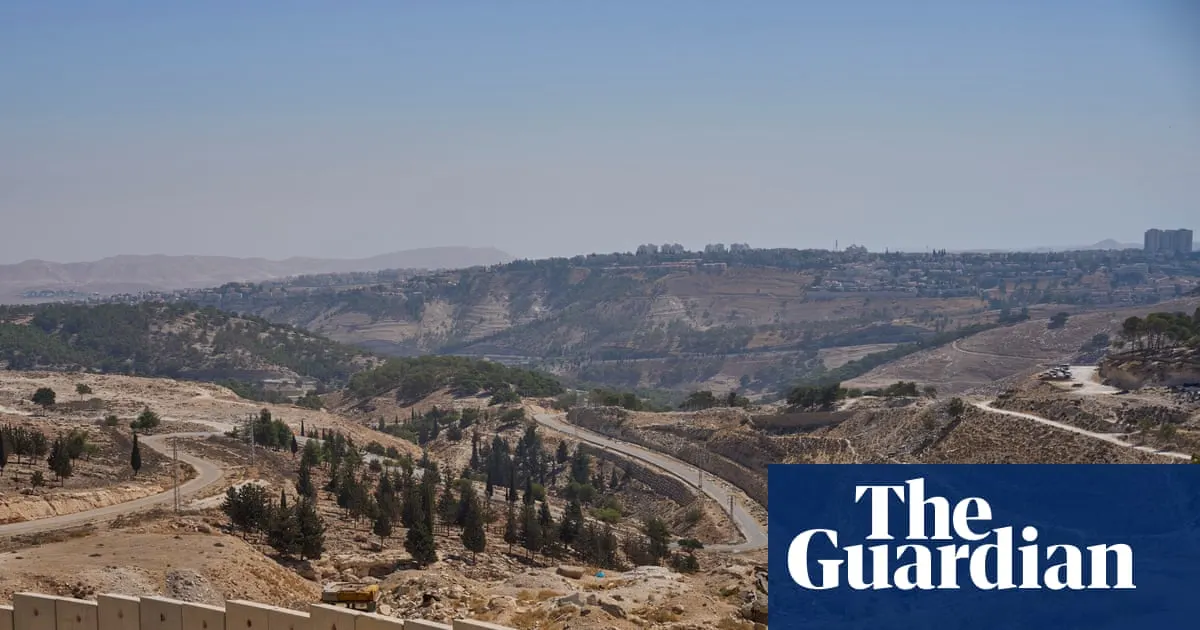
The UK has announced its first sanctions against Israeli businesses involved in West Bank settlement construction, targeting eight firms ahead of tenders for the large E1 settlement project. Foreign Secretary Ed Miliband said the measures aim to restrict finance for settlements that undermine prospects for a two-state solution.
The sanctions also target a rightwing Israeli group accused of trying to block aid to Gaza. The UK says Israel’s current government has approved more settlements in four years than in the previous 20, though it is not yet clear how dependent the firms are on British finance. The UN says more than 150,000 tents and 300,000 tarpaulins are waiting outside Gaza, while floods have left nearly 4,000 households without shelter.
- Sources
- 3
- Outlets
- 3
- Left · Centre · Right
- 1 · 1 · 1
In short
- UK sanctions eight firms linked to West Bank settlements.
- Measures come ahead of tenders for the E1 project.
- A separate Israeli group is targeted over blocking aid to Gaza.
How this story developed
- 2 hours ago The UK specified that the eight firms were linked to planning, building, supplying or marketing settlement housing and infrastructure, while the firms’ reliance on British finance remained unconfirmed.
- 3 hours ago The UK imposed its first sanctions on Israeli businesses involved in West Bank settlement construction, targeting eight firms and a rightwing group accused of obstructing aid to Gaza.
- Daily Mail Ed Miliband warns 'do not bid, do not build' as he slaps sanctions on construction firms involved in Israeli settlements – as well as activist group blocking Gaza aid
- The Guardian UK sanctions eight Israeli businesses tied to West Bank settlements
- BBC Politics UK sanctions firms over Israeli West Bank settlements
Full account
The UK has imposed sanctions on eight Israeli businesses linked to construction and development in West Bank settlements, in a move Foreign Secretary Ed Miliband said was intended to restrict their access to finance and deter further building. The measures were announced shortly before deadlines for bids on the proposed E1 settlement development, east of Jerusalem. The area is seen as strategically significant because construction there could further separate the West Bank from East Jerusalem, complicating the prospect of a two-state solution.
The targeted businesses are described as construction, property development and architectural firms involved in planning, building, supplying or marketing homes and public infrastructure in settlements in the occupied West Bank. The reports name Har Hevron Development Company, Hemdat Shomron and SAG (Velvel) Construction and Development among them. The practical effect of restricting their access to British finance remains uncertain, as the extent of their reliance on it has not been established.
The sanctions package also targets Tzav 9, an Israeli activist group accused of obstructing humanitarian aid convoys bound for Gaza. Miliband said the UK would not stand by while aid was blocked as civilians faced severe hardship. He framed the measures as part of the Government’s effort to protect the two-state solution, while saying it wanted to work with a future Israeli government and the Palestinian Authority towards lasting peace and security.
The action follows the Government’s September announcement of plans to ban imports of goods from Israeli settlements and to widen sanctions relating to settlement activity. The Foreign Office distinguishes trade with Israel within its pre-1967 lines from activity in settlements, and says the current Israeli government has failed to curb settlement expansion and has instead enabled it. The reports present the policy as a response to continued building and rising violence against Palestinians, while noting that settlement construction is widely regarded internationally as illegal and as an obstacle to peace.
Where outlets differ
From the full account, which is AI-written from the sources:
The first report gives more attention to the Government’s broader policy, including the planned settlement-goods import ban, the expanded sanctions criteria and the uncertainty over whether the firms depend on British finance. It also includes the Foreign Office’s criticism of the Israeli government and a possible opening to cooperate with a new Israeli government.
The second report foregrounds Labour’s shift in approach, the timing ahead of E1 bid deadlines and the scheme’s potential effect on the geography between the West Bank and East Jerusalem. It names three sanctioned businesses and describes Tzav 9’s alleged obstruction of aid as occurring as recently as October; the first report says the group was involved as recently as the previous month.
Left-leaning outlets 1
Only here: eight, businesses, tied
Centre outlets 1
Right-leaning outlets 1
Only here: miliband, warns, build, slaps, construction
Every side used: sanctions, israeli, settlements
Headline columns compared word for word; nothing in them is AI-written.
Steelman: both sides, in good faith
The strongest fair case each way — we don't pick a winner.
The case for
Supporters argue that settlement expansion makes a negotiated two-state solution harder by fragmenting Palestinian territory, so targeted sanctions are a proportionate way to raise the costs of activity the UK regards as unlawful and damaging to peace. They may also see the timing as a signal that the government is willing to act before further construction proceeds, while directing measures at businesses rather than the Israeli public as a whole.
The case against
Critics argue that sanctions may have limited practical effect if the firms do not rely on British finance, while risking damage to UK-Israel relations and reducing scope for dialogue. They may also contend that punitive measures against private businesses are poorly targeted or selectively applied, and that settlement policy is more likely to change through negotiations and broader diplomatic engagement.
Explained simply
The West Bank is a territory captured by Israel in 1967, where Palestinians live under Israeli control and where Israel has built settlements. Most countries regard the settlements as illegal under international law, while Israel disputes this view. Palestinians seek the West Bank as part of a future independent state alongside Israel.
The E1 project is a proposed settlement area east of Jerusalem; its development could affect links between Palestinian communities and the city. The UK’s measures target businesses involved in settlement construction and a group accused of obstructing aid to Gaza. Sanctions can restrict access to UK-based financial services, though the firms’ use of British finance has not been established.
Coverage · 3 sources
Bias meters
From 3 rated sources.
- The GuardianLeftUK sanctions eight Israeli businesses tied to West Bank settlements
- Daily MailRightEd Miliband warns 'do not bid, do not build' as he slaps sanctions on construction firms involved in Israeli settlements – as well as activist group blocking Gaza aid
- BBC PoliticsCentreUK sanctions firms over Israeli West Bank settlements
Geopolitics Middle East Politics World
Read the full article at the source →
Originally published by The Guardian as “Ed Miliband announces first sanctions on Israeli firms working in West Bank”.