World news and discussion on TalkFuse.
UK productivity growth outpaced major EU economies, ONS figures suggest
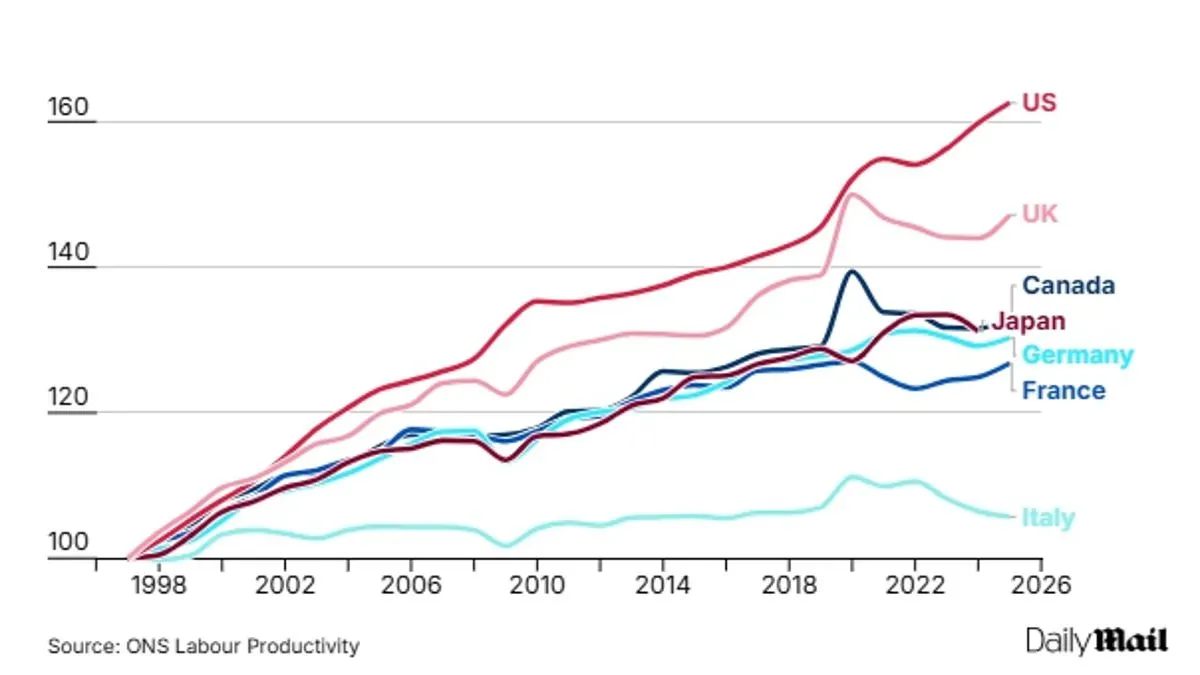
New figures from the Office for National Statistics suggest UK output per hour has grown faster than in Germany, France and Italy over the past decade, with only the US doing better among the G7. The findings challenge claims that Brexit has caused a major productivity hit, although the ONS cautions that international comparisons are difficult.
The ONS used a revised method and produced estimates back to 1997, which show UK productivity growth was the second strongest in the G7 over the ten years to 2025. The Office for Budget Responsibility has forecast that Brexit could reduce the UK’s potential productivity by 4 per cent over 15 years, while some estimates put the effect as high as 8 per cent of GDP. Economists quoted in the article said the new figures could imply a smaller Brexit effect, but the OBR says it is hard to separate Brexit from the pandemic and other geopolitical changes.
In short
- UK productivity growth outpaced major EU economies over the past decade.
- Only the US performed better among the G7.
- The revised figures complicate estimates of Brexit’s economic impact.
Steelman: both sides, in good faith
The strongest fair case each way — we don't pick a winner.
The case for
The revised ONS figures suggest UK output per hour grew faster than in Germany, France and Italy over the past decade, which weakens claims that Brexit has already caused a large, clearly visible productivity decline. Supporters of this interpretation may argue that the figures warrant reassessing forecasts of substantial long-term harm, while recognising that the pandemic and other shocks also shaped the period.
The case against
A decade of relative productivity growth does not establish that Brexit had no cost: the UK might have grown faster still without it, and the ONS cautions that international comparisons are difficult. Advocates of this view can point to the OBR’s forecast of a 4 per cent reduction in potential productivity over 15 years and argue that the effects may take time to emerge or be obscured by the pandemic and other geopolitical changes.
Explained simply
Productivity measures how much an economy produces for each hour worked. It can rise when workers have better equipment, skills or processes, and it is one factor that affects long-term economic growth and living standards.
The Office for National Statistics (ONS) collects and analyses UK data, while comparisons with other countries depend on how each country measures output and working hours. The G7 is a group of seven large advanced economies, including the UK, Germany, France, Italy and the US.
Brexit refers to the UK’s departure from the European Union. The Office for Budget Responsibility (OBR), which provides independent economic forecasts, has estimated that Brexit could reduce the UK’s potential productivity over time; assessing its effect is difficult because other events, including the pandemic, also changed the economy.
Read the full article at the source →
Originally published by Daily Mail as “Was there really a big Brexit hit? Striking official figures show UK productivity has outperformed EU rivals over past decade… while the US streaked ahead”.