World news and discussion on TalkFuse.
NIH asks Nature Medicine to review authorship of COVID origins paper
Developed over time first seen 11 hours ago
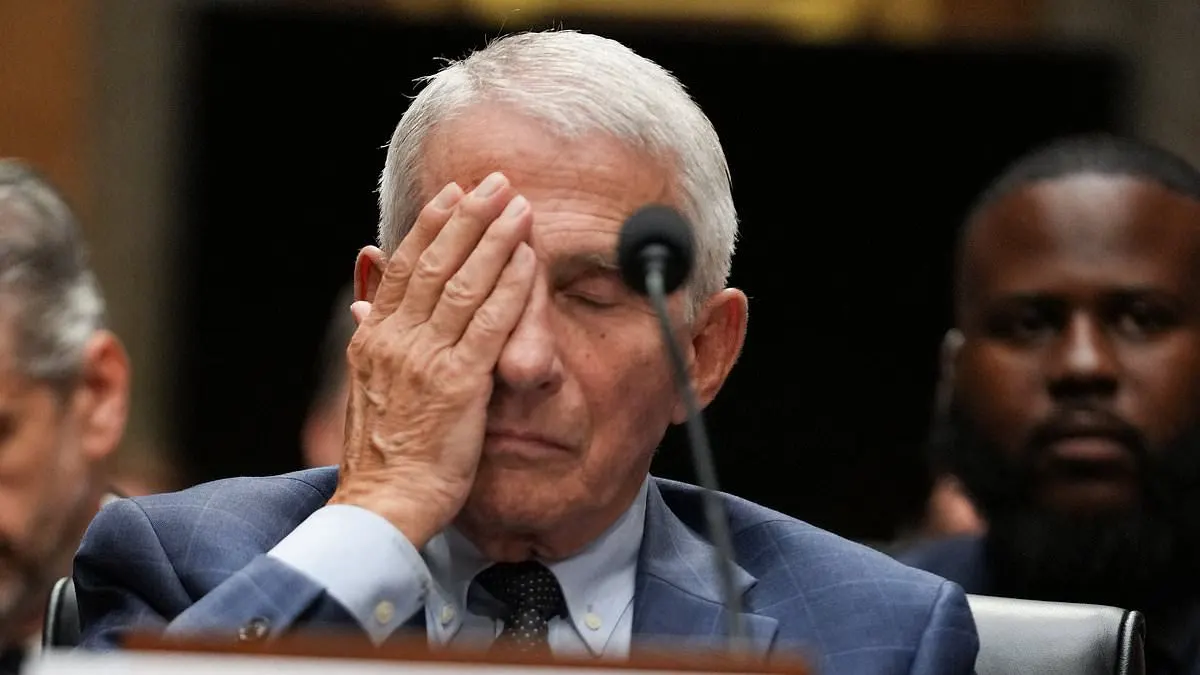
The National Institutes of Health has asked Nature Medicine to investigate whether Anthony Fauci, Francis Collins and Jeremy Farrar significantly contributed to a prominent 2020 paper without being properly credited. The request renews scrutiny of the paper’s influence on early debate over COVID-19’s origins and whether a laboratory leak could explain the virus.
An HHS advisory opinion cited correspondence indicating that Fauci and Collins received and discussed early drafts, while Farrar helped coordinate the drafting and circulation and made at least one direct edit. The paper, published in March 2020 under five other scientists’ names, argued that the available evidence did not support the virus being deliberately engineered; NIH has asked the journal to consider correcting or retracting it. The inquiry concerns authorship and transparency standards, and the article reports no indication that Fauci broke the law.
- Sources
- 2
- Outlets
- 2
- Left · Centre · Right
- 0 · 0 · 2
In short
- NIH wants Nature Medicine to investigate the paper’s authorship.
- Correspondence suggests Fauci, Collins and Farrar had varying roles.
- The inquiry could lead to a correction or retraction.
How this story developed
- 2 hours ago The latest account again highlighted the paper’s influence on early debate about COVID-19’s origins and said the inquiry concerns credit and transparency, with no reported indication that Fauci broke the law.
- 8 hours ago The five named authors disputed claims that Fauci directed the paper to dismiss a possible laboratory leak, as NIH asked the journal to consider correcting or retracting it.
- 8 hours ago The NIH asked Nature Medicine to examine whether Anthony Fauci, Francis Collins and Jeremy Farrar deserved authorship credit for their contributions to a 2020 paper on the origins of SARS-CoV-2.
Steelman: both sides, in good faith
The strongest fair case each way — we don't pick a winner.
The case for
Critics argue that senior officials’ substantial input into an influential paper should have been clearly disclosed and credited, so readers could assess possible conflicts and the paper’s independence. A journal review is therefore justified to determine whether authorship standards were met and whether a correction or retraction is warranted.
The case against
The authors and officials can argue that receiving drafts, discussing evidence or helping circulate a paper does not by itself amount to ghostwriting or show that its scientific conclusions were directed. The paper addressed whether the virus appeared deliberately engineered, and scrutiny of its transparency should not be treated as proof that its conclusions were false or that anyone acted improperly.
Explained simply
SARS-CoV-2 is the virus that causes COVID-19. Scientists have debated how it first reached people, including whether it passed from animals or was linked to a laboratory; a lab leak would not, by itself, show that the virus was deliberately made.
Anthony Fauci led the US National Institute of Allergy and Infectious Diseases during the pandemic, Francis Collins headed the National Institutes of Health, and Jeremy Farrar is a scientist who helped coordinate research discussions. Nature Medicine published a 2020 paper by five authors that said the evidence did not support the virus being deliberately engineered.
The paper became influential in public discussion of the virus’s origins. Questions about who contributed to it and how those contributions were disclosed matter to scientific standards for authorship and transparency.
Coverage · 2 sources
Bias meters
From 2 rated sources.
Read the full article at the source →
Originally published by Daily Mail as “Dr Fauci accused of ghostwriting paper dismissing COVID lab leak theory as new bombshell information revealed”.