Culture news and discussion on TalkFuse.
Voyager 1 is now a light-day from Earth. Here’s what to know about NASA’s longest-running mission
Developed over time first seen 9 hours ago
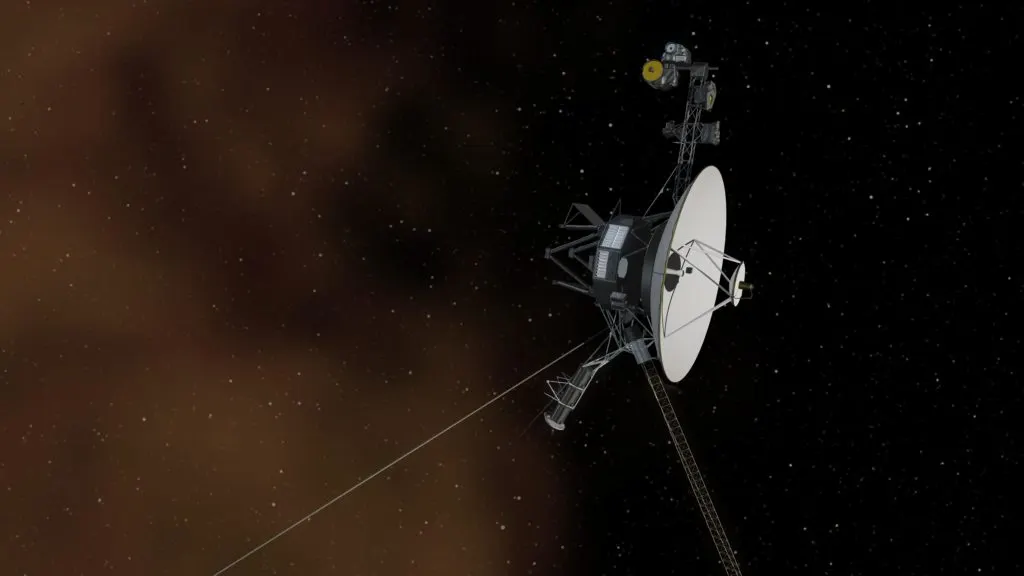
Voyager 1 has become the first human-made object to travel one light-day from Earth, about 16 billion miles away. Nearly 50 years after launch, the milestone highlights the spacecraft’s longevity and its continuing contribution to research on the outer reaches of the solar system and interstellar space.
Travelling at more than 37,000 mph, Voyager 1 takes a full day to send a radio signal to Earth, with a further day needed for a reply to reach it. Launched in 1977 with Voyager 2 to study the giant planets, it explored Jupiter and Saturn before heading outwards, and crossed the heliopause into interstellar space in 2012; Voyager 2 studied Uranus and Neptune and crossed the boundary in 2018.
- Sources
- 2
- Outlets
- 2
- Left · Centre · Right
- 1 · 1 · 0
In short
- Voyager 1 has reached one light-day from Earth.
- Radio signals now take a day each way.
- The probe continues to return scientific data from interstellar space.
How this story developed
- 12 minutes ago Voyager 1 has become the first human-made object to travel one light-day from Earth, a distance of about 16 billion miles. The milestone comes nearly 50 years after launch and highlights the spacecraft’s remarkable longevity and continuing scientific role.
- 6 hours ago Voyager 1 has become the first human-made object to travel one light-day from Earth, nearly 50 years after its 1977 launch. The milestone highlights the spacecraft’s remarkable longevity and the continuing scientific value of a mission that has transformed understanding of the outer planets and interstellar space.
- 6 hours ago Voyager 1 has become the first human-made object to travel one light-day from Earth, about 16 billion miles away. Nearly 50 years after launch, the milestone highlights the spacecraft’s longevity and its continuing contribution to research on the outer reaches of the solar system and interstellar space.
Where outlets differ
Left-leaning outlets 1
Only here: reaches, space
Centre outlets 1
- Voyager 1 is now a light-day from Earth. Here’s what to know about NASA’s longest-running missionPBS NewsHour
Only here: know, nasa, longest, running, mission
Every side used: voyager, light, earth
Headline columns compared word for word; nothing in them is AI-written.
Explained simply
Voyager 1 is one of two spacecraft NASA launched in 1977 to study the outer planets. It flew past Jupiter and Saturn, sending back close-up observations, then continued towards the space between the stars.
The heliopause is the boundary where the Sun’s outward flow of particles meets the surrounding interstellar environment. Voyager 1 crossed it in 2012, and Voyager 2 followed in 2018; both have continued sending scientific data as they travel farther from Earth.
Their distance makes communication slow: a radio signal takes about a day to reach Voyager 1. The mission helps scientists study conditions beyond the Sun’s influence and shows how long a spacecraft can operate in deep space.
Coverage · 2 sources
Bias meters
From 2 rated sources.
Culture Politics Space Technology Travel