World news and discussion on TalkFuse.
Van Gogh painting sells for record-breaking £144.9 MILLION despite ‘complex Nazi-era history’
Developing story first seen 9 hours ago
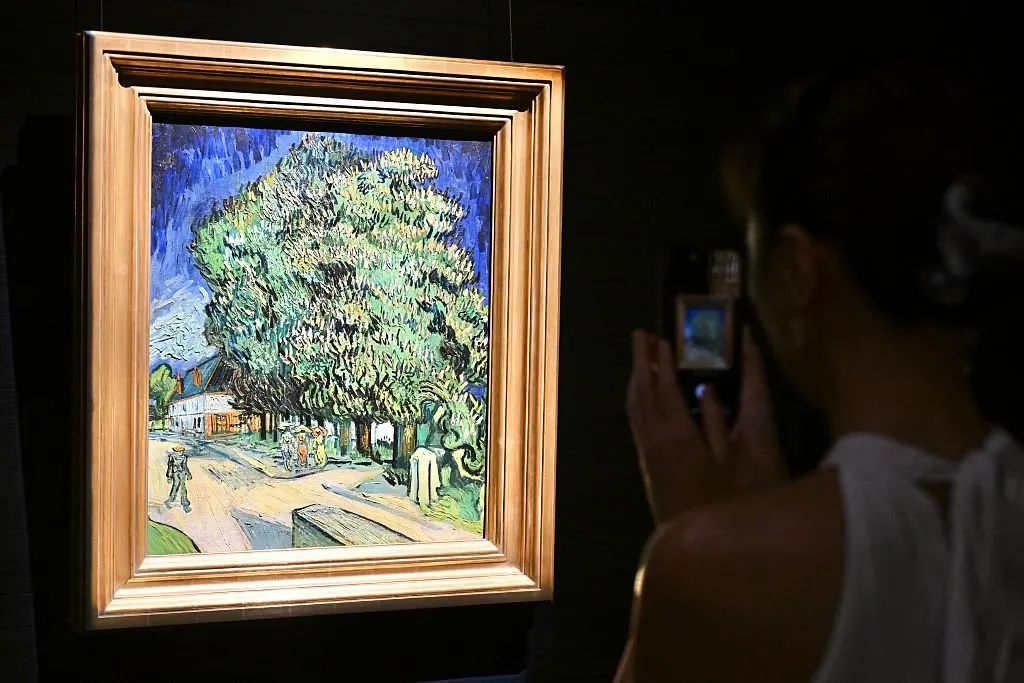
Van Gogh’s *Châtaigniers en fleurs* sold at Sotheby’s for $190.4 million, setting a new auction record for the artist after a dispute over its Nazi-era history was resolved. The sale matters because descendants of the Fischer family had argued that the painting was sold under financial pressure caused by Nazi persecution.
Samuel Fischer bought the painting in 1909, and his family sold it in 1936, two years after his death. The Blaquier-Arrieta family, which had owned the work since 1975, reached an agreement with Fischer’s descendants on the eve of the auction. The price exceeded Van Gogh’s previous auction record of $117.2 million, set four years earlier; the work had been estimated at $180 million.
- Sources
- 2
- Outlets
- 2
- Left · Centre · Right
- 0 · 1 · 1
In short
- Van Gogh’s painting sold for $190.4 million at Sotheby’s.
- The sale followed an agreement with Fischer family descendants.
- It set a new auction record for the artist.
How this story developed
- 4 hours ago Vincent van Gogh’s painting *Châtaigniers en fleurs* sold at Sotheby’s for $190.4 million, around £144.9 million, setting a new auction record for the artist.
- 4 hours ago Van Gogh’s *Châtaigniers en fleurs* sold at Sotheby’s for $190.4 million, setting a new auction record for the artist after a dispute over its Nazi-era history was resolved.
Full account
Vincent van Gogh’s Châtaigniers en fleurs (Chestnut Trees in Blossom) sold at Sotheby’s in New York for $190.4 million, reported as about £144.8 million. The 1890 painting set a new auction record for the artist, surpassing the $117.2 million paid for Orchard with Cypresses in 2022. Sotheby’s had estimated the work at $180 million before the sale. The buyer was not immediately identified.
Van Gogh painted the chestnut trees during the final two months of his life, in Auvers-sur-Oise, France. Sotheby’s described it as one of the most important works from that period still in private hands. The painting had been included in the Blaquier-Arrieta Collection, whose owners had held it since 1975.
The sale had been clouded by questions about the painting’s transfer from the family of German publisher Samuel Fischer. He acquired it in 1909; after his death in 1934, it remained with his family before changing hands in 1936. Fischer’s descendants argued that Nazi-era persecution and financial losses may have forced the family to sell. Their representative sought evidence that the transaction reflected fair market value and that the family would have sold regardless of the political circumstances.
Sotheby’s announced shortly before the auction that the Blaquier-Arrieta family and Fischer heirs had reached an agreement, allowing the sale to proceed. The auction house said the resolution recognised the painting’s Nazi-era history and the suffering of the Fischer family during the Holocaust. The heirs welcomed the negotiations, according to a family spokesperson. The reports describe the dispute and settlement, but do not disclose the agreement’s terms.
Where outlets differ
From the full account, which is AI-written from the sources:
Both reports give the sale price as $190.4 million, but convert it to different sterling amounts: about £144 million in Source 1 and £144.8 million in Source 2; the headline rounds it to £144.9 million.
Source 1 gives more detail about the heirs’ demands, the Blaquier-Arrieta family’s long ownership and the family spokesperson’s response. Source 2 focuses more on the auction, the pre-sale estimate, the unidentified buyer and Sotheby’s published provenance account.
The reports describe the 1936 transfer differently. Source 1 says the painting was sold in 1936; Source 2 says Sotheby’s records it passing to Henriette and Marcel Kapferer in Paris that year, after being deposited with Paul Cassirer in Amsterdam in 1932 or 1933. The sources do not establish that the sale was legally determined to have been under duress.
Centre outlets 1
Right-leaning outlets 1
- Van Gogh painting sells for record-breaking £144.9 MILLION despite ‘complex Nazi-era history’GB News
Only here: breaking, million, despite, complex
Every side used: gogh, painting, sells, record, nazi, history
Headline columns compared word for word; nothing in them is AI-written.
Steelman: both sides, in good faith
The strongest fair case each way — we don't pick a winner.
The case for
The sale can be seen as a practical resolution that allowed the painting to enter the market while recognising the Fischer family’s suffering under Nazi rule. The 1936 sale took place after Samuel Fischer’s death and amid severe upheaval, but the available account does not establish whether the price was unfair; the agreement may therefore be a reasonable way to acknowledge the family’s history without claiming more than the evidence shows.
The case against
The agreement may have settled the dispute without fully answering whether the Fischer family was forced by Nazi-era hardship to sell below fair market value. From this perspective, proceeding with the auction risks allowing a private settlement and record price to overshadow unresolved questions about the circumstances of the 1936 sale and what would constitute adequate restitution.
Explained simply
Vincent van Gogh was a Dutch painter whose work became highly sought after after his death. Paintings by major artists can fetch very high prices at auction, and a new sale record can draw attention to both their market value and their history.
The painting’s earlier owner was Samuel Fischer, a German publisher who bought it in 1909. After his death, his family sold it in 1936, when Nazi rule was bringing persecution and financial pressure on Jewish people and others targeted by the regime.
Disputes over art sold during the Nazi era can involve whether owners were forced to sell and whether the price was fair. Such claims may be negotiated between present owners and descendants, and agreements can recognise past suffering while allowing a sale to proceed.
Coverage · 2 sources
Bias meters
From 2 rated sources.