Sport news and discussion on TalkFuse.
World marathon champion Jepchirchir gets three-year doping ban
Developed over time first seen 1 day ago
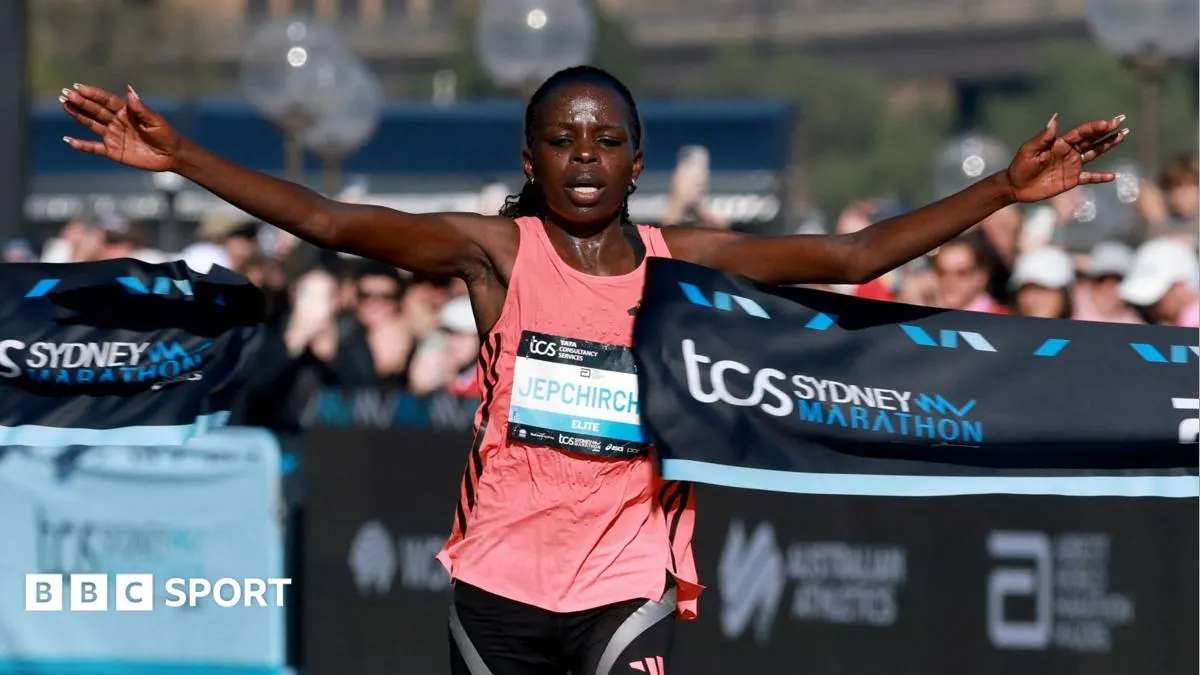
World marathon champion Peres Jepchirchir has received a three-year ban after an out-of-competition sample tested positive for EPO. She denied using the substance but signed an admission of violations form and accepted the disqualification of all her results since 17 July 2026, including her Sydney Marathon victory.
The sample was collected in Kenya before Jepchirchir won the Sydney Marathon on 30 August by three minutes and 40 seconds; it returned an adverse finding on 17 September. Kenyan athletes Veronica Loleo and Ronald Korir were also sanctioned, receiving three-year and six-year bans respectively. More than 140 Kenyan athletes have been suspended by the Athletics Integrity Unit since 2017, adding scrutiny as Kenya prepares to host the 2029 World Athletics Championships.
- Sources
- 2
- Outlets
- 2
- Left · Centre · Right
- 1 · 1 · 0
In short
- Jepchirchir is banned for three years after an EPO finding.
- Her results since 17 July 2026 have been disqualified.
- The case adds scrutiny of Kenya’s anti-doping efforts ahead of 2029.
How this story developed
- 18 hours ago New details highlight the wider impact of Peres Jepchirchir’s three-year ban: she has accepted disqualification of all results since 17 July 2026, including her Sydney Marathon win.
- 1 day ago World marathon champion Peres Jepchirchir has received a three-year ban after an out-of-competition sample tested positive for EPO. The Kenyan athlete, who denies using the banned substance, accepted disqualification of her results from 17 July 2026, affecting a period that includes her Sydney Marathon victory.
- 1 day ago World marathon champion Peres Jepchirchir has received a three-year ban after an out-of-competition sample tested positive for EPO. She denied using the substance but signed an admission of violations form and accepted the disqualification of all her results since 17 July 2026, including her Sydney Marathon victory.
Full account
Reigning world marathon champion Peres Jepchirchir has received a three-year ban after an out-of-competition sample collected in Kenya tested positive for erythropoietin (EPO). The Athletics Integrity Unit (AIU) said the sample was taken before her Sydney Marathon victory on 30 August 2026 and produced an adverse finding on 17 September. Jepchirchir, 33, had been provisionally suspended in October.
Jepchirchir denied using EPO but signed a form admitting anti-doping rule violations and accepted the disqualification of her results from 17 July 2026 onwards. Her Sydney win is therefore among the results affected. The race organisers said her separate in-competition test was negative and that Irine Cheptai is set to be recognised as the 2026 women’s champion.
EPO is a hormone normally produced mainly by the kidneys that prompts the body to make red blood cells. Its synthetic form can be misused to increase the blood’s oxygen-carrying capacity and improve endurance. The AIU also announced sanctions against two other prominent Kenyan runners: Veronica Loleo received a three-year ban after an EPO violation, while Ronald Korir was banned for six years after failing to explain irregularities in his athlete biological passport.
Jepchirchir’s record includes Olympic marathon gold in 2021 and victories at the New York Marathon in 2021, Boston in 2022 and London in 2024. The cases arrive amid continued scrutiny of doping in Kenyan distance running. AIU chief executive Brett Clothier said Kenya had made progress but needed to do more, including strengthening its anti-doping agency and tackling networks that facilitate doping. Kenya is due to host the 2029 World Athletics Championships; the decision to award it the event has brought renewed attention to the country’s efforts to address the problem.
Where outlets differ
From the full account, which is AI-written from the sources:
The first report says Jepchirchir’s sample returned an adverse finding on 17 September and describes her as having denied EPO use while accepting violations; the second focuses on the AIU’s account that she admitted breaches concerning the presence and use or attempted use of a prohibited substance.
The second report adds that Jepchirchir’s in-competition test at Sydney was negative and that Irine Cheptai is expected to be elevated to champion. The first does not include that detail.
The first report foregrounds Kenya’s selection to host the 2029 World Championships, the broader pressure on the country and comments from WADA president Witold Banka. The second gives more detail about Loleo’s and Korir’s cases and mentions other recent Kenyan sanctions.
Left-leaning outlets 1
Only here: kenya, peres
Centre outlets 1
Only here: world
Every side used: marathon, champion, jepchirchir, gets, three, doping
Headline columns compared word for word; nothing in them is AI-written.
Steelman: both sides, in good faith
The strongest fair case each way — we don't pick a winner.
The case for
A strong anti-doping response protects clean athletes, public confidence and the credibility of major competitions. Jepchirchir accepted disqualification of her results and signed an admission of violations form, and the case may strengthen calls for Kenya to improve testing and oversight before hosting the 2029 championships.
The case against
A ban carries serious consequences, so it should rest on clear evidence and fair procedures, especially when an athlete denies using the substance. The reported adverse finding and signed form warrant scrutiny, but the available account does not explain the evidence in detail; concern about Kenya’s wider anti-doping record should not substitute for assessing each case on its own merits.
Explained simply
Peres Jepchirchir is a Kenyan distance runner who won Olympic marathon gold in 2021 and became world champion in 2023. Elite athletes can be tested for banned substances both during competitions and outside them, and the Athletics Integrity Unit investigates possible anti-doping rule violations.
EPO is a medicine that can increase the blood’s ability to carry oxygen, which may improve endurance; its use in sport is banned. Kenya has faced a large number of athletics doping cases, bringing attention to how the country tests athletes and enforces the rules.
Kenya is due to host the 2029 World Athletics Championships, a major international track and field event. Anti-doping enforcement matters to athletes and organisers because it helps uphold competition rules and public confidence in the sport.
Coverage · 2 sources
Bias meters
From 2 rated sources.