Technology news and discussion on TalkFuse.
Voyager Is a Light-Day Away. Here’s How Far That Really Is
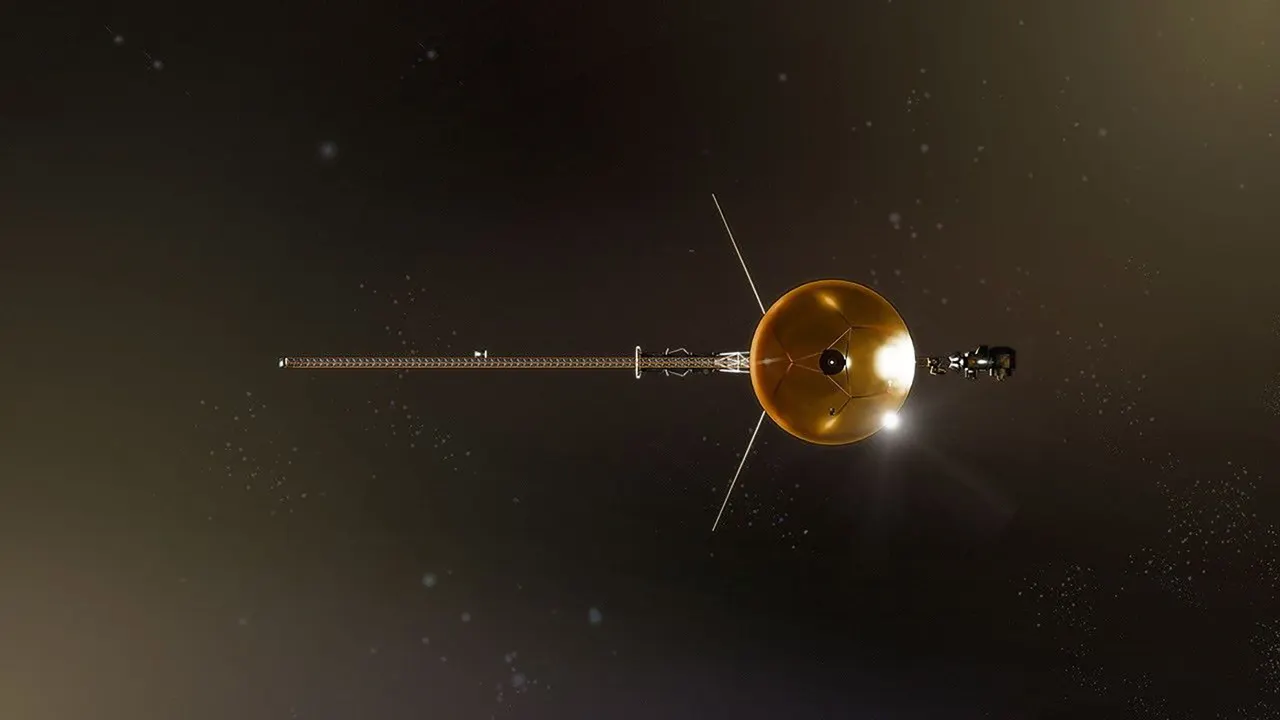
Voyager 1 is so distant from Earth that its radio signals take about a day to travel each way, placing it roughly one light-day away. The distance illustrates the vast scale of space and offers a way to explain how astronomers measure it.
The article puts one light-day at about 2.6 × 10¹³ metres, while a light-year is about 9.9 × 10¹⁵ metres. It also compares the astronomical unit, the average Earth-Sun distance, with the parsec, measured through parallax. Assuming Voyager travelled in a straight line at constant speed, its average speed would be about 164 kilometres per second, or 36,000 miles per hour.
In short
- Voyager 1 is about one light-day from Earth.
- Its signals take roughly a day to reach us.
- A light-day is about 26 trillion metres.
Explained simply
Voyager 1 is a NASA spacecraft launched in 1977 to explore the outer planets and then continue beyond the Solar System. It communicates with Earth by radio, which travels at the speed of light.
Astronomers use several units to describe enormous distances. An astronomical unit is roughly the distance from Earth to the Sun; a light-year is the distance light travels in a year, and a parsec is based on how nearby stars appear to shift as Earth moves around the Sun.
These units help put spacecraft journeys and the scale of space into perspective. Voyager 1’s distance also shows why communicating with faraway probes involves long delays.