World news and discussion on TalkFuse.
UN court rules Myanmar committed genocide against Rohingya, orders reparations
Developed over time first seen 1 day ago
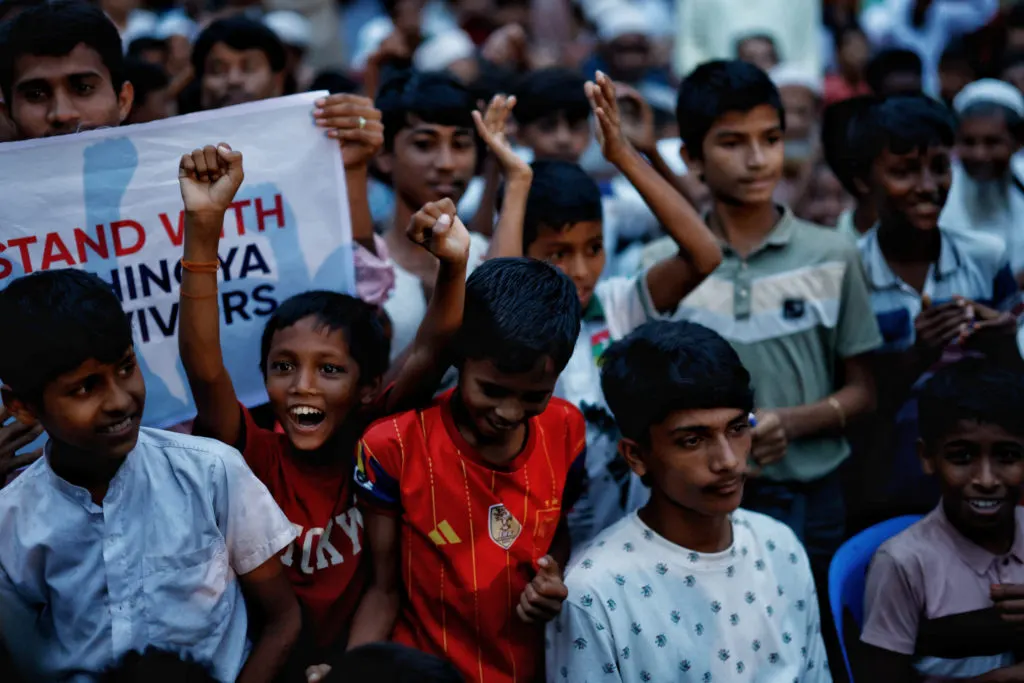
The International Court of Justice ruled that Myanmar committed genocide against the Rohingya during its 2017 military campaign in Rakhine state. The landmark decision is the first time the court has found a state responsible for genocide, but putting its orders into effect may prove difficult because the court cannot enforce them directly.
In a 9-6 decision, the court cited the killing of thousands of Rohingya civilians, widespread sexual violence and attacks on children and people fleeing. It ordered Myanmar to investigate and punish those responsible, pay compensation to Rohingya, and permit safe, voluntary and dignified returns; the compensation amount will be set in later proceedings. Myanmar gave no immediate response, while the UK called for a UN Security Council session.
- Sources
- 7
- Outlets
- 5
- Left · Centre · Right
- 4 · 3 · 0
In short
- The UN’s top court found Myanmar responsible for genocide against the Rohingya.
- Myanmar must investigate crimes, pay compensation and allow safe returns.
- Enforcing the legally binding ruling remains uncertain.
How this story developed
- 16 hours ago No further details were added; the account repeated the genocide finding, reparations order and court’s lack of direct enforcement powers.
- 22 hours ago The judgment was restated with emphasis on the Rohingya victims and the requirement that any return be safe, voluntary and dignified.
- 22 hours ago The reported findings specified extreme violence against children alongside killings, sexual violence and attacks on people fleeing.
- 22 hours ago The account emphasised the ruling’s historic significance and clarified that compensation would be determined in later proceedings.
- 23 hours ago The court’s ruling was again reported as a landmark first: it had found a state responsible for genocide and required Myanmar to provide reparations.
- 1 day ago Further details highlighted the order for reparations, including dignified refugee returns, while implementation remained uncertain because the court cannot enforce its binding rulings directly.
- The Guardian ‘Everyone struggled for this justice’: tears in court as Rohingya vindicated in Myanmar genocide ruling
- The Guardian Myanmar ruling gives new relevance to genocide convention and is ‘full of messages’ for Israel
- New York Times Myanmar Committed Genocide Against the Rohingya, Top Global Court Finds
- Middle East Eye ICJ ruling on Rohingya genocide could strengthen South Africa's case against Israel
- BBC World Myanmar committed genocide against Rohingya minority, top UN court rules
- PBS NewsHour UN court rules Myanmar committed genocide against Rohingya, orders reparations
- BBC World Rohingya genocide: What was said in court and what happens now?
Full account
The International Court of Justice (ICJ), the United Nations’ highest court, has ruled that Myanmar committed genocide against the Rohingya in northern Rakhine state during the military operation of 2017. The decision, delivered in The Hague, is a historic finding by the court. In a 9–6 vote, its judges rejected Myanmar’s argument that the campaign was a legitimate security operation against insurgents.
The court described killings of Rohingya civilians, widespread sexual violence, extreme violence against children and attacks on people fleeing. It also ordered Myanmar to provide for reparations, including the safe, voluntary and dignified return of Rohingya to their homes. The reports place the death toll above 10,000 and say about 700,000 people fled to Bangladesh. Many have remained there since, including in the vast refugee camps around Cox’s Bazar.
Rohingya survivors and community members welcomed the ruling with tears and embraces in The Hague, while people watching in Bangladesh cheered and applauded. Some called relatives in the camps after the decision was read; the verdict was also translated into Rohingya for those gathered to watch. The Guardian report foregrounds these reactions and the long wait for recognition, including the role of The Gambia, which brought the case on the community’s behalf. It also records refugees’ doubts that a ruling will make a safe return possible, particularly where villages have been destroyed.
The ruling’s practical effect is uncertain. Although ICJ judgments are legally binding and final, the court has no direct enforcement power; it can refer non-compliance to the UN Security Council. The AP report stresses this limitation and notes the absence of an immediate response from Myanmar’s delegation or government. The Guardian account focuses more on survivors’ expectations and the responsibility of governments around the world to act. Recognition in court, the reports make clear, does not by itself resolve the Rohingya’s displacement or guarantee their return.
Where outlets differ
From the full account, which is AI-written from the sources:
The AP report gives more attention to the legal vote, the court’s findings and the limits on enforcement, and notes Myanmar’s lack of an immediate response. The Guardian report centres Rohingya witnesses’ reactions, the community’s years-long wait, The Gambia’s role and refugees’ uncertainty about returning. Both describe the ruling as a finding of genocide and report intense celebrations among Rohingya in The Hague and Bangladesh.
Left-leaning outlets 4
- ‘Everyone struggled for this justice’: tears in court as Rohingya vindicated in Myanmar genocide rulingThe Guardian
- Myanmar ruling gives new relevance to genocide convention and is ‘full of messages’ for IsraelThe Guardian
- Myanmar Committed Genocide Against the Rohingya, Top Global Court FindsNew York Times
- ICJ ruling on Rohingya genocide could strengthen South Africa's case against IsraelMiddle East Eye
Only here: ruling, israel, everyone, struggled, justice
Centre outlets 3
- UN court rules Myanmar committed genocide against Rohingya, orders reparationsPBS NewsHour
- Myanmar committed genocide against Rohingya minority, top UN court rulesBBC World
- Rohingya genocide: What was said in court and what happens now?BBC World
Only here: rules, orders, reparations, minority, happens
Every side used: court, rohingya, myanmar, genocide, committed
Headline columns compared word for word; nothing in them is AI-written.
Explained simply
The Rohingya are a mainly Muslim minority from Myanmar, many of whom lived in Rakhine state. They have faced long-standing restrictions and violence, and hundreds of thousands fled to Bangladesh after a military operation in 2017.
The International Court of Justice, based in The Hague, settles legal disputes between countries. The case was brought by The Gambia, which argued that Myanmar had breached the Genocide Convention, an international treaty aimed at preventing and punishing genocide.
The ruling matters because it sets out Myanmar’s legal responsibilities under that treaty, including steps concerning accountability and reparations. Although the court’s decisions bind countries, it has no direct means to enforce them, so carrying them out remains uncertain.
Coverage · 7 sources
Bias meters
From 7 rated sources.
- PBS NewsHourCentreUN court rules Myanmar committed genocide against Rohingya, orders reparations
- The GuardianLeft‘Everyone struggled for this justice’: tears in court as Rohingya vindicated in Myanmar genocide ruling
- The GuardianLeftMyanmar ruling gives new relevance to genocide convention and is ‘full of messages’ for Israel
- New York TimesLeftMyanmar Committed Genocide Against the Rohingya, Top Global Court Finds
- Middle East EyeLeftICJ ruling on Rohingya genocide could strengthen South Africa's case against Israel
- BBC WorldCentreMyanmar committed genocide against Rohingya minority, top UN court rules
- BBC WorldCentreRohingya genocide: What was said in court and what happens now?
Asia Geopolitics Politics World
Read the full article at the source →
Originally published by PBS NewsHour as “UN’s highest court finds Myanmar responsible for genocide in historic ruling”.