Technology news and discussion on TalkFuse.
NASA’s Voyager 1 phones home from record one light-day away, 49 years after launch
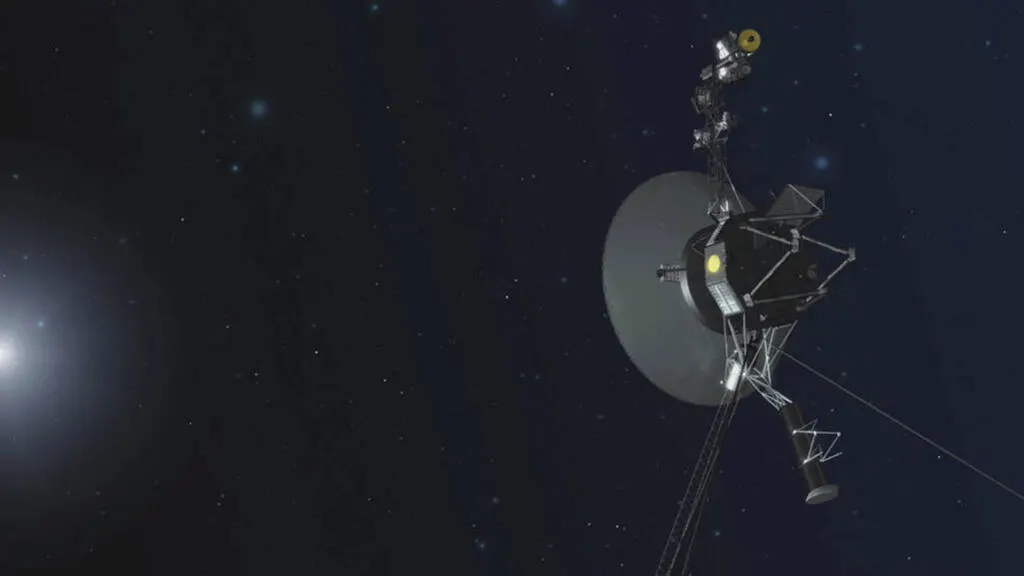
Voyager 1 has become the first spacecraft to reach a distance of one light-day from Earth, with NASA receiving its signal 24 hours after it was sent. The milestone highlights the probe’s extraordinary longevity and its continuing journey through interstellar space, nearly 49 years after launch.
The signal travelled more than 26 billion kilometres, or 16 billion miles. Voyager 1 is still moving at about 61,000 kilometres per hour, but NASA has received no science or engineering data from it since Saturday and is investigating the interruption; its carrier signal continues. Its twin, Voyager 2, entered interstellar space in 2018 and is not expected to reach one light-day away until 2035.
In short
- Voyager 1 has reached one light-day from Earth.
- Its signal took 24 hours to arrive.
- NASA is investigating a pause in science data.
Explained simply
Voyager 1 is a robotic spacecraft launched by NASA in 1977 to study the outer planets. It sent back close-up observations of Jupiter and Saturn before continuing away from the Sun.
The spacecraft is now travelling through interstellar space, the region beyond the bubble of particles and magnetic fields created by the Sun. Its twin, Voyager 2, is also on a journey out of the Solar System. The Voyagers carry instruments that measure their surroundings, helping scientists study what lies beyond the Sun’s influence.