Culture news and discussion on TalkFuse.
Emergency guidance helps lift UK retail sales as households stockpile supplies
Developed over time first seen 2 days ago
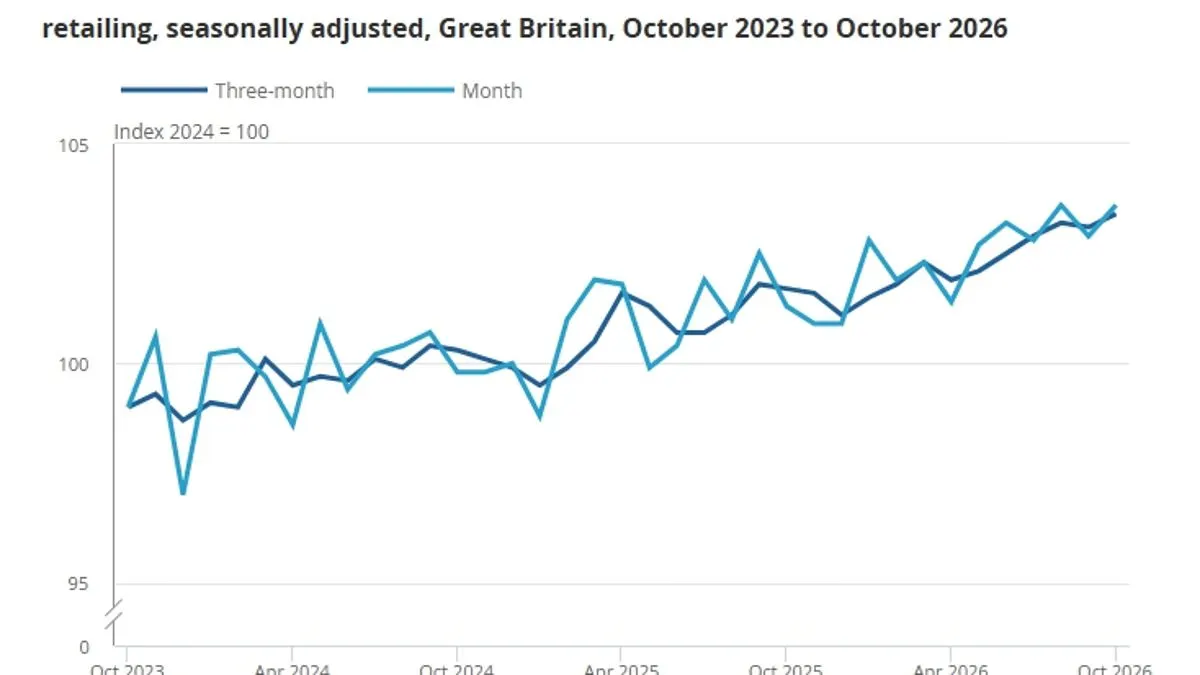
UK retail sales volumes rose by 0.7 per cent in October, reversing a 0.6 per cent fall in September. Supermarkets said sales of long-life food increased after the Government’s “Be Ready” campaign urged households to prepare for emergencies, and some stores ran short of baked beans, bottled water and batteries.
The guidance recommended keeping three days’ worth of food and water, as well as medical supplies, batteries, a wind-up radio, a power pack and cash in case electronic payments failed. Defence Secretary Wes Streeting said the advice could help people prepare for wildfires, flooding and cyber attacks; officials and military figures had also cited risks including sabotage. Art galleries and clothing shops performed well, while fuel sales recovered despite rising pump prices.
- Sources
- 3
- Outlets
- 3
- Left · Centre · Right
- 1 · 0 · 2
In short
- October retail sales rose 0.7 per cent after September’s decline.
- Supermarkets linked stronger long-life food sales to emergency guidance.
- The advice included supplies for three days and cash.
How this story developed
- 2 days ago Reports added that some supermarkets had run out of baked beans, water and batteries as households followed advice to stock three days of essentials and prepare for hazards including floods, wildfires and cyber attacks.
- 2 days ago UK retail sales volumes rose by 0.7 per cent in October after falling in September, with stronger supermarket purchases of long-life food linked to the Government’s Be Ready emergency-preparation advice.
Full account
UK retail sales volumes rose by 0.7 per cent in October, recovering from a 0.6 per cent fall in September and exceeding forecasts of no change. The figures, from the Office for National Statistics, point to a stronger month for shops despite continued pressure on household finances and weak consumer confidence.
Food stores were a key driver. Supermarkets told the ONS that sales of long-life products, including tinned food and UHT milk, increased after the Government’s Be Ready campaign advised households to keep enough food and water for three days. Its guidance also suggested keeping essentials such as a radio, batteries, a medical kit and a way to charge devices in case of disruption. The campaign cited emergencies including severe weather and cyber incidents.
Sales also improved across several non-food categories. The ONS reported gains in clothing shops, galleries, sports equipment and toy stores; online and other non-store sales also rose as cooler weather encouraged purchases from autumn and winter ranges. Fuel sales moved in the opposite direction, falling as pump prices increased. The October figures therefore reflect a varied picture across retail, rather than a rise in every type of spending.
The rebound offers retailers a more encouraging start to the run-up to Black Friday and Christmas, but its durability is uncertain. Some commentators described the stockpiling demand as a short-lived boost and pointed to squeezed budgets and fragile confidence as constraints on wider spending. Consumer confidence edged up in November after a sharp fall the previous month, though it remained negative.
Where outlets differ
From the full account, which is AI-written from the sources:
Source 1 gives the campaign and reports of emptied supermarket shelves the strongest emphasis, describing a ‘Prepper Panic’ and noting officials’ references to sabotage and Russia. Sources 2 and 3 present the campaign as one driver among broader retail trends, with Source 3 giving more detail on category-level changes and the weather-related recovery in online sales.
Source 2 includes views from analysts who warn that the increase may be temporary and places it alongside November’s small improvement in consumer confidence. Source 3 also records optimism about the festive period, while highlighting operating costs and price-sensitive shoppers. Source 1 focuses more on the Government’s preparedness message and the response to it.
The reports differ in the detail they provide: Source 3 gives specific changes for food, clothing, non-food and online sales, while Source 1 highlights art galleries and clothing without comparable figures. Source 2 adds that non-food sales rose faster than the overall rate and discusses retailer inventory and seasonal stock decisions.
Left-leaning outlets 1
Only here: household, rush, sends, british, soaring
Right-leaning outlets 2
- Emergency guidance helps lift UK retail sales as households stockpile suppliesDaily Mail
- Government stockpiling push helps boost retail salesCity AM
Only here: helps, guidance, lift, households, government
Every side used: stockpile, emergency, supplies, retail, sales
Headline columns compared word for word; nothing in them is AI-written.
Steelman: both sides, in good faith
The strongest fair case each way — we don't pick a winner.
The case for
Encouraging households to keep a modest emergency reserve can help them cope with flooding, wildfires or disruption to essential services, while reducing pressure on public responders and shops during a crisis. The reported rise in sales suggests people are acting on practical advice, and buying shelf-stable food and basic supplies may be a proportionate way to improve household readiness.
The case against
Public emergency guidance can prompt people to buy more than they need, contributing to temporary shortages or making supplies harder to find for others, especially if demand is concentrated. Critics may also question whether a broad campaign is the best use of attention when households face cost pressures and preparedness advice could be targeted more clearly at specific risks.
Explained simply
UK households buy food, drink and other goods through supermarkets and retailers, and changes in the volume of sales offer one measure of consumer activity. The figures can rise or fall as households change what they buy, even when wider spending patterns are mixed.
The Government’s “Be Ready” campaign advises people to keep basic supplies at home in case everyday services are disrupted. Its guidance includes food and water for three days, as well as items such as medicines, batteries and a radio; the risks it cites include flooding, wildfires and cyber attacks.
Coverage · 3 sources
Bias meters
From 3 rated sources.
Culture Food Government Politics World
Read the full article at the source →
Originally published by Daily Mail as “Panicking Brits stockpiling tinned food and water after Government warnings sparked surge on high streets last month”.