World news and discussion on TalkFuse.
UK and EU agree Brexit reset framework, leaving student fees unresolved
Developing story first seen 6 hours ago
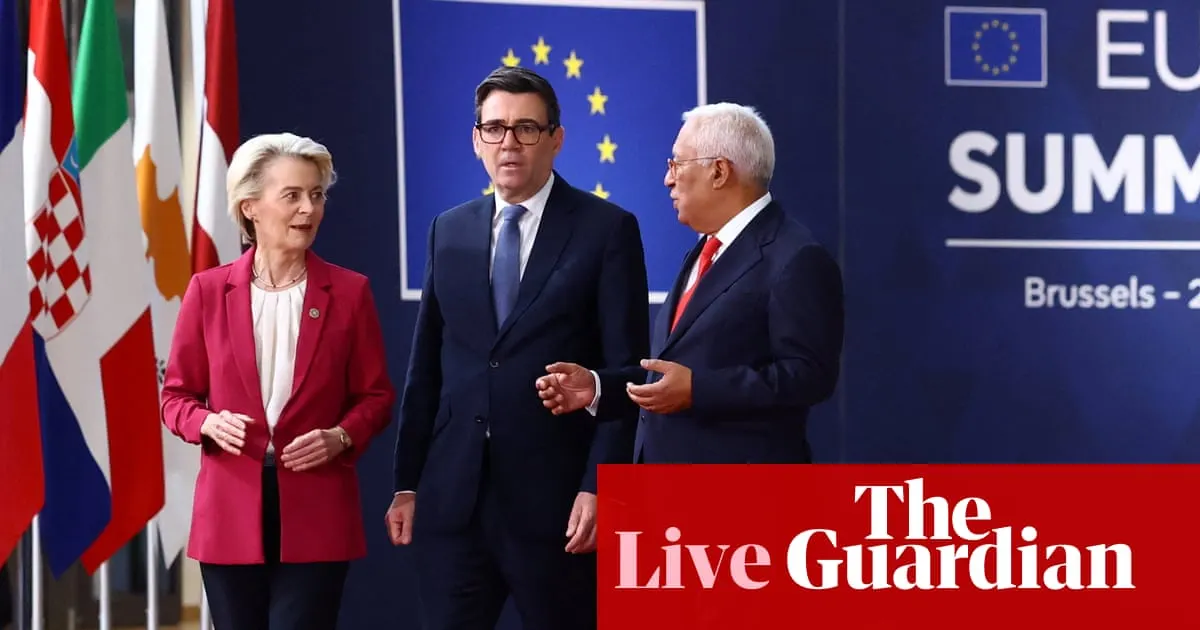
The UK and EU have set out a broader Brexit reset framework, confirming plans for youth mobility, Erasmus+ participation and cooperation across several policy areas. Tuition fees for European students at UK universities remain unresolved, with both sides agreeing to work towards a supplementary deal within six months.
The Youth Experience Scheme is intended to allow up to 100,000 people from each side, aged 31 or under, to live in the other for up to three years; the sides aim to apply the agreement by 2028 and launch it by January 2030. The UK is due to rejoin Erasmus+ in 2027. The declaration also covers reciprocal fishing access until 30 June 2038, work on food standards and emissions trading, and cooperation on security, supply chains and foreign policy.
- Sources
- 5
- Outlets
- 4
- Left · Centre · Right
- 4 · 0 · 0
In short
- UK and EU set out a wider Brexit reset framework.
- Youth scheme could cover 100,000 people from each side.
- Student tuition fees remain unresolved, with six months for talks.
How this story developed
- 44 minutes ago The EU has reiterated that the food, emissions and youth mobility deals will not take effect without a tuition-fee settlement, maintaining its position that the four agreements form one package.
- 55 minutes ago The sides have signed a declaration advancing the reset, including plans for youth mobility and the UK’s return to Erasmus+, while leaving tuition fees to a supplementary agreement within six months.
- 3 hours ago The EU has made three proposed reset deals contingent on resolving tuition fees for European students at UK universities, despite a six-month deferral of the fee decision.
- 5 hours ago At the UK and EU’s second post-Brexit summit in Brussels, the sides are seeking a long-term reset, with proposals to ease trade costs and expand opportunities for young people, though tuition fees remain an obstacle.
- The Independent EU-UK Summit live: Burnham secures historic Brexit reset deal with Brussels
- The Guardian Fallout over tuition fees may snag Burnham’s EU deal, say insiders
- 🔎 Sheffield What Andy Burnham’s EU deal means on food exports, tuition fees and youth mobility – Yorkshire Post
- The Guardian UK and EU agree Brexit reset framework, leaving student fees unresolved
- New York Times Britain Announces Brexit Reset Deal at E.U. Summit: What to Know
Full account
The UK and EU have concluded negotiations on a set of agreements intended to reset parts of their relationship, the British government says. The prime minister is in Brussels to sign arrangements covering food and agricultural exports, emissions trading and a youth mobility scheme. The two sides say they have agreed when the measures will take effect, although implementation work remains. The government says the agreement is done; talks on some related issues are continuing.
The proposed youth scheme could allow about 100,000 young Europeans to come to the UK temporarily for work. Before the summit, the prime minister argued that closer cooperation would bring lower costs and new opportunities, describing Britain and Europe as stronger together. Supporters quoted by The Independent welcomed the agreements as an initial move towards reducing trade barriers and called for a wider public discussion about the UK’s future relationship with Europe.
Tuition fees remain a significant point of dispute. The EU wants European students at British universities to receive the same fee treatment as UK students, rather than paying the higher international rate. According to the Guardian’s account, the EU institutions regard equal treatment as part of the wider package agreed at the 2026 summit and intend to link the other three agreements to a satisfactory outcome. The bloc has reportedly accepted a six-month deferral of the fee question, but that does not settle the disagreement.
The reports therefore describe different aspects of the negotiations: the government presents the three agreements as concluded and moving towards implementation, while the Guardian stresses that the EU considers them connected to the unresolved tuition-fee issue. The Independent focuses more on political reaction and the prospect of a broader conversation about Europe. European Movement UK and Labour Movement for Europe figures welcomed the agreements but characterised them as a first step, with one arguing that full EU membership would bring greater economic gains.
Where outlets differ
From the full account, which is AI-written from the sources:
The government, as reported by The Independent, says negotiations on the three agreements have concluded and implementation dates have been agreed. The Guardian highlights the EU’s position that those agreements are part of a package and should depend on an acceptable tuition-fee settlement.
The Guardian foregrounds the EU demand for domestic-rate fees and its reported plan to use the other agreements as leverage. The Independent gives more space to the youth scheme, the government’s case for the deal, and responses calling for further rapprochement with Europe.
Steelman: both sides, in good faith
The strongest fair case each way — we don't pick a winner.
The case for
The EU can argue that the four agreements were negotiated as one package, so putting them into effect together protects the balance of the summit deal. Equal domestic tuition rates would also make UK universities more accessible to European students and support educational exchange; linking this issue to the other agreements gives the EU leverage to secure that outcome.
The case against
The UK can argue that tuition policy is a separate domestic matter and should not hold up agreements on food and drink, emissions trading and youth mobility that offer practical benefits to both sides. Higher international fees help universities fund teaching and research, and making the three agreements conditional on a fee settlement risks delaying cooperation while limiting the UK’s ability to set its own policy.
Explained simply
The UK left the European Union in 2020, and the two sides have since negotiated arrangements for how they work together. A 2026 summit produced proposals on food and drink trade, emissions trading and youth mobility, alongside a separate dispute over university fees.
European students studying in Britain can face higher international fees than UK students. The EU wants them to pay the same domestic rates as UK students, while the UK has not accepted that position.
The EU Council and Commission treat all four issues as a package, so progress on the three proposed arrangements depends on resolving the fee question. The outcome matters for students and for the practical ties between the UK and EU.
Coverage · 5 sources
Bias meters
From 4 rated sources, 1 unrated.
- The GuardianLeftUK and EU agree Brexit reset framework, leaving student fees unresolved
- The IndependentLeftEU-UK Summit live: Burnham secures historic Brexit reset deal with Brussels
- The GuardianLeftFallout over tuition fees may snag Burnham’s EU deal, say insiders
- 🔎 SheffieldWhat Andy Burnham’s EU deal means on food exports, tuition fees and youth mobility – Yorkshire Post
- New York TimesLeftBritain Announces Brexit Reset Deal at E.U. Summit: What to Know
Business Europe Politics UK World
Read the full article at the source →
Originally published by The Guardian as “UK and EU close in on Brexit reset deal but tuition fees remain a stumbling block – live”.