World news and discussion on TalkFuse.
‘Biggest leap forward in decades’: Daily pill makes deadly cancer tumours disappear in major trial
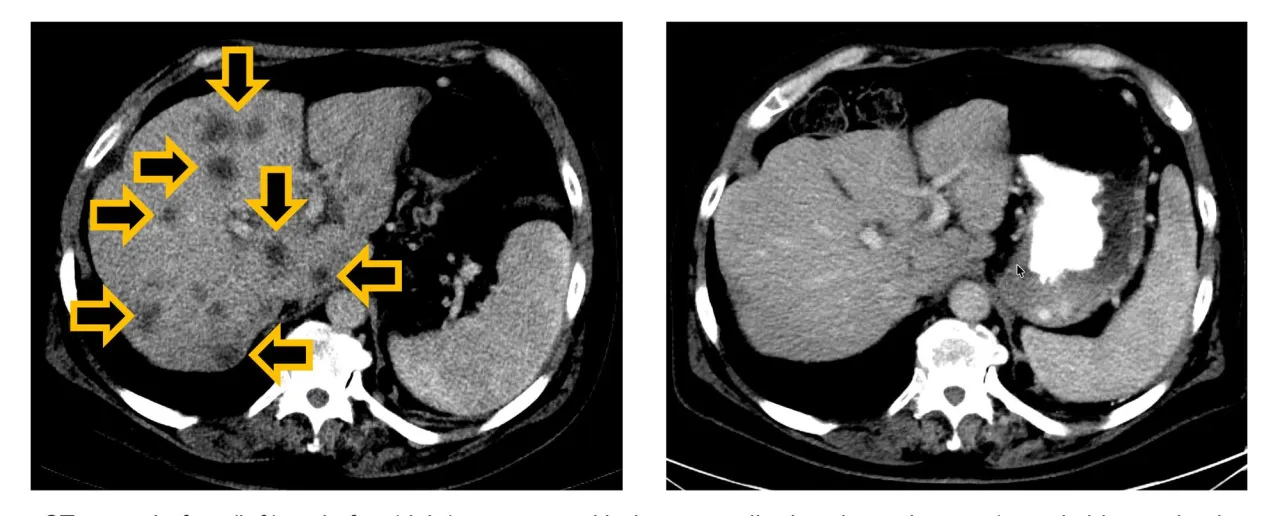
In an early trial, the daily pill daraxonrasib, given with chemotherapy, shrank or made tumours disappear in many people with advanced pancreatic cancer. The findings have raised hopes for a disease that is often difficult to treat, but researchers say further trials are needed before the drug could be considered for NHS use.
The phase one/two study involved 61 patients whose cancer had spread beyond the pancreas: tumours shrank or vanished in 60.7 per cent, and progression was halted in 90.2 per cent. After a year, 76.6 per cent were alive, compared with an estimated 40 to 45 per cent for chemotherapy alone; tumours became undetectable in about one in 12. Daraxonrasib targets mutated KRAS, found in more than nine in 10 pancreatic tumours, but longer follow-up is needed because cancers can develop resistance.
In short
- Daraxonrasib plus chemotherapy shrank or eliminated tumours in 60.7 per cent of trial patients.
- About one in 12 patients had tumours become undetectable.
- Larger trials and longer follow-up are needed before NHS use can be assessed.
Steelman: both sides, in good faith
The strongest fair case each way — we don't pick a winner.
The case for
The early results offer real grounds for hope: many participants’ tumours shrank or stopped progressing, and one-year survival was higher than estimates for chemotherapy alone. Because daraxonrasib targets a mutation common in pancreatic cancer, larger trials could establish whether it becomes a useful addition to treatment for a disease with few effective options.
The case against
These are promising but preliminary findings from a small phase one/two study, so they cannot yet show reliably how much benefit the pill adds or which patients are most likely to benefit. The comparison with chemotherapy relies on an estimate rather than a randomised control group, and longer follow-up is needed to assess survival, side effects and resistance before judging whether the treatment should be adopted.
Explained simply
Pancreatic cancer starts in the pancreas, an organ involved in digestion and blood sugar control. It can be hard to treat, especially when it has spread to other parts of the body, as surgery may no longer be an option.
Daraxonrasib is a daily pill designed to block KRAS, a gene that is altered in most pancreatic tumours and can help cancer cells grow. In the study, it was given alongside chemotherapy to people whose cancer had spread beyond the pancreas.
The trial was small and at an early stage, so the results do not yet show how well the drug works over the longer term or whether cancers may become resistant. Further studies are needed before its safety and benefit can be assessed for wider use, including on the NHS.
Europe Health Medicine UK World