Technology news and discussion on TalkFuse.
Riemann hypothesis proof claim remains unverified after Anthropic debut
Developed over time first seen 1 day ago
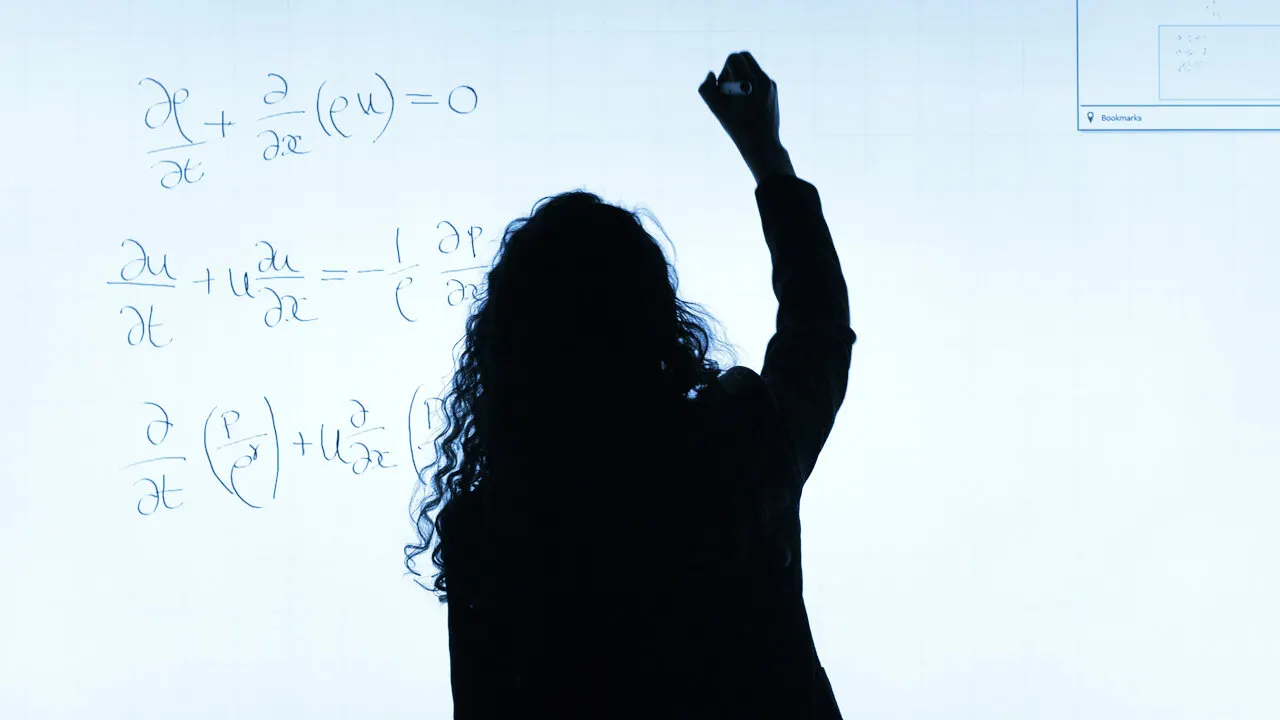
Anthropic mathematician Levent Alpöge says Claude helped him prove the Riemann hypothesis, a problem mathematicians have pursued since 1859. The claim surfaced a day after Anthropic began trading on Nasdaq, but it remains unverified and has not been accepted by the mathematical community.
Alpöge says his argument also proves the broader Generalized Riemann Hypothesis and has been encoded in Lean, which checks formal deductions. He has shared a 14-part proof archive, but mathematicians still need to reproduce it, confirm it matches the conjecture and scrutinise the result. The Riemann hypothesis is linked to the distribution of prime numbers and is one of the Clay Mathematics Institute’s Millennium Prize Problems, with a $1 million award subject to publication, at least two years of scrutiny and general acceptance.
- Sources
- 2
- Outlets
- 2
- Left · Centre · Right
- 0 · 0 · 1
In short
- An Anthropic mathematician says Claude helped prove the Riemann hypothesis.
- The 14-part Lean-checked archive has not been independently verified.
- Any $1 million prize requires publication and sustained scrutiny.
How this story developed
- 1 day ago The claim was newly attributed to Anthropic mathematician Alpöge, who said Claude helped prove both the Riemann hypothesis and its generalised form, with experts still needing to reproduce the Lean proof and confirm it matches the conjecture.
- 1 day ago Coverage stressed that Levent Alpöge’s reported 14-part Lean archive had not been independently checked, and that its existence alone did not show it proved the Riemann hypothesis.
Full account
Levent Alpöge, a mathematician on Anthropic’s technical team, says he and the company’s Claude AI have proved the Riemann hypothesis, a problem first posed by Bernhard Riemann in 1859. The claim appeared shortly after Anthropic began trading on Nasdaq. It has not been independently verified, and the release of proof materials does not mean the result has been accepted by mathematicians.
The hypothesis concerns the zeros of the Riemann zeta function, whose distribution is closely connected to the pattern of prime numbers. It is among the Clay Mathematics Institute’s Millennium Prize Problems, which carry a $1 million award for a qualifying solution. Alpöge says the approach also proves the Generalized Riemann Hypothesis, a wider version involving other mathematical functions.
Alpöge has made parts of the argument available in Lean, a system that checks whether formal mathematical deductions follow specified rules. He says the full AI-generated response runs to about 250,000 pages, while his note links to 14 parts of a proof archive. Formal checking could help assess the argument, but mathematicians would still need to reproduce the archive, confirm that the formal statement corresponds to the original conjecture and scrutinise the result. Until then, the claim remains unverified.
The timing has drawn attention because Anthropic’s stock-market debut came just before the announcement. Alpöge says he discussed when to make it with chief executive Dario Amodei and describes the timing as unfortunate; he also rejects a cynical reading, without explicitly saying the offering caused the delay. His claim arrives amid wider debate about AI-generated mathematical work. Recent disputes over credit and large batches of AI-produced results have prompted mathematicians to call for stronger evidence, while some worry that AI could change how mathematical research is done. Others, including mathematician Tristan Buckmaster, have stressed the continued importance of human understanding.
Where outlets differ
From the full account, which is AI-written from the sources:
The first report foregrounds the lack of independent verification and the checks needed before the claim could be accepted, and places it in the context of recent disputes over AI mathematics. The second gives more space to Alpöge’s account of working with Claude and the timing around Anthropic’s listing, including his description of the AI’s contribution. It says he withheld the announcement until after the listing, while the first report describes his discussions with company leadership and notes that he did not explicitly attribute the delay to the IPO.
The reports describe the Lean materials differently: the first mentions a four-page note linking to 14 downloadable archive parts; the second says Alpöge presented the result in Lean and reports his estimate that the AI-generated answer is 250,000 pages long. Neither account presents independent confirmation of the proof.
Steelman: both sides, in good faith
The strongest fair case each way — we don't pick a winner.
The case for
The claim deserves serious, open-minded scrutiny: formalising the argument in Lean could make its steps unusually checkable, and a genuine proof would be a major mathematical achievement. The timing after the IPO may invite questions, but it does not by itself show the announcement was staged or the result is unsound; independent experts should assess the archive on its merits.
The case against
Extra caution is reasonable because the Riemann hypothesis has resisted proof for generations, and neither the claimed result nor the connection between the formalised argument and the original conjecture has been independently confirmed. Announcing it just after the IPO can also raise legitimate questions about incentives and timing, even without evidence of wrongdoing; publication and sustained expert scrutiny are needed before it is accepted.
Explained simply
The Riemann hypothesis is a long-standing problem in mathematics, first posed by Bernhard Riemann in 1859. It concerns the zeros of a function called the zeta function, which are linked to how prime numbers are distributed.
Levent Alpöge says he has proved the hypothesis and a broader version called the Generalized Riemann hypothesis, with help from Anthropic’s Claude AI. A proof written in Lean, a computer proof-checking system, can be checked for logical errors, but that alone does not establish that it proves the hypothesis.
The Clay Mathematics Institute lists the Riemann hypothesis as one of its Millennium Prize Problems, with a $1 million prize. Its rules require a proposed solution to be published, scrutinised for at least two years and generally accepted before the prize can be considered.
Coverage · 2 sources
AI Business Companies Offbeat Technology Weird & Viral
Read the full article at the source →
Originally published by Decrypt as “Claude Claims Historic Math Breakthrough One Day After Anthropic IPO”.