Politics news and discussion on TalkFuse.
Ed Miliband confirms Labour could tear up Brexit and rejoin Europe – and says Andy Burnham’s new EU deal will come into force whether or not £500m fees row is resolved
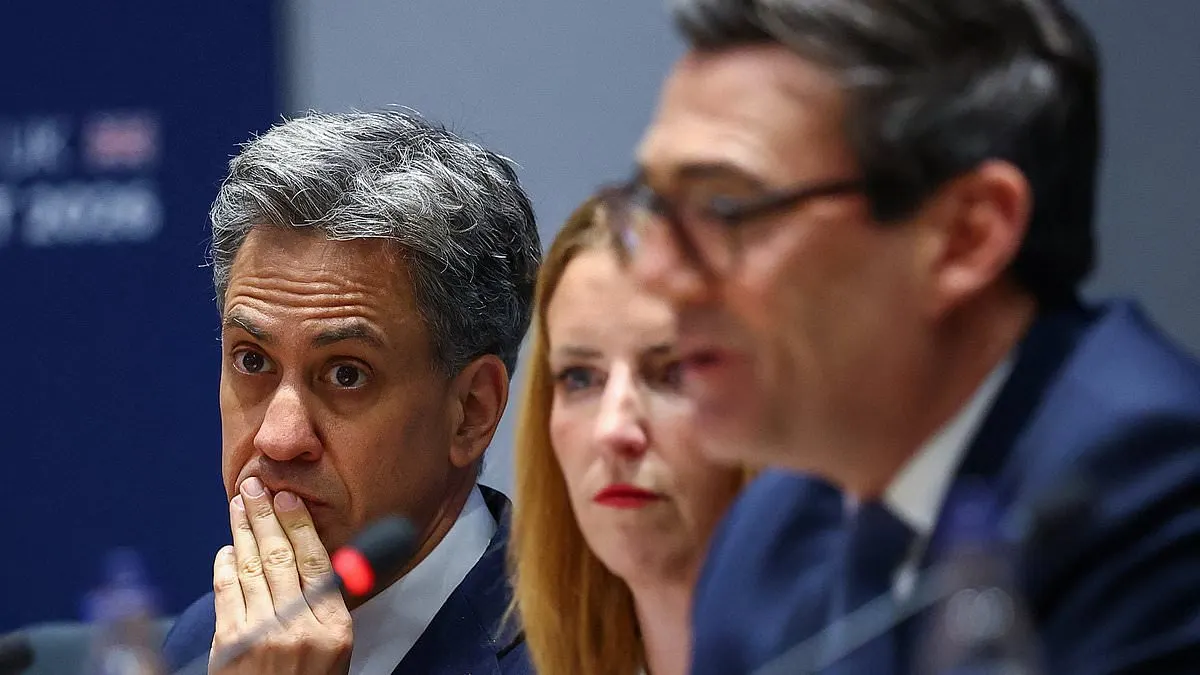
Ed Miliband said the Government would consider the costs and benefits of all options for the UK’s relationship with Europe, including rejoining the EU, while saying it respects the 2016 referendum result and current parliamentary red lines. He also said Andy Burnham’s EU reset deal would proceed whether or not a dispute over university fees is resolved, leaving a six-month deadline for that issue.
The deal includes a youth mobility scheme for 100,000 Europeans aged 18 to 31 to live, work and study in the UK for three years, alignment with some EU rules from 2028, and an emissions trading arrangement. Burnham says it could add up to £17 billion a year to the UK economy; critics dispute that estimate and warn of effects on jobs, farmers and British rule-making. EU leaders have also pressed for lower tuition fees for European students at UK universities, a dispute reported as potentially costing the sector £500 million.
In short
- Miliband says rejoining the EU remains among options to consider.
- Burnham’s EU deal is set to proceed despite a tuition-fee dispute.
- The proposed youth scheme would cover 100,000 Europeans for three years.
Steelman: both sides, in good faith
The strongest fair case each way — we don't pick a winner.
The case for
Supporters argue that keeping all options open, including eventual EU membership, reflects the scale of the economic and diplomatic choices facing the UK, while respecting the referendum result and current political constraints. They see the reset deal as a practical way to improve trade and cooperation, expand opportunities for young people and potentially boost growth; proceeding while tuition-fee talks continue avoids letting one dispute hold up wider benefits.
The case against
Critics argue that closer alignment with EU rules and a possible path back to membership could weaken UK control over its laws and policy choices, while the claimed economic gains remain uncertain. They also raise concerns about effects on jobs and farmers, and say unresolved demands over lower tuition fees could impose substantial costs on universities and students.
Explained simply
Brexit refers to the UK’s departure from the European Union in 2020, following the 2016 referendum. Since then, successive governments have set limits on how closely the UK should align with EU rules, while debating the effects of different arrangements on trade, migration and the economy.
Ed Miliband is a senior Labour minister, and Andy Burnham is the Mayor of Greater Manchester. The proposed EU reset includes easier short-term mobility for young people, closer alignment with some rules and cooperation on emissions trading; a separate disagreement concerns tuition fees for European students at UK universities.
The debate matters because closer links could affect businesses, workers, students and the UK’s ability to set its own rules. Supporters and critics differ over the likely economic gains and costs, including the impact on universities and sectors such as farming.
Elections Europe Politics UK World