Science news and discussion on TalkFuse.
COP31 draft deal leaves fossil fuel dispute unresolved as talks stall
Developed over time first seen 1 day ago
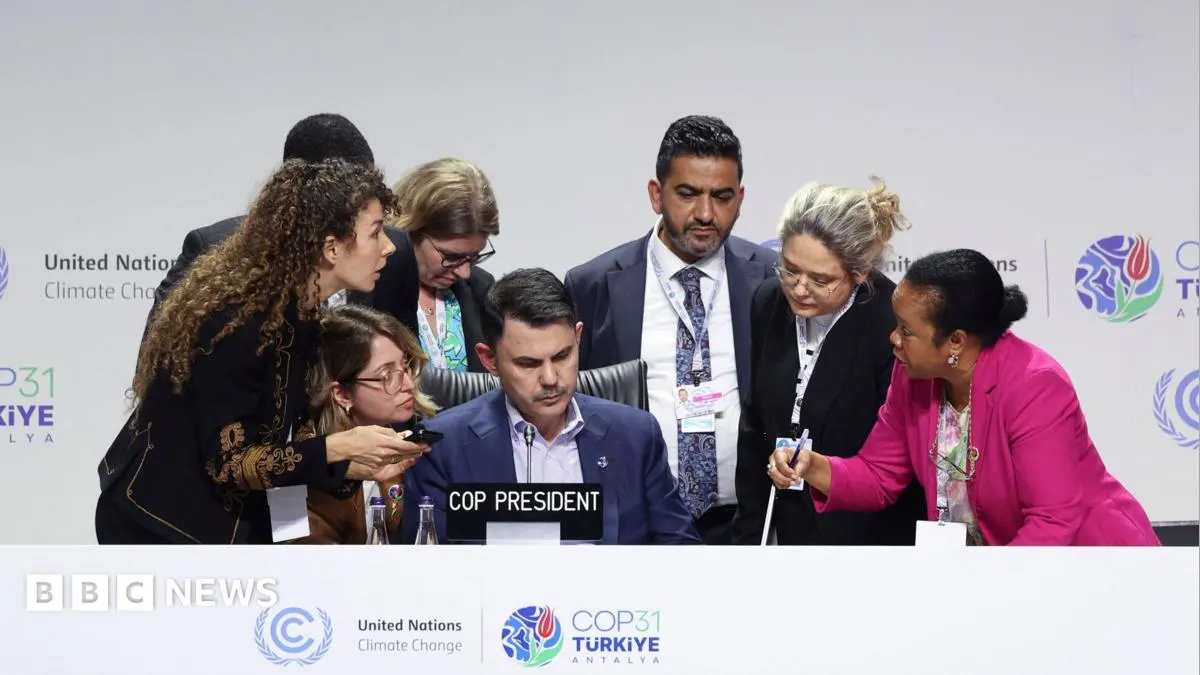
Countries at the COP31 climate summit have published a new draft agreement in an effort to prevent negotiations from collapsing, but a meeting to consider it was delayed. The text acknowledges an earlier commitment to move away from fossil fuels without specifically calling for that transition, leaving a central dispute unresolved.
The draft also recognises that the world is on course to miss the goal of limiting warming to 1.5C, while postponing a decision on adaptation funding. Talks have passed their Friday deadline and are approaching the longest in COP history. Without consensus, negotiations could be suspended until next year; this has happened only once since COP meetings began in 1995.
- Sources
- 4
- Outlets
- 4
- Left · Centre · Right
- 1 · 2 · 1
In short
- A new draft aims to keep COP31 negotiations on track.
- The fossil fuel dispute remains unresolved.
- Adaptation funding is left for future talks.
How this story developed
- 12 hours ago The latest draft still lacked a specific fossil fuel transition call and an adaptation funding figure, while the meeting on whether to approve it remained delayed.
- 19 hours ago A meeting to consider the new draft was delayed, extending uncertainty over whether countries could reach agreement before the talks became the longest in COP history.
- 19 hours ago A third draft deal was published, acknowledging the risk of missing the 1.5C limit but leaving the fossil fuel transition and adaptation funding unresolved.
- 21 hours ago COP31 delegates entered overtime negotiations over a draft deal that omitted a specific call to move away from fossil fuels and left adaptation funding undecided, with consensus still needed to avoid suspending the talks.
- Daily Mail COP31 on the brink of collapse as EU rejects UN climate deal amid row with Saudi Arabia over fossil fuels
- DW COP31: Climate deal 'not adopted,' summit president says
- Middle East Eye COP31 talks collapse as EU and other countries reject final climate deal
- BBC Science COP31 draft deal leaves fossil fuel dispute unresolved as talks stall
Full account
Countries at the COP31 climate summit in Antalya are still trying to agree a deal, after negotiations continued beyond their planned Friday finish. A new draft, prepared by co-hosts Turkey and Australia and released early on Sunday, is intended to bridge differences between governments. The meeting to consider it was delayed, leaving the outcome uncertain.
The draft does not explicitly call for a transition away from fossil fuels, the issue at the centre of the dispute. It does, however, refer to an earlier commitment by countries to make that transition. Previous drafts had moved from proposing a faster phase-out to removing references to coal, oil and gas altogether. The EU and Pacific island states have pressed for fossil fuels to be addressed; Saudi Arabia and other oil-producing countries have resisted their inclusion and sought language on carbon removal.
The EU has indicated it may reject a deal that omits meaningful action on fossil fuels. Ireland’s climate and energy minister, Darragh O’Brien, said the draft did not meet the scale of the climate emergency, while Tuvalu’s climate minister, Mania Talia, warned that failing to address fossil fuels would make the negotiations futile. Turkey’s environment minister and summit president, Murat Kurum, struck a more optimistic note, saying he hoped for a breakthrough and urging delegates to find common ground.
The draft also acknowledges that the world is on course to miss the goal of limiting warming to 1.5C. It sets no specific amount of funding for adaptation, leaving that question to future discussions, a decision likely to disappoint African countries. Governments must reach consensus for the agreement to pass. If they cannot, talks could be suspended until next year; the reports describe the delay and dwindling prospects for agreement, but do not establish whether the new draft will be accepted.
Where outlets differ
From the full account, which is AI-written from the sources:
The first report focuses on the draft’s contents, the lack of an adaptation finance figure and the risk that talks could be suspended. The second gives greater prominence to the EU–Saudi Arabia dispute, quotes criticism from Ireland and Tuvalu, and describes repeated delays to the closing plenary. It also says the conference had passed the record for the longest UN climate summit; the first instead says negotiations were approaching that record. The reports differ in their account of the sequence and timing: the first describes a draft released early Sunday and a meeting delayed on Sunday morning, while the second calls it a fourth draft prepared that morning and refers to a closing plenary. The supplied excerpts do not include source URLs.
Left-leaning outlets 1
Only here: countries, reject, final
Centre outlets 2
- COP31 draft deal leaves fossil fuel dispute unresolved as talks stallBBC Science
- COP31: Climate deal 'not adopted,' summit president saysDW
Only here: draft, leaves, fuel, dispute, unresolved
Right-leaning outlets 1
Only here: brink, rejects, saudi, arabia, fuels
Every side used: cop31, climate, deal
Headline columns compared word for word; nothing in them is AI-written.
Steelman: both sides, in good faith
The strongest fair case each way — we don't pick a winner.
The case for
Supporters of the draft could argue that a compromise is preferable to a breakdown in talks, preserving a shared forum for further climate action. Referring to the earlier fossil-fuel commitment and recognising the risk of missing the 1.5C limit may keep those issues on the agenda while allowing countries with different priorities to reach consensus.
The case against
Critics could argue that omitting a specific call to move away from fossil fuels weakens the response to a central driver of warming, despite the acknowledged risk to the 1.5C limit. Leaving adaptation funding to future meetings also postpones decisions that vulnerable countries say they need, so avoiding a collapse may come at the cost of commitments they regard as essential.
Explained simply
COP summits are annual UN meetings where countries negotiate shared responses to climate change. Decisions are made by consensus, so every participating country must agree for a deal to be adopted.
Countries differ over how quickly to reduce reliance on fossil fuels and how much money should go to help communities adapt to climate impacts. The EU and Pacific states have pressed for stronger language on fossil fuels, while the Africa Group has sought clearer commitments on adaptation funding.
The talks follow an earlier global pledge to pursue efforts to limit warming to 1.5C above pre-industrial levels. Whether countries can agree on what to do next matters for international cooperation on climate change and for the support available to countries facing its effects.
Coverage · 4 sources
Bias meters
From 4 rated sources.
- BBC ScienceCentreCOP31 draft deal leaves fossil fuel dispute unresolved as talks stall
- Daily MailRightCOP31 on the brink of collapse as EU rejects UN climate deal amid row with Saudi Arabia over fossil fuels
- DWCentreCOP31: Climate deal 'not adopted,' summit president says
- Middle East EyeLeftCOP31 talks collapse as EU and other countries reject final climate deal
Climate Geopolitics Politics Science
Read the full article at the source →
Originally published by BBC Science as “New draft deal aims to avert collapse of talks at climate summit”.