Technology news and discussion on TalkFuse.
“It can take years”: Why the AI Riemann proof is far from settled
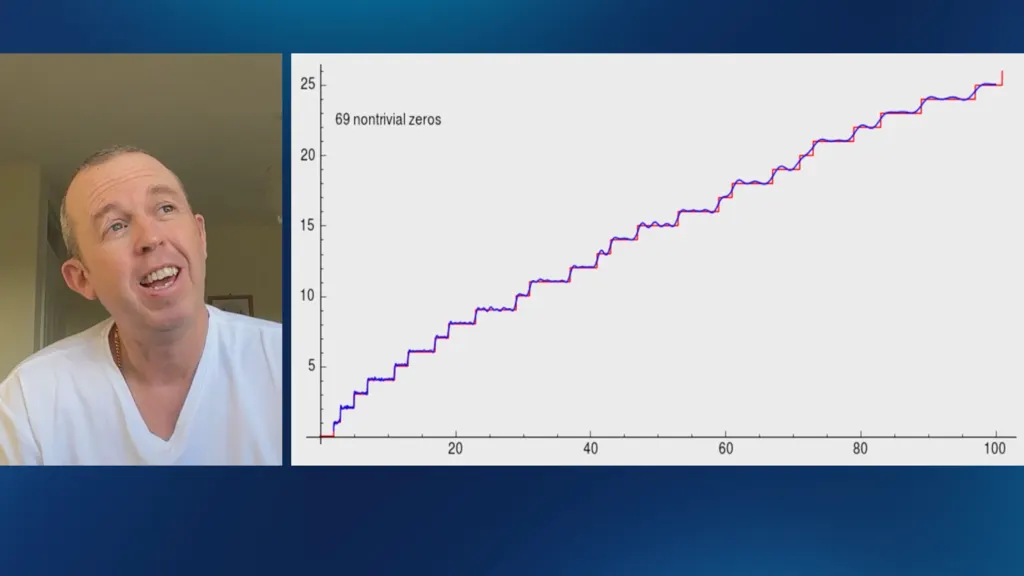
Loubna Achkar Alpöge says he has proved the Riemann hypothesis, a long-standing conjecture about the distribution of prime numbers, with help from Anthropic’s chatbot Claude. If confirmed, the result could affect many areas of mathematics because numerous other proofs rely on the hypothesis.
Mathematicians have been pursuing the conjecture since 1859. Expert Brian Conrey described the claim as potentially momentous, while University of Nottingham physicist Tony Padilla cautioned that the community needs a proof people can read and check; that process could take years, and problems may yet emerge. Padilla also stressed that the work must be shared transparently, noting Alpöge’s commercial interests.
In short
- Alpöge says Claude helped prove the Riemann hypothesis.
- The claim could affect many areas of mathematics.
- Experts say verification may take years and needs transparency.
Steelman: both sides, in good faith
The strongest fair case each way — we don't pick a winner.
The case for
A claimed proof of the Riemann hypothesis deserves serious, open-minded examination: if correct, it would be a major mathematical result with consequences for work that depends on the conjecture. AI assistance does not by itself invalidate a proof; what matters is whether mathematicians can inspect the reasoning, verify each step and reproduce the result.
The case against
Extraordinary claims in mathematics need rigorous scrutiny, and a claim is not established until other experts can follow and check its proof. That review can take years, and errors may emerge; transparent sharing is especially important when the claimant has commercial interests that could affect how the work is presented.
Explained simply
The Riemann hypothesis is an unsolved idea about where prime numbers sit among the whole numbers. First proposed by mathematician Bernhard Riemann in 1859, it concerns a pattern that is difficult to see directly but is linked to how often primes occur.
Loubna Achkar Alpöge says he has proved the hypothesis with help from Anthropic’s chatbot Claude. Mathematicians would need to examine the full argument and check each step before accepting it; that kind of review can take years, and may uncover errors.
The question matters because many mathematical results rely on the hypothesis being true. Experts including Brian Conrey and Tony Padilla have described both its potential importance and the need for a proof that can be openly shared and independently checked.