World news and discussion on TalkFuse.
Chris Mason: Can Burnham turn volume down on EU debate?
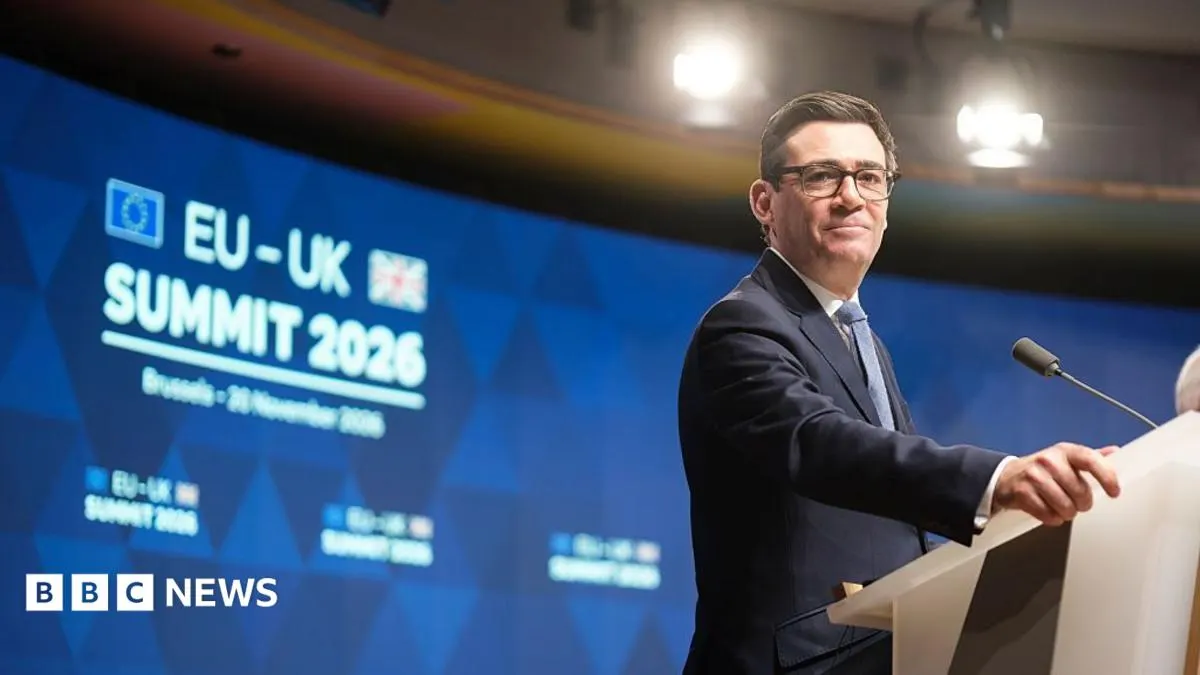
Andy Burnham used a Commons statement after the EU-UK summit to present his approach to Europe as pragmatic and measured, after raising the issue repeatedly in recent months. He did not rule out Labour seeking a mandate for an EU referendum at the next general election, saying any recommendation would depend on Britain’s national interest; the debate’s prominence matters because it could crowd out other political issues.
Burnham said he would avoid a running commentary and that there was no fixed destination for UK-EU relations. EU officials regard talks about the future relationship as normal diplomacy, with options ranging from the status quo to full membership. The government is due to publish legislation to implement the summit agreements and their legal text; the expected deal could require the UK to pay for reinstating food export checkpoints if it reverses that part within ten years, while talks on other areas, including university tuition fees, continue.
In short
- Burnham leaves open the possibility of a referendum.
- He says future EU policy should follow Britain’s interests.
- The summit agreements’ legal details are due to be published.
Steelman: both sides, in good faith
The strongest fair case each way — we don't pick a winner.
The case for
A measured, open-ended approach to Europe could let the UK pursue practical cooperation where it serves the national interest without prematurely committing to a fixed destination. Keeping a referendum mandate as a possibility may also respect voters’ right to decide if a future government proposes a major change, while avoiding constant commentary could leave room for other issues.
The case against
Keeping a future referendum in play, even without a firm proposal, risks prolonging uncertainty for businesses, institutions and the public, and could allow Europe to dominate debate at the expense of other priorities. Critics could argue that the government should state more clearly what closer cooperation is meant to achieve and seek public consent for any significant shift, rather than leave the direction open-ended.
Explained simply
The UK left the European Union in 2020, ending its membership of the bloc and its single market. Since then, the two sides have negotiated arrangements for trade and cooperation, while politicians have debated whether closer ties would benefit Britain.
Andy Burnham is Labour’s mayor of Greater Manchester and a prominent party figure. Labour’s position matters because it could shape the UK’s future relationship with the EU; a referendum would require a public vote on whether to change that relationship.
The EU and UK continue to discuss practical agreements, including checks on food exports and access to university programmes. Those negotiations affect businesses, students and the rules governing trade, while the wider debate can also influence which issues receive attention in British politics.