Politics news and discussion on TalkFuse.
Singapore’s rule of law balances individual rights with collective needs: Chief Justice
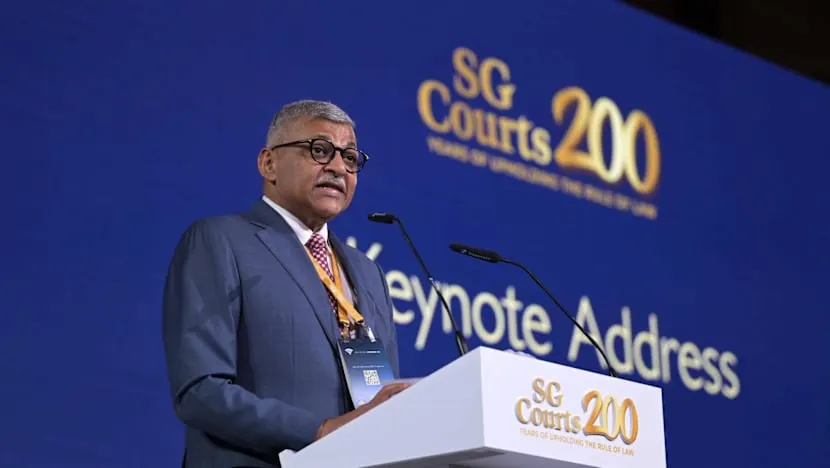
Singapore’s Chief Justice Sundaresh Menon said the rule of law depends on balancing individual rights with collective needs, and on each branch of government respecting its role. Courts should allow elected leaders to decide complex policy questions, while ensuring that government powers remain within legal limits.
Speaking at a conference marking 200 years since the 1826 Second Charter of Justice, Menon linked Singapore’s strong executive to the challenges of nation-building, including public order and economic survival. He said political leaders have the democratic mandate and resources to weigh competing interests, while courts focus on legality; both branches must respect authoritative judicial decisions. Menon, 64, is due to retire in February 2027.
In short
- Menon says courts should review legality, not take over policy choices.
- Executive power must remain within legal limits.
- Singapore marks 200 years since the 1826 Second Charter of Justice.
Steelman: both sides, in good faith
The strongest fair case each way — we don't pick a winner.
The case for
In a diverse city-state facing practical pressures around public order and economic security, elected leaders may be better placed to weigh competing needs and make complex policy choices. A restrained judicial role can respect democratic mandates while courts still enforce legal limits and protect individual rights.
The case against
Giving elected leaders broad discretion over questions framed as policy may leave individual rights less effectively protected, especially when those most affected have limited political influence. Courts’ independence and willingness to scrutinise government action can provide an essential check on executive power, even when policy choices are difficult.
Explained simply
Singapore’s legal system has roots in the Second Charter of Justice, issued in 1826 when the island was under British rule. The charter helped establish English law and courts in Singapore, which later became an independent country in 1965.
The government is led by elected politicians, while the courts interpret the law and decide whether public powers are being used lawfully. Chief Justice Sundaresh Menon leads Singapore’s highest court; his role sits within this division of responsibilities.
The balance matters because decisions about public order, the economy and individual freedoms can affect people in different ways. Singapore’s system gives elected leaders responsibility for policy while courts provide legal oversight, with each expected to respect the other’s role.