World news and discussion on TalkFuse.
Jury finds Huawei stole US tech, laundered money, and broke sanctions
Developed over time first seen 1 day ago
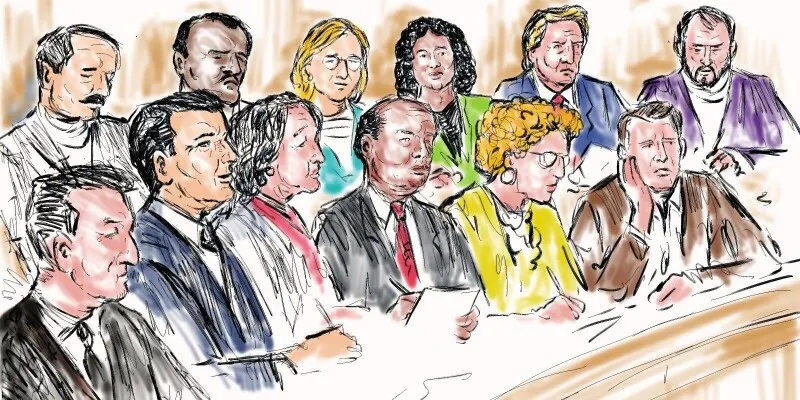
A US jury has found Huawei and three subsidiaries guilty of stealing trade secrets, committing fraud and money laundering, and violating US sanctions law. The verdict follows a three-month trial over alleged misconduct linked to Huawei’s technology work and its telecommunications business in Iran; the jury rejected a separate racketeering charge.
Prosecutors cited Cisco source code labelled “ocsic”, a fake “Weihua” identity used to photograph Fujitsu equipment, and the theft of part of a T-Mobile testing robot. They also said Huawei misled banks to obtain billions of US dollars and access to dollar-clearing services. Huawei disputes the convictions, sentencing is scheduled for September 2027, and the company is already barred from selling its products in the US.
- Sources
- 2
- Outlets
- 2
- Left · Centre · Right
- 0 · 0 · 1
In short
- Huawei and three subsidiaries were convicted on multiple federal charges.
- The jury rejected the racketeering charge.
- Sentencing is scheduled for September 2027.
How this story developed
- 15 hours ago New coverage adds the jury’s finding that Huawei and three subsidiaries committed a broad set of offences, including trade-secret theft, fraud, money laundering and violations of US sanctions law.
- 22 hours ago A US jury has found Huawei and three subsidiaries guilty of stealing trade secrets, committing fraud and money laundering, and violating US sanctions.
- 22 hours ago A US jury has found Huawei and three subsidiaries guilty of stealing trade secrets, committing fraud and money laundering, and violating US sanctions law.
Steelman: both sides, in good faith
The strongest fair case each way — we don't pick a winner.
The case for
The prosecution’s case is that the jury’s verdict reflects evidence of deliberate conduct: allegedly taking competitors’ technology, disguising Huawei’s work in Iran, and misleading banks to retain access to US financial services. From this perspective, enforcing trade-secret and sanctions laws protects firms’ intellectual property and gives effect to rules intended to restrict business with Iran; the jury’s rejection of the racketeering charge also shows it did not accept every allegation.
The case against
Huawei’s strongest case is that a conviction does not settle whether the evidence or legal theories were sound, and the company says the verdict lacks legal and factual merit. A thoughtful critic may argue that allegations about corporate conduct should be scrutinised carefully, especially where US sanctions and access to dollar-clearing services have broad consequences; the jury’s rejection of the racketeering charge underscores that some parts of the prosecution’s case were not proved to its satisfaction.
Explained simply
Huawei is a Chinese telecommunications company that makes equipment used in mobile and data networks. US prosecutors accused Huawei and three subsidiaries of taking technology from other firms and hiding parts of the company’s business dealings from banks.
The case also concerned Huawei’s work in Iran, where US sanctions restrict certain business. Banks’ access to US dollars can depend on following those rules, so alleged deception could affect whether transactions can be processed. The jury convicted the companies of several offences but rejected a racketeering charge; Huawei disputes the convictions.
Coverage · 2 sources
Americas Geopolitics Politics World